Gulf Statistical Centre: GCC economies see expansion in recycling and waste treatment
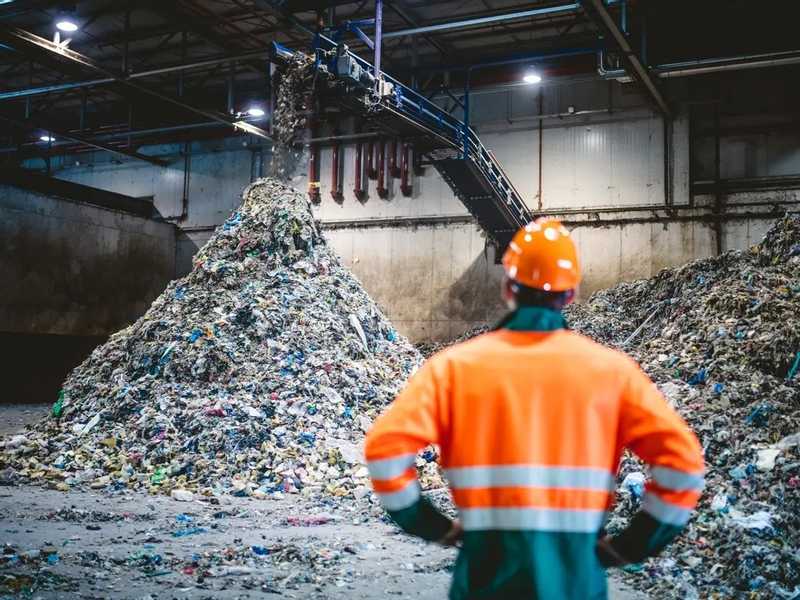
A report by the Statistical Centre for GCC countries reveals rapid growth in waste treatment and recycling in Gulf countries during 2024, with market growth expected to reach 104 billion dollars by 2031.
Translated by Alqyas from Al-Qabas — Original source
The Statistical Center for the Cooperation Council for the Arab States of the Gulf announced on Sunday that the economies of the Gulf states have achieved rapid expansion in waste processing, recycling, and resource recovery infrastructure, noting that the annual growth rate of processed waste reached 6.2 percent in 2024.
In a report issued by the center on waste management in the region, it stated that the sector has evolved from mere municipal services into a "promising and highly attractive investment market" for capital and strategic partnerships with the private sector, particularly in the fields of processing industrial and hazardous medical waste, recycling materials, recovering metals and metal compounds, and re-refining used oils.
The center added that the total volume of waste collected in GCC countries reached 283.5 million metric tons in 2024, recording an annual increase of 20.4 percent compared to 2023. Meanwhile, the volume of processed waste achieved an annual growth rate of 6.2 percent, reaching 69 million metric tons.
Regarding the waste management market, the center valued the market in Gulf countries at approximately $68.3 billion in 2025, projecting its growth to exceed $104 billion by 2031, at a compound annual growth rate of approximately 7.3 percent during the period 2025–2031.
The center outlined the structural distribution of waste flows collected and processed in GCC countries in 2024, indicating that non-hazardous waste constituted the majority of total waste collected in the region, accounting for 97.1 percent, compared to 2.9 percent for hazardous waste.
In terms of processing, it clarified that the proportion of hazardous waste reached 11.7 percent of the total processed volume, an increase of 1.8 percentage points compared to 2023, when it stood at 9.9 percent, while non-hazardous waste accounted for 88.3 percent.
Regarding patterns of hazardous waste treatment, the center pointed to the diversity of technical methods used in the region, noting that modern methods, including physical and chemical treatment, resale, and reuse, accounted for the largest share at 61.1 percent, followed by recycling at 21.6 percent, environmentally sound landfilling at 15.5 percent, and incineration at 1.9 percent.
It indicated that construction and demolition waste collected recorded the highest annual growth rate among all key indicators, with a growth rate of 26.5 percent, reaching 226.6 million metric tons in 2024, compared to 179.1 million tons in 2023, 136.7 million tons in 2022, and 109.9 million tons in 2021.
The center stated that this statistical growth coincided with the "urban boom and infrastructure projects in GCC countries," noting that the gross domestic product of construction and building activities rose from $130.7 billion in 2021 to $187.8 billion in 2024, achieving a growth rate of 43.6 percent. Concurrently, the number of workers in the sector increased from 3.3 million to 4.7 million, an increase of 42.4 percent.
The report highlighted the rapid growth in the Gulf industrial sector alongside the growth in the sector’s value added, noting that the gross domestic product of industrial activities rose from $885.4 billion in 2021 to $1.256 trillion, while the number of workers in the industrial sector increased from five million to 7.5 million.
Regarding internationally approved infrastructure for treating hazardous industrial waste in accordance with the Basel Convention, the Center stated that the Gulf Cooperation Council (GCC) countries host 28 specialized facilities for recycling hazardous industrial waste and recovering metals and metal compounds, with an average annual growth rate of 20.1 percent between 2019 and 2024. Additionally, there are 43 approved facilities for re-refining and reusing used oils, recording an average annual change rate of 25.2 percent over the same period.
The Center noted that the Gulf health sector’s production of hazardous medical waste reached 134,600 metric tons in 2024, accounting for 1.6 percent of total hazardous waste generated. This output saw an annual increase of 14.3 percent, while the volume of collected waste rose by 14.6 percent compared to 2023. This expansion was linked to the growth of human health sector activities, as the sector’s gross domestic product increased from $63.1 billion in 2019 to $83.9 billion in 2024. The number of hospitals also grew by 10.6 percent, rising from 812 to 898, and the total number of health workforce members increased from 755,000 to 1,054,000.
To ensure the safe disposal of waste, the GCC countries operate 27 dedicated sites for incinerating hazardous medical waste, with a total design capacity of approximately 176,000 metric tons.
The Center affirmed the region’s leadership in solid waste management, highlighting trends in municipal and agricultural waste. Total collected waste reached 48.8 million metric tons in 2024, reflecting a cumulative growth of five percent between 2017 and 2024. Household waste constituted more than 45 percent of total collected municipal waste.
On the global environmental leadership front, the Center pointed out that four Gulf countries—Kuwait, the United Arab Emirates, Qatar, and the Sultanate of Oman—ranked first globally with a perfect score in the Sustainable Management of Solid Waste index, part of the Environmental Performance Index published by Yale University.
Regarding the agricultural sector and organic waste, collected agricultural waste rose by a significant cumulative rate of approximately 80 percent between 2017 and 2024, coinciding with the growth of agricultural GDP to nearly $40 billion. The UAE led in collected quantities with 2.4 million tons, followed by Kuwait with 600,000 tons.
The Center emphasized the GCC countries’ full compliance with international environmental treaties. In 2024, the GCC countries exported 800,000 metric tons of hazardous waste abroad in accordance with Basel Convention regulations. The cumulative number of national reports submitted by GCC countries to the Convention Secretariat reached 92 reports, underscoring the integrity of environmental governance and statistical transparency in the region.
The Statistical Center for the Gulf Cooperation Council countries, headquartered in the Sultanate of Oman, was established in 2011 as the official authorized body for data, information, and statistics related to the GCC countries. It also plays a role in enhancing statistical and informational efforts among national statistical centers and planning authorities within the region.
