Heart health checks should be included in routine women's screenings
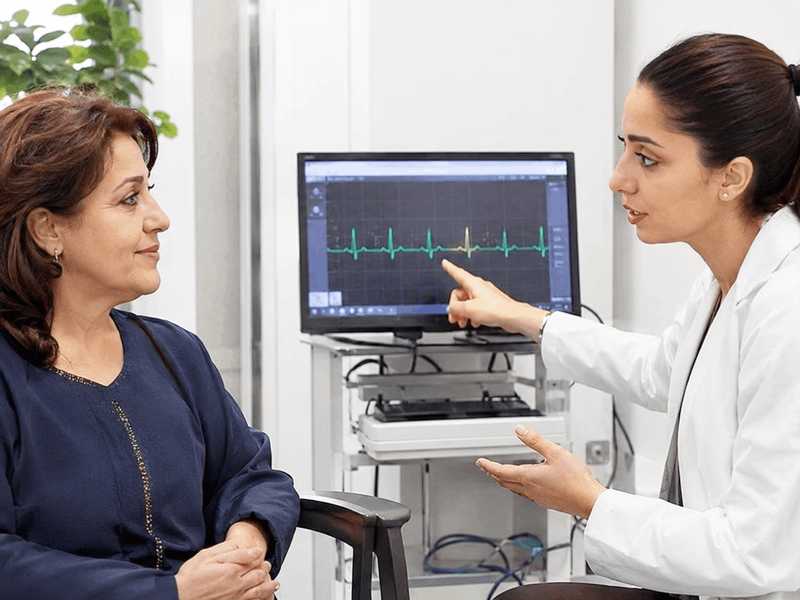
Medical report links women's life stages to the risk of heart disease.
Translated by Qiyas from القبس — Original source
Dr. Wala’a Hafiz: Regular exercise, adequate sleep, and a healthy diet are key factors in protecting the heart. However, maintaining these habits can be affected by the health stages and changes women go through, making it important to understand and monitor risk factors from an early age. Heart disease in women differs from that in men, both in causes and symptoms, which can make early diagnosis and treatment more difficult. Research indicates that risk factors may begin at puberty and change with age, from pregnancy to menopause.
What do the latest reports say? According to The Washington Post, and based on recent reports published in the medical journal Circulation, the American Heart Association, the American College of Obstetricians and Gynecologists, and the Society for Maternal-Fetal Medicine have outlined how different life stages affect women’s risk of developing heart disease. Sadiya Khan, head of the report-writing team and professor of preventive medicine at Northwestern University’s Feinberg School of Medicine, notes that pregnancy clearly reveals these differences; for instance, preeclampsia during pregnancy or postpartum may indicate an increased risk of future heart disease. Khan adds that evidence is growing linking menopause and polycystic ovary syndrome (PCOS), also known as ovarian endocrine and metabolic syndrome, as important indicators of heart health. She sees a common factor linking these conditions that affects women’s health.
Early years of puberty: While puberty may seem too early to discuss heart health, it can carry indicators of future risks. Starting menstruation before age 10 is associated with an increased risk of cardiovascular disease, possibly due to its link with metabolic disorders and fat accumulation, factors that may persist into adulthood. Irregular or absent menstrual periods may also indicate PCOS, which is associated with elevated androgens and inflammation, as well as cholesterol imbalances and insulin resistance. Heavy menstrual bleeding, irregular cycles, and premenstrual symptoms can affect exercise, sleep, and healthy eating—factors essential for heart protection. Additionally, physical changes during puberty may exacerbate body image issues, depression, and eating disorders, which are also linked to a higher risk of cardiovascular disease.
Reproductive years: Khan explains that women’s risk of heart disease is lower than men’s during years of ovulation and regular menstrual cycles, a phenomenon known as the “female advantage,” attributed to the protective effect of estrogen and other hormones. However, irregular or absent periods may indicate hormonal imbalances that increase the risk of cardiovascular disease, according to Khan. Emily Lau, a cardiologist at NewYork-Presbyterian/Columbia University Irving Medical Center, notes that heavy menstrual bleeding and severe premenstrual syndrome can also affect heart health. Hormonal contraceptives warrant attention, as combined formulations containing estrogen and progestin may increase the risk of blood clots that can travel to the lungs. Although this risk is limited, women with risk factors such as uncontrolled high blood pressure may be advised to avoid these methods. Conversely, progestin-only options, such as certain types of intrauterine devices, may be more suitable, depending on a physician’s assessment.
◄ Pregnancy: Dr. Lau explains that pregnancy resembles a “natural stress test for the heart,” as it can reveal underlying health problems such as pregnancy-related hypertension (including preeclampsia) or gestational diabetes, particularly in women who already have cardiovascular risk factors. These complications increase the likelihood of developing heart disease after childbirth. Postpartum hemorrhage may also double the risk of cardiovascular disease in the year following delivery, and this elevated risk can persist for up to 15 years. ◄ Hormonal fluctuations in the years preceding menopause: Hormone levels fluctuate before declining, which reduces the protective effect of estrogen on the heart and narrows the gap in heart disease rates between women and men. Dr. Lau describes this period as one of accelerating risk, with rising cholesterol levels, increased insulin resistance, and fat accumulation around the waist. She emphasizes that changes in cardiovascular risk during this phase go beyond what can be explained by aging alone. The process is not limited to declining estrogen; it also involves increased inflammation and changes in the autonomic nervous system. Hot flashes and night sweats, especially when severe or frequent, are associated with a higher risk of cardiovascular disease. ◄ Postmenopausal phase: The postmenopausal phase begins 12 months after a woman’s last menstrual period and accounts for most cases of heart disease in women. Some of the previously mentioned symptoms may persist during the early years of menopause, leaving long-lasting effects on heart health. At this stage, sex differences are not limited to hormonal changes but are also linked to the accumulation of risk factors over previous life stages. As women age, they may face additional risks, including chronic diseases, social isolation, and the burden of caring for others, all of which increase the likelihood of cardiovascular disease. Dr. Lau stresses that the new approach aims to encourage physicians to incorporate heart health into routine discussions and examinations for women at all stages of life.
