Education Minister Approves New Amendments to the Ministry's Organizational Structure
Press coverage 2 newspapers covered this event: Al-Jarida · Al-Qabas →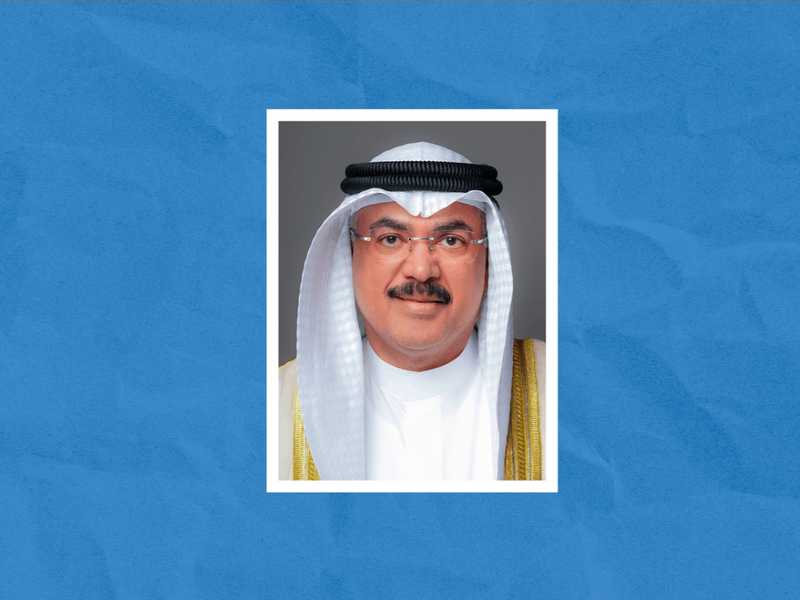
Education Minister Sayed Jalal Al-Tabtabaei has approved structural amendments aimed at rationalizing positions and merging departments within the Kuwait Ministry of Education.
Translated by Qiyas from القبس — Original source
Minister of Education, Engineer Sayed Jalal Al-Tabatabai, issued a decision regarding the approval of amendments to the organizational structure of the Ministry of Education. These amendments include a package of administrative and organizational changes aimed at curbing administrative bloat, redistributing competencies and responsibilities, and merging several departments and organizational units with similar nature. This is intended to ensure the optimal use of human resources and enhance the efficiency of administrative and institutional performance.
The Ministry of Education clarified that the new amendments were based on continuous reviews of the practical implementation results of the organizational structure, as well as studies of observations and proposals submitted by employees across various sectors and departments of the Ministry. This process enabled an assessment of actual work needs, identification of required development areas, and implementation of changes that ensure greater flexibility in distributing competencies and defining responsibilities.
The Ministry emphasized that the decision mandates all relevant entities, within their respective jurisdictions, to implement its provisions and act accordingly from the date of approval of the amended detailed competency cards. It also requires completing the placement of all employees in organizational units within the integrated civil service systems. The Ministry confirmed the cancellation of all previous decisions that conflict with the provisions of this decision, thereby ensuring the unification of organizational references and establishing the amended structure as the primary basis for organizing work, defining competencies, and assigning responsibilities within the Ministry.
The Ministry indicated that the new structural amendment includes reducing the number of General Director positions from 14 to 10, a decrease of approximately 28.6 percent. Additionally, the number of Department Director positions was reduced from 72 to 63, and Administrative Inspector positions from 260 to 197. The number of Section Head positions also declined from 482 to 331. Consequently, the total number of positions in the organizational structure will decrease from 845 to 613, a difference of 232 positions, representing a reduction of approximately 27.5 percent. This reflects the Ministry’s trend toward building a more agile administrative structure based on rationalizing supervisory levels, distributing workloads and responsibilities more evenly, and enhancing the efficiency of organizational units.
The Ministry pointed out that the amendments are not limited to reducing numbers and supervisory positions; they also include reorganizing competencies and merging similar units. This contributes to simplifying procedures, reducing administrative workflow steps, accelerating decision-making, unifying competency references, and minimizing overlap and duplication between departments. These changes are expected to positively impact the quality of educational and administrative services provided.
Regarding notable amendments to the sector of the Assistant Undersecretary for General Education, the Ministry noted the reduction of the sector’s affiliated General Departments to five: the General Department of General Education, the General Department of Private Education, the General Department of Measurement and Evaluation, the General Department of Supporting Educational Services, and the General Department of Guidance, Research, and Curricula. This aligns with a trend aimed at unifying educational and supervisory competencies and enhancing integration among departments involved in the educational process.
The Ministry clarified that the new structure includes merging Religious Education and Special Education under the umbrella of the General Department of General Education. This achieves unified administrative and organizational supervision and enhances coordination among different types of education. Furthermore, the supervision of examinations and student affairs has been returned to the sector in educational districts, across their various sections and competencies. This strengthens the connection of these tasks to the educational field, facilitates the monitoring of student affairs and examinations, and unifies work procedures in educational districts.
The Ministry added that the amendments also included redistributing certain competencies related to supporting educational services, by transferring the supervision of activity guidance, library guidance supervision, and educational technology guidance supervision under the General Administration of Supporting Educational Services. This aims to enhance the integration of services provided to schools, unify oversight of areas supporting the educational process, and improve coordination among entities responsible for implementing educational programs and activities.
Regarding the sector of the Assistant Undersecretary for Administrative, Financial, and Technical Affairs, the Ministry of Education stated that the amendments included reorganizing the sector and reducing the number of its general administrations to five: the General Administration of Facilities and Projects, the General Administration of Financial Affairs, Supplies, and Warehouses, the General Administration of Human Resources and Services, the General Administration of Development, Planning, and Quality, and the General Administration of Technology and Information Systems.
The Ministry clarified that the reorganization involved merging financial affairs, supplies, and warehouses into a single general administration, with the aim of unifying the financial and administrative system related to procurement, supplies, and inventory management, and strengthening oversight and coordination among these competencies. This contributes to enhancing the efficiency of managing financial and material resources and improving procedures for expenditure, supply, and storage.
The amendments also consolidated human resources and services competencies within a single general administration, thereby enhancing integration in managing employee affairs and related services, unifying procedures, and developing mechanisms to monitor job and service needs. Additionally, development, planning, and quality competencies were merged under a single administrative umbrella, supporting the linkage between strategic planning, development initiatives, and performance quality measurement, and ensuring that efforts are directed toward achieving institutional goals according to clear priorities and measurable performance indicators.
The Ministry of Education noted that retaining the General Administration of Facilities and Projects and the General Administration of Technology and Information Systems within the new structure aligns with the institutional focus on developing educational infrastructure, monitoring projects and facilities, and continuing the digital transformation and updating of technical systems, as these are fundamental pillars supporting the development of the educational and administrative system.
The Ministry emphasized that redistributing competencies among general administrations and various sectors aims to achieve greater clarity in supervisory and reporting lines, enhance responsiveness to work requirements, avoid task duplication, and enable administrations to perform their responsibilities according to specific and integrated competencies. This raises the level of institutional coordination and enhances performance effectiveness.
The Ministry of Education stressed that developing the organizational structure is part of the administrative reform path it follows, and is not limited to renaming positions or reducing supervisory roles. Rather, it aims to establish a more efficient and flexible administrative model that keeps pace with educational development requirements, increases productivity, and enhances the deployment of human resources in positions aligned with work needs.
The Ministry concluded by reaffirming its commitment to continuously reviewing organizational structures and evaluating their implementation efficiency, in accordance with actual work requirements and performance indicators. This ensures the continued development of the administrative apparatus, optimal use of available resources, and enhanced capacity of the Ministry’s various sectors to fulfill their responsibilities, thereby serving the goals of educational development in the State of Kuwait.
