64th Anniversary of the Constitution's Ratification: One of the Most Important National Milestones in Modern Kuwaiti History
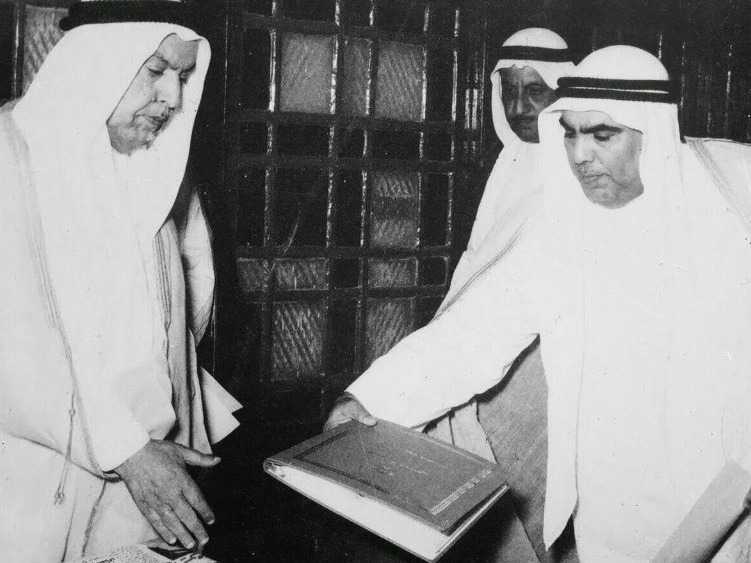
Kuwait commemorates the 64th anniversary of the ratification of the 1962 Constitution, which defines the state's general system and guarantees rights and duties.
Translated by Qiyas from القبس — Original source
KUNA – Today, Wednesday, marks the 64th anniversary of the approval of the country’s constitution, one of the most pivotal milestones in modern Kuwaiti history, as it defines the state’s general system of governance. The promulgation of the Kuwaiti Constitution on November 11, 1962, represents a crucial turning point in the nation’s democratic journey, particularly when recalling the efforts undertaken by its sons over several decades, beginning with the Constitutional Document of 1938, which paved the way for the adoption of the 1962 Constitution.
This anniversary serves as a cherished national occasion, during which Kuwaitis reflect with profound pride and honor on their country’s immortal historical record, reaffirming their steadfast commitment to a rich democratic tradition and the enduring principles of justice, freedom, equality, and equal opportunity.
Kuwait commemorates this historic event every year on November 11, recalling when the late Amir, Sheikh Abdullah Al-Salim Al-Sabah, may God have mercy on him, approved the Kuwaiti Constitution in 1962. Prior to the constitution’s adoption, Sheikh Abdullah Al-Salim Al-Sabah issued an emiri decree on August 26, 1961, concerning the Basic Law for the Transition Period, and called for elections to the Constituent Assembly with the aim of drafting a permanent constitution for the country.
On January 20, 1962, Sheikh Abdullah Al-Salim delivered a speech at the opening of the Constituent Assembly, stating: “In the name of Allah, the Most High, the Almighty, we open the proceedings of the Constituent Assembly, which bears the responsibility of laying the foundations of governance for the future.” During that session, the members of the Constituent Assembly were elected, and Abdul Latif Mohammed Thunayan Al-Ghanim was elected as the Assembly’s President, while Dr. Ahmad Al-Khatib was elected as its Vice President.
At the sixth session of the Constituent Assembly, the Constitution Committee was formed, comprising five members: Abdul Latif Al-Ghanim; the late Amir and Father of the Nation, Sheikh Saad Al-Abdullah Al-Salim Al-Sabah, may God have mercy on him, who was then Minister of Interior and Chairman of the Committee tasked with drafting the constitutional project; Hamoud Al-Zaid Al-Khalid, Minister of Justice; Yaqoub Yousef Al-Humaidi; and Saud Abdulaziz Al-Abdulrazzaq, both members of the Assembly.
The Committee presented the final draft of the Constitution to the Constituent Assembly, which approved it unanimously during a session held on November 3, 1962. The Assembly then submitted the draft to Sheikh Abdullah Al-Salim, who approved and promulgated it on November 11, 1962, in the form adopted by the Assembly. It was published in the Official Gazette the following day.
The Kuwaiti Constitution comprises 183 articles divided into five chapters. The first chapter deals with the State and the system of governance; the second covers the fundamental components of Kuwaiti society; the third addresses general rights and duties; the fourth pertains to the branches of government, including five sections: general provisions, the Head of State, the legislative authority, the executive authority, and the judicial authority; and the fifth chapter contains general and temporary provisions.
Kuwait’s democratic journey has passed through numerous political milestones, with the Constitution serving as an impenetrable fortress against many internal and external challenges, particularly during the Iraqi invasion catastrophe in August 1990, when Kuwaitis inside and outside the country united under the leadership and the flag of wise governance.
In April 1991, the late Amir Sheikh Jaber Al-Ahmad Al-Jaber Al-Sabah, may God have mercy on him, delivered a speech stating that “consultation and popular participation in the country’s affairs have been the norm of life in our nation, with various methods employed; however, the return of parliamentary life was what we agreed upon at the Popular Conference in Jeddah.” This was realized in October 1992, when parliamentary life resumed, and the National Assembly once again exercised its legislative and oversight functions.
Over the subsequent years, Kuwaiti emirs have consistently followed the path of their predecessors in all occasions and speeches, emphasizing their commitment to the Constitution and their dedication to entrenching it as the social contract between the ruler and the people, as well as reinforcing the principles of democracy and ensuring their proper application. This was underscored by the late Emir Sheikh Sabah Al-Ahmad Al-Jaber Al-Sabah, may God have mercy on him, in his address to the National Assembly on October 26, 2010, when he stated: “Our Constitution serves as a guardian for this democracy, clearly delineating through its provisions the jurisdiction, boundaries, and authorities of each branch of government. Any transgression against these provisions constitutes a violation of the Constitution itself and does not serve the public interest nor achieve the desired national objectives.”
Similarly, the late Emir Sheikh Nawaf Al-Ahmad Al-Jaber Al-Sabah, may God have mercy on him, affirmed this stance in his speech at the National Assembly session on September 30, 2020, during which he took the constitutional oath as Emir of the State. His Highness stated: “We reaffirm our pride in our Constitution and our democratic path, and we take pride in our Kuwait, a state of law and institutions, and in our commitment to embodying the spirit of a single family, a hallmark of Kuwaiti society, and to upholding our firm, foundational principles.”
His Highness the Amir of the State, Sheikh Meshal Al-Ahmad Al-Jaber Al-Sabah, may God protect and support him, reiterated this position on several occasions, including his address at the National Assembly session on October 8, 2020, to confirm his appointment as Crown Prince. He stated that he would champion the principle of popular participation and strive to paint a bright picture of Kuwait’s future, one characterized by stable democracy, the supremacy of national interests, adherence to the Constitution, a commitment to justice, and the pursuit of a dignified life for all.
Kuwait’s Constitution remains the cornerstone of the state’s legal and political framework, particularly because it has established a unique balance between authenticity and modernity, and between the powers of governance and the requirements of popular participation.
