Study on the Feasibility of Establishing a Gulf Water Linkage Project
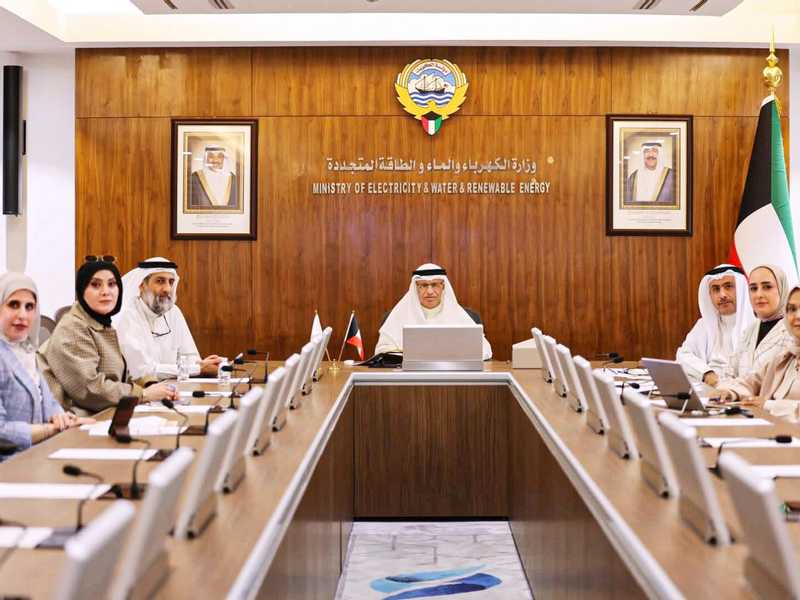
The Ministry of Electricity, Water, and Renewable Energy reaffirms its commitment to developing the national power system and enhancing Gulf electrical integration.
Translated by Qiyas from القبس — Original source
The Ministry of Electricity, Water, and Renewable Energy confirmed today (Thursday) its commitment to developing the national power system, enhancing the security and sustainability of energy supplies, and supporting Gulf electrical integration. In a statement following the participation of a delegation from the ministry in the Gulf Power Conference and Exhibition (Gulf Power 2026), hosted by the Omani capital Muscat, the ministry emphasized the importance of keeping pace with scientific and technological developments, exchanging expertise with specialized institutions and entities, and supporting scientific research and innovation in the energy sector.
The ministry clarified that the participating Kuwaiti delegation included Eng. Azhari Al-Mohammed, Chairperson of the Board of Directors of Gulf Power, and Eng. Sanaa Al-Gharib, Board Member, alongside several ministry engineers. It added that the participation aims to strengthen Kuwait’s presence at specialized technical and scientific forums and support cooperation and knowledge exchange among the countries of the Gulf Cooperation Council (GCC) in the field of electricity.
The conference, which saw the participation of officials, experts, and specialists in the electricity and energy sectors from GCC countries and various nations around the world, featured a Kuwaiti scientific paper titled “Enhancing the Resilience of Power Systems Using Interconnected Microgrids,” supervised by Eng. Ali Al-Muhanna. The paper discussed the development of a smart energy management system for interconnected microgrids, relying on the integration of solar and wind energy, battery energy storage systems, and emergency generators. This approach aims to enhance the reliability and continuity of electricity supplies during emergencies and main grid disruptions. Furthermore, the paper outlined a framework for energy exchange between microgrids according to specific operational priorities, contributing to optimal utilization of renewable energy sources, reducing reliance on backup fuel generators, and protecting energy storage systems.
In a related context, the ministry noted the participation of several Kuwaiti engineers and technicians in the conference proceedings, including Asma Al-Salal, Mohammed Al-Mari, and Atheer Al-Anzi, who contributed by chairing specialized scientific sessions and evaluating scientific and research papers. The ministry affirmed that this participation reflects the technical and engineering expertise of national cadres and their role in enriching scientific discussions and exchanging knowledge and expertise with specialists and researchers in the electricity sector at both the GCC and international levels.
Furthermore, as part of integrated and coordinated efforts to address emergencies and regional developments, an extraordinary meeting of the GCC Electricity and Water Cooperation Committee, with Kuwait’s participation, stressed the enhancement of Gulf water security and the necessity of ensuring the continuity of vital services and strengthening shared interests.
GCC Secretary-General Jassem Al-Budaiwi, during the meeting held today (Thursday) via video conference and chaired by Bahrain’s Minister of Electricity and Water Affairs, Yasser Hamidan (current Committee Chair), stated that enhancing GCC integration in the electricity and water sectors constitutes one of the strategic pillars for consolidating the security of GCC states and sustaining their development. Al-Budaiwi added that the move to strengthen the GCC power interconnection system and study the feasibility of establishing a water interconnection project among GCC member states reflects the shared vision of GCC leaders toward building an integrated, more prepared, and efficient Gulf system capable of facing regional changes and developments, thereby ensuring the continuity of vital services and enhancing the shared interests of GCC states and their peoples.
He emphasized that this meeting comes as a continuation of Gulf efforts aimed at translating the directives of the heads of state of the Cooperation Council into joint strategic projects and initiatives, and in following up on the implementation of decisions issued by the 19th Consultative Meeting held in Jeddah last April regarding the enhancement of cooperation and integration in strategic sectors, foremost among them the electricity and water sectors, which are considered fundamental pillars of the developmental and economic security of the Council’s member states. He pointed out that the rapid developments witnessed by the region underscore the importance of elevating the levels of Gulf coordination and integration in managing vital resources, enhancing the readiness, efficiency, and capacity of infrastructure to cope with various circumstances.
Review of studies: The extraordinary Gulf meeting reviewed the outcomes of studies and the recommendations proposed for submission to the Supreme Council. Among the most prominent is completing the requirements of the first phase of bilateral water interconnection among member states, leading to collective water interconnection, alongside completing the studies on the outcomes of the second and third phases and their technical, administrative, financial, and legal requirements, thereby strengthening Gulf water security.
National competencies: The Ministry of Electricity, Water, and Renewable Energy confirmed that its delegation participating in the Gulf Electricity Conference and Exhibition (GEC 2026), hosted by the Omani capital (Muscat), included a number of Kuwaiti engineers and technicians. The ministry stressed that this participation reflects the technical and engineering expertise possessed by national competencies and their role in enriching scientific discussions and exchanging knowledge and expertise with specialists and researchers in the electricity sector at both the Gulf and international levels.
