Of Egyptian Descent: Who is the Abdul Who Defeated Trump's Candidate?
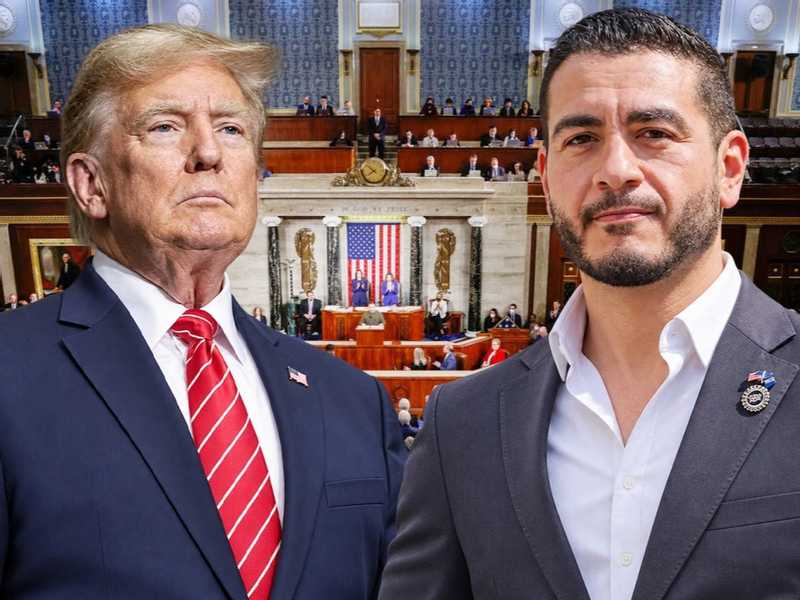
Abdul Rahman El-Sayed, a doctor and politician of Egyptian descent, wins the U.S. Senate seat in Michigan, becoming the first Muslim elected to this position, defeating Mike Rogers, backed by Donald Trump.
Translated by Qiyas from القبس — Original source
American physician and politician of Egyptian descent, Abdul El-Sayed, known as “Abdul El-Sayed,” has secured a new place in the political history of the United States after winning a U.S. Senate seat from Michigan, defeating Republican candidate Mike Rogers, who was backed by President Donald Trump. El-Sayed becomes the first Muslim elected to the U.S. Senate. His victory followed a race that attracted wide political attention, not only because of the contest for Michigan’s seat but also due to his political stances, particularly his criticism of U.S. military support for Israel and his position on the war in the Gaza Strip.
El-Sayed, 42, is a prominent figure within the progressive wing of the Democratic Party. He campaigned under the slogan of improving Americans’ lives, focusing on healthcare, reducing the cost of living, and curbing the influence of large corporations and the wealthy in politics. Born on October 31, 1984, in Rochester Hills, Michigan, to Egyptian immigrant parents, he grew up in the southeastern part of the state, where he attended public schools before enrolling at the University of Michigan. He studied biology and political science, graduating with honors in 2007. He then received a prestigious Rhodes Scholarship to continue his studies at the University of Oxford in the United Kingdom, where he earned a doctorate in public health in 2011. He also obtained a medical degree from Columbia University in 2014. He pursued a career in public health and epidemiology, serving as an assistant professor of epidemiology before taking on administrative roles in healthcare institutions in Michigan.
In 2015, he was appointed chief executive officer of the Detroit Department of Public Health, where he led efforts to rebuild the city’s healthcare services following its bankruptcy declaration, remaining in the post until 2017. Despite holding a medical degree, he did not complete a medical residency nor obtain a license to practice medicine independently, choosing instead to focus on public health and health policy rather than clinical work.
El-Sayed entered electoral politics in 2018 when he resigned as director of the Detroit Health Department and ran in the Democratic primary to select the party’s candidate for governor of Michigan. He finished second, behind Gretchen Whitmer, who won the Democratic nomination and went on to win the governorship. In 2020, El-Sayed joined the healthcare team within the Biden Transition Team, which included experts and figures from the Democratic Party tasked with shaping healthcare priorities and policies. He later served as director of the Wayne County Department of Health and Human Services and Veterans Affairs from 2022 to 2025.
He returned to electoral competition in 2026, running in the Democratic primary for the U.S. Senate seat from Michigan. He defeated Representative Haley Stevens in August to become the party’s nominee in the general election, before defeating Republican Mike Rogers in November.
El-Sayed’s electoral rise drew criticism from President Donald Trump and his Republican allies, who targeted him for his Islamic identity and political positions, with attacks even questioning his loyalty to the United States. Trump referred to him as a “jihadist,” accusations that sparked widespread condemnation from Democrats. The confrontation extended beyond his religious identity to encompass his views on U.S. foreign policy, particularly military support for Israel and the war in the Gaza Strip.
Mr. Abdul-Sattar has adopted a stance opposing the continuation of unconditional U.S. military aid to Israel, calling for an end to the use of American taxpayers’ funds to finance Israeli military operations, and arguing that these funds should instead be directed toward improving healthcare and education services within the United States. He has also described Israel’s war on Gaza as a “genocide,” and criticized what he perceives as double standards in U.S. positions on international conflicts, advocating for an end to military interventions and foreign wars, and a greater focus on domestic economic and social crises. These positions have become a central pillar of his electoral campaign, drawing criticism from his Republican rival and pro-Israel groups, while earning support from prominent progressive figures within the Democratic Party, including Senator Bernie Sanders and Representative Alexandria Ocasio-Cortez. With his victory, Abdul-Sattar opens a new chapter in the history of political representation for American Muslims, becoming the first Muslim elected to the U.S. Senate, following the election of several Muslims to the House of Representatives, including Ilhan Omar and Rashida Tlaib.
