Finance Minister: Closure of 'Hormuz' Would Have Implications for Global Economy and Supply Chains
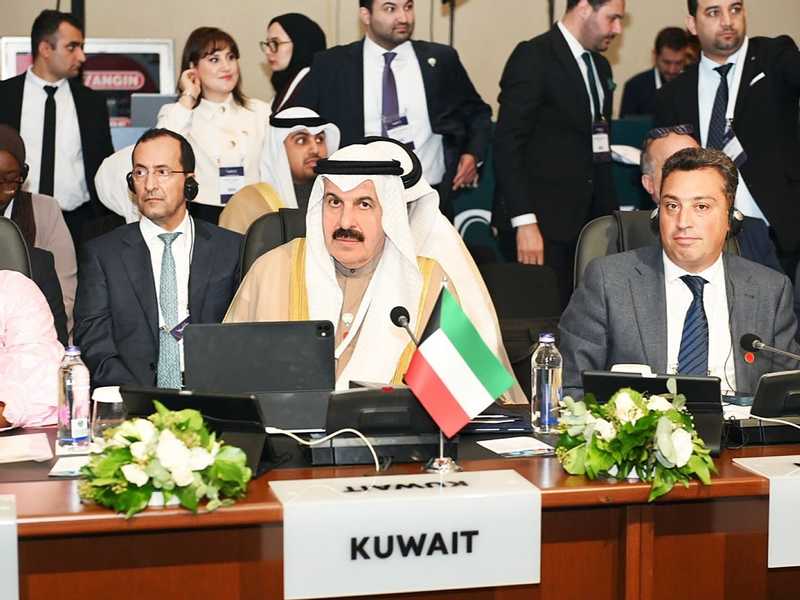
Al-Rafai affirms Kuwait's solidarity with affected countries and calls for urgent measures to address economic repercussions.
Translated by Qiyas from القبس — Original source
Kuwaiti officials emphasized that the repeated attacks targeting the Kingdom of Saudi Arabia, several Gulf Cooperation Council (GCC) countries, and other Arab and Islamic member states of the Organization of Islamic Cooperation (OIC) pose a threat to regional security and stability, casting a shadow over the global economy and supply chains, particularly in light of the closure of the Strait of Hormuz and its repercussions affecting countries worldwide. This was stated by Dr. Yaqoub Al-Rafai, representative of the Deputy Prime Minister and Minister of Finance, and Chairman of the OIC Permanent Committee for Economic and Commercial Cooperation (COMCEC), during his address while leading Kuwait’s delegation at the 42nd COMCEC Ministerial Meeting, which commenced today in Turkey and concludes today.
Dr. Al-Rafai affirmed Kuwait’s full solidarity with member states that have been targeted by these attacks, stressing the urgent need to adopt immediate measures and policies to address the resulting economic and trade repercussions and mitigate their impact on member states’ economies and supply chains. He added that intra-OIC trade, despite the potential and resources available and the genuine demand in targeted markets, continues to face practical challenges reflected in current indicators and figures, particularly regarding access to trade financing for small and medium-sized enterprises (SMEs), which constitute a fundamental pillar of member states’ economies.
Trade Financing
Deputy President of Turkey, Cevdet Yılmaz, representing President and COMCEC Chairman Recep Tayyip Erdoğan, officially opened the meeting. Kuwait’s delegation was led by Minister of Finance Dr. Yaqoub Al-Rafai, accompanied by Kuwait’s Ambassador to Turkey, Mohammed Al-Shaboub, and Kuwait’s Consul General in Istanbul, Khaled Al-Khalifa. The event was also attended by the OIC Secretary-General, several ministers, heads of delegations from member states, and the President of the Islamic Development Bank.
According to a statement from the Ministry of Finance, the current ministerial session focuses on governmental efforts to develop effective trade financing tools, thereby boosting exports among OIC member states. Participants discussed various topics related to enhancing trade financing mechanisms and increasing exports, alongside adopting a set of technical reports, recommendations, and action plans for sectors including trade, transport and communications, agriculture, tourism, financial cooperation, poverty alleviation, and digital transformation. These discussions are part of the work of the COMCEC working groups, aimed at strengthening cooperation among member states and supporting sustainable economic and social development pathways.
A Key Platform
The OIC Permanent Committee for Economic and Commercial Cooperation (COMCEC) is one of the primary platforms for economic and commercial cooperation among OIC member states. Established by a decision of the Third Islamic Summit Conference in 1981, its chairmanship was assigned to the President of Turkey. The committee comprises the finance and economy ministers of member states and works to examine economic and trade issues at the international and regional levels, assess their implications for member states, and coordinate efforts to enhance economic and commercial cooperation and support joint development.
