Anticipation of Iran's Response to Vance's Message: Reviving Talks or Escalation
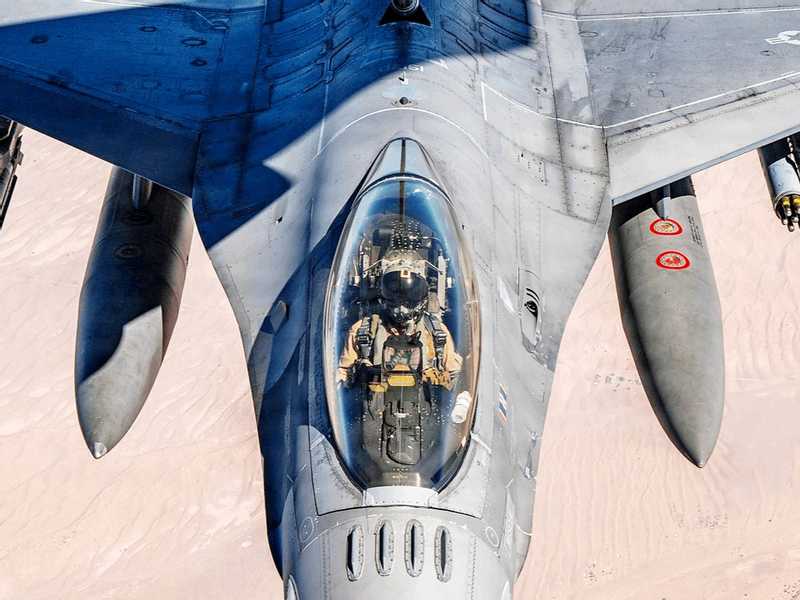
Washington is witnessing intense diplomatic moves led by Vice President JD Vance, via a message addressed to Tehran, in an effort to avoid an anticipated military escalation and open the door to resuming negotiations between the two sides. The Wall Street Journal revealed that JD Vance sent a message...
Translated by Qiyas from القبس — Original source
Washington is witnessing intense diplomatic activity led by Vice President J.D. Vance, through a message addressed to Tehran, in an effort to avoid an anticipated military escalation and open the door to resuming negotiations between the two sides. The Wall Street Journal revealed that Vance sent a message to Iranian National Security Council Secretary Mohsen Rezaei, at the direction of President Donald Trump. The newspaper quoted U.S. officials and informed sources as saying that Vance is trying to determine whether there is common ground with Tehran, in order to persuade Trump not to issue a final order for a short, intense attack on Iran ahead of the midterm elections scheduled for next Tuesday. The New York Times reported that Vance initiated contact with Rezaei through a message sent last week via Qatari mediation and delivered last Sunday. It noted that Vance emphasized in the message the necessity for Iran and the United States to resolve the dispute through direct negotiations, insisting on the need to reach a solution to the nuclear issue and that Iran’s nuclear program must be placed on the negotiating table from the outset.
While the U.S. President downplayed the significance of the message in remarks to journalists today, categorizing it under the provision of medical supplies to Iran to assist those suffering from health problems, Tasnim News Agency quoted Iranian sources as saying that Vance had sent a message to Rezaei and that no response had been received yet, and that Tehran insists on Washington implementing its seven conditions and rejects any stance that deviates from this framework. A source told News Nation that if Iran rejects the proposal, Trump may be left with no option but to order strikes against Iran, noting that discussions so far have been positive but no final agreement has been reached.
The Associated Press, citing diplomats, reported that U.S. officials briefed regional allies and several Middle Eastern countries on the need to prepare for the possibility of renewed military action against Iran following the midterm elections. The sources clarified that the new round of operations could last several days, with U.S. officials urging allies to take precautionary measures in anticipation of a retaliatory Iranian response.
Details follow: Amid reports that U.S. Vice President J.D. Vance sent a message to Tehran to launch new peace talks, President Donald Trump attempted to downplay them, telling journalists today that he had not directed the Vice President to start new negotiations. When pressed on the matter before his departure for a campaign rally in Ohio, Trump replied, “No,” adding, “They need help with medical supplies and other different things... Vance asked me for my opinion, and I told him: If you want to do that, it’s fine. It’s simply about providing supplies to help people with health problems.”
The U.S. President has made the midterm elections a dividing line between renewing the military campaign against Tehran to push it toward negotiations after weakening its capabilities, as the military option will return as a key item on the President’s agenda for exiting the Iranian quagmire. However, before the November 3 deadline, mediators, including Saudi Arabia, Pakistan, and Turkey—signatories to the Mecca Defense Alliance—as well as the Qatari mediator, have intensified their efforts to persuade Iran to make concessions that could spare the Middle East from a new, more destructive war. Meanwhile, official and military sources told Fox News that moves are underway in the Middle East to provide President Donald Trump with options if he decides to resume strikes against Iran.
An initiative to prevent the resumption of conflict. The Wall Street Journal reported that Vice President Vance sent a message to Mohsen Rezaei, secretary of Iran’s Supreme National Security Council and one of the system’s most hardline figures, as well as the longest-serving commander of the Islamic Revolutionary Guard Corps (IRGC), in an effort to revive peace negotiations. The newspaper stated that Vance was communicating directly with Rezaei and sent the message under the direction of President Trump, noting that the initiative aims to determine whether Washington and Tehran can find common ground to avoid a renewed conflict.
According to the newspaper, the message was sent last week via Qatari intermediaries and delivered to Rezaei on Sunday. It proposed an early meeting between American and Iranian officials, with Vance offering to lead the American negotiating team. The newspaper reported that Rezaei is expected to issue an official response by today. The message did not specify a date or location for the negotiations, but the newspaper quoted American and Iranian officials as saying that direct talks could begin as early as next week in Qatar or Turkey.
According to Axios, Vance’s message explicitly stated that any negotiations aimed at preventing new American military strikes would require discussions on Iran’s nuclear program.
An expected response on Saturday! In a related development, an insider familiar with diplomatic affairs confirmed to CBS News that Qatari intermediaries presented Iran with a new draft agreement to end the war, despite Iranian denials. A response from Tehran is expected by the end of the week, most likely on Saturday.
Vance’s message and the Qatari proposal come to open a window of hope amid escalating tensions, coinciding with Iran’s search for an exit from a state of “neither war nor peace.” Notably, Rezaei met in Tehran on Monday with Saudi Defense Minister Prince Khalid bin Salman, Pakistani Army Chief General Asim Munir, and Turkish Intelligence Chief Ibrahim Kalin. The following day, Rezaei received Vance’s message from the Qatari delegation and met on Tuesday with Supreme Leader Ayatollah Ali Khamenei’s son, Mojtaba Khamenei, who is reportedly tasked with leading efforts to extricate the country from the “neither war nor peace” situation by implementing Iran’s previously proposed “Seven-Day Plan.” Foreign Minister Abbas Araghchi reiterated this plan on Wednesday, posting on X that his country continues to review ideas to find a diplomatic solution to the war. He wrote: “While our forces are on standby for defense, Iran continues to give diplomacy a chance to succeed. We are in close and continuous contact with intermediaries to review ideas that ensure the implementation of our Seven-Day Plan in less than a week.”
President Masoud Pezeshkian also described Mojtaba Khamenei’s directive to end this state as an important step in shaping Iran’s future.
On the ground, however, the American military buildup remains unchanged, and the IRGC has continued its threats against ships in the strategically vital Strait of Hormuz. Brigadier General Hossein Habbibi, a spokesperson for the IRGC, called on the U.S. Central Command to “prove” that the Strait of Hormuz has been cleared of mines with independent evidence, rather than through statements.
Meanwhile, the UK Maritime Trade Operations (UKMTO) center announced on Thursday that a “burning” vessel had been spotted in the Strait of Hormuz. The IRGC also claimed to have seized a U.S. reconnaissance drone near the strait in an “electronic warfare operation.” However, U.S. Central Command dismissed these claims, with Captain Tim Hawkins stating: “The IRGC has lied repeatedly out of desperation, and today is no different.”
Hegseth dismisses Pentagon’s top military planner: A Pentagon official told CBS News that Defense Secretary Pete Hegseth has dismissed the service’s top military planner. The official said, “Army General Brett Siple was accused of misconduct for leaking classified information related to the war with Iran and the Russia-Ukraine war,” adding that Siple failed three lie-detector tests concerning his sharing of classified information with the press, and that the case has been referred to the Department of Justice. Siple is the latest in a series of generals who have been removed, having been relieved of his post as Vice Chairman of the Joint Chiefs of Staff for Strategy, Plans, and Policy. He is the second general to be dismissed from this position under Hegseth. President Trump later indicated that Siple would face “serious problems.”
