Standard & Poor's: Budget Strength Supports Resilience of Gulf Sovereign Ratings
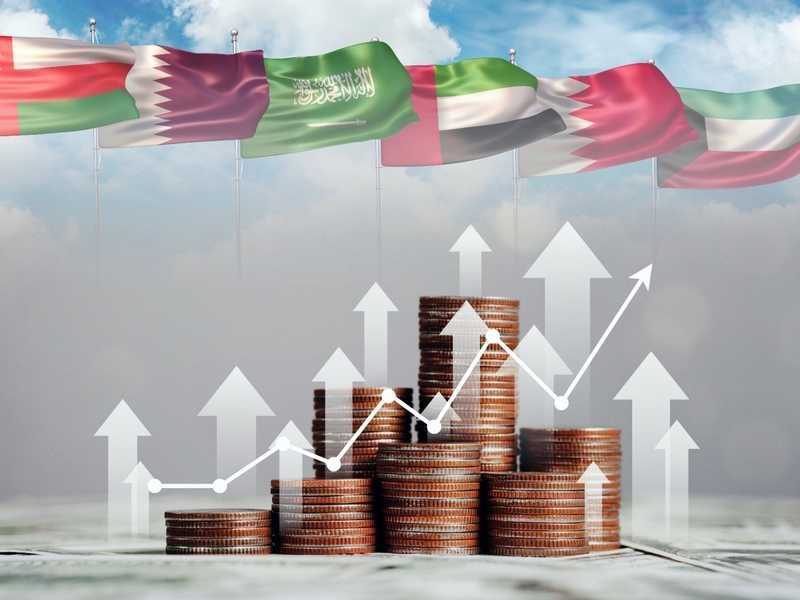
S&P Global confirms the resilience of Gulf states' sovereign ratings due to strong budgets, while changing Iraq's outlook to negative due to conflict.
Translated by Qiyas from القبس — Original source
S&P Global reported that the fiscal strength of Gulf Cooperation Council (GCC) countries’ budgets supports the resilience of their sovereign ratings and enhances the outlook for recovery from the region’s conflict fallout. Benjamin Young, Managing Director and Head of Sovereign Ratings for Europe, the Middle East, and Africa, told Bloomberg Middle East in an interview on the sidelines of the Dubai International Finance Conference that the impact of shocks does not necessarily appear immediately, warning that a prolonged war could weaken the expected recovery, while permanent shifts in supply chains could damage the region’s economic foundations.
In contrast, Young noted that the fiscal flexibility of most GCC governments, along with recovery prospects, has prevented the conflict from triggering rating or outlook changes, except for Iraq, whose outlook was revised to negative. He affirmed that the agency continues to monitor medium-term risks, as the credit assessment composition changes due to the war.
S&P Global maintains a stable outlook on Saudi Arabia’s credit rating, expecting the kingdom to restore its fiscal position and see medium-term growth recovery after this year’s contraction. According to Young, these expectations are based on the assumption that conflict-related disruptions will persist through 2027, with domestic demand—driven by population size—continuing to support growth and revenues, alongside government benefits from higher oil prices.
For the United Arab Emirates, the agency does not expect an economic contraction this year, unlike most regional economies, thanks to its diversified activities and broad base. However, it sees risks for the non-oil private sector, as companies cannot indefinitely draw down inventories without significant pressure on profit margins, given their reliance on imported inputs and external export markets. Young warned that a permanent shift of supply chains outside the region could weaken long-term growth, though the agency has not yet observed such a trend.
In Kuwait, the agency forecasts fiscal deficits for about two years due to the conflict and constraints on export routes. However, the country’s net foreign sovereign assets, amounting to roughly 60% of GDP, provide a substantial buffer to absorb these deficits and serve as a pillar for credit rating resilience, according to Young.
Regarding Bahrain, Young stated that its BB- rating with a stable outlook is based on the expectation that the kingdom will continue to receive sufficient support to maintain its current rating and avoid payment disruptions, an assumption he described as still “largely entrenched.”
Looking further ahead, S&P Global expects oil production to rise after 2027 beyond pre-war levels, increasing supply as supply disruptions subside, which will lead to lower prices. Young believes this underscores the importance of fiscal discipline and monitoring the oil prices needed to balance budgets and current accounts in the region’s countries.
