Clayface: When Physical Horror Becomes Visual Art
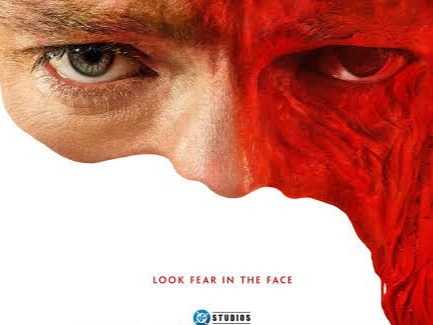
A DC universe body horror film tells the story of Matt Hagen, who undergoes physical transformation after his face is disfigured.
Translated by Qiyas from القبس — Original source
It seems that the villains of the DC universe know their way to the box office better than its heroes. The Joker previously created a global phenomenon on a modest budget, proving that audiences are willing to follow a charismatic villain to the end. Today, Clueless repeats the same lesson, but with a secondary Batman villain, in a body horror film rated for adults only. The film topped the US box office in its opening weekend with approximately $24 million, and grossed nearly $43 million worldwide in three days, a figure close to its production cost of around $44 million. The comparison with Superman: Legacy, from the same universe which premiered earlier this summer, clarifies the point: the latter’s budget exceeded $170 million, and its final earnings hovered around $126 million. Villain films do not require sky-high battles or collapsing metropolises; they need a complex character, a dark narrative, and a compelling actor. Consequently, they cost less and turn a profit faster.
The story of a man who loses his face unfolds as a drama about Matt Hagen (Tom Reese Harris), a film actor at the height of his golden era: handsome, talented, Oscar-nominated, and a star rising rapidly. But he makes a mistake in a single night, engaging in a reckless affair with Mia, the intimate friend of a dangerous gangster. Revenge comes harshly—not with a bullet or a corpse, but by destroying his greatest asset: his face. The gangster does not want to kill Hagen; he wants to leave him alive but worthless. From here, the film follows two parallel lines: the attempt to restore his face after all cosmetic surgeries fail, and the quest for revenge against those who disfigured him and manipulated justice and the law to escape punishment.
Hagen submits himself to treatment by Dr. Caitlin (Naomi Akiko), who conducts experiments using nanocellular technology and artificial intelligence to repair damaged cells. The medical procedure succeeds in healing the protagonist, but its side effects trigger horror. The film’s structure is tight in its first half: the pacing is slow but thought-provoking and curiosity-inducing. The motivations are clear, and the two narrative threads advance in parallel. However, the physical transformation storyline remains more thrilling on screen than the revenge plot, which ultimately appears predictable and conventional, recycling a plot we have seen many times before.
A different tone... and a sound decision. The film is the third installment in James Gunn’s new DC Universe, following Superman (2025) and Superman: Legacy (2026), and surprises us with a tone completely different from its predecessors. This is not a bright, large-scale adventure about a noble hero defending a cause, but a dark film about the birth of a villain. Peter Safran, head of DC Studios, described it as body horror in the style of David Cronenberg’s films. The film operates in the realm of the “anti-hero,” the central character who earns our sympathy despite lacking traditional heroic qualities such as nobility, sacrifice, and integrity; we understand and follow him, but we cannot applaud him. Hagen then takes a further step toward complete evil.
The script’s greatest achievement is its manipulation of the audience’s emotions. We begin by sympathizing with a young man who made a human error and paid a price greater than his crime; indeed, we secretly wish for him to take revenge. Gradually, this sympathy turns into anxiety, then revulsion, and finally fear for his fate. The film does not pinpoint the exact moment when we stop loving Hagen; we suddenly discover that we have already stopped.
The airplane scene is one of the film’s best. It takes place on a plane encountering severe turbulence. The bumps incite panic among passengers, and hands cling to seats, while Hagen is disturbed only by his own condition. He feels his features slipping out of control, rushes to the restroom, and sees in the mirror that his skin has stretched so much it has closed his eyes. He grabs scissors and cuts the skin above his eyes. The scene succeeds on two levels. Physically, it is one of the film’s most harrowing moments. Dramatically, it encapsulates the nature of the character in minutes.
Everyone is afraid for their lives, while he is afraid for his face. The face that was once his passport to the world has now literally blinded him. This is a symbolic scene that needs no dialogue to explain; it relies solely on the contradiction between the passengers’ confusion outside and Hagen’s isolation in front of the mirror. In the age of Instagram, with its obsession with dazzling images and filters that sculpt faces with a single touch, the question posed by the mirror makes *Cliffside* feel more like a film about our era than a story from the world of comics. Hagen knows himself only through the mirror and the eyes of his fans, so when his face is disfigured, he does not seek a new meaning for his life; he wants to restore his former image at any cost. The doctor’s procedure is nothing more than a filter in the image of a scientific invention, a technology that promises you the face you want without asking what you will lose in return, even if that price is your very self.
The comparison with Coralie Fargeat’s film *The Substance*, released two years ago, is inevitable. It tells the story of a television star who turns to a chemical substance to produce a younger, more beautiful version of herself, living at the expense of her original body. Both films are body horror stories set behind the scenes of the entertainment industry, each about a person who destroys his life to preserve his beautiful image. However, *The Substance* is sharper and clearer in its message; its satire deliberately approaches caricature, targeting an industry that despises women as they age and lose their beauty. *Cliffside*, by contrast, is less satirical and darker. Its protagonist is a young man who lost his beauty in a reckless night. The film poses a clever question about him: Did he deserve success as an actor or as a model? At times, we doubt whether his talent is merely an accessory to his handsomeness, and that his Oscar nomination itself was a celebration of his good looks rather than his true ability. The film leaves this question open.
Brilliant ideas on the periphery: The protagonist is an actor, and his profession theoretically involves transforming from one character to another in what is called the art of method acting. He then gains a supernatural ability that allows him to do this literally with his body, transforming his body and voice into any character he desires. This is one of the film’s most original ideas, yet also one of its most underutilized. The film hints at it in several places but does not build drama upon it. This thread alone could have made a film about authenticity and forgery, and the essence of the acting craft, but it remained merely a brilliant idea on the periphery.
The film presents artificial intelligence in the common vision found in many modern science fiction films: as a useful, even great, technology as long as it remains under control, and catastrophic when it gets out of hand. This approach is traditional and adds nothing new intellectually, but its application is successful because the out-of-control machine here is not in a distant laboratory, but directly under the protagonist’s skin. The cells that restored Hagen’s face do not know when to stop, nor do they distinguish between repair, transformation, and recreation. Nevertheless, this thread remains vague in many of its details, particularly regarding how the experiment actually works, the reasons for its failure, and the meaning of its side effects.
Body horror is one of the film’s best elements. Shots of skin stretching on its own, sharp machines slicing it mercilessly, features sliding out of place, and a body rebelling against its owner. Some scenes will make you involuntarily look away from the screen. This is not a comfortable film to watch. It is disturbing, and it delivers its disturbance effectively. The visual effects are sophisticated, especially in the morphological transformations and the depiction of disfigurement details. A key feature of the horror here is that it is tied to character development; each disfigurement represents a step in Hagen’s journey toward savagery.
The film bears the unmistakable imprint of its creators. Director James Watkins, who terrified us two years ago with *Speak No Evil*, bringing horror that slowly creeps in from ordinary details. Then there is writer Mike Flanagan, author of *Doctor Sleep* and the originator of the film’s concept, where sorrow lies hidden beneath the crust of horror.
Amini also touches on this, as the writer of Drive, where the influence of modern film noir appears in the gangster’s line of revenge. Gotham and its visual representation succeed, with Watkins and cinematographer Rob Hardy presenting a gloomy, fog-shrouded Gotham illuminated by neon signs, and suffocating background streets that seem to close in on its protagonists. The city is gleaming from afar and corrupt within, much like its hero. Most of the film was shot in the English city of Liverpool, standing in for Gotham—the same city used for The Batman. Its old architecture lends the film a realistic texture, making it appear larger than its budget. The casting of Tom Rhys Harries in the lead role was also a shrewd choice. He is a known actor who has not yet achieved full stardom, much like his character: a man on the rise who has not yet fully realized his potential. If a major star had played the role, we would have lost some of the tension; Harries, by contrast, seems to genuinely gamble with his image. He performs the role with clear commitment, successfully navigating the transition from the allure of the beginning to the horror of the end. Naomi Ackie also stands out in her role as therapist Caitlin, who struggles between her scientific ambitions, her humanity, and her feelings as a woman. Ideas that fail to converge. The film’s fundamental problem is that it fails to fully exploit the richness of its ideas. It raises many brilliant concepts—such as appearance obsession, celebrity culture, artificial intelligence, and an actor who shifts from the metaphorical to the literal. Each idea shines on its own, but fizzles out before it matures or intersects with others, so the film never delivers a coherent statement about the world through any of them. It seems the script’s passage between two writers left its mark: Flanagan wrote the first draft and then stepped away, and Amini rewrote it. Flanagan said before the premiere that the film was no longer his and that he had not yet seen it. The result is two adjacent characters who never fully merge. In conclusion, Clive is a good film, not a masterpiece. Its strengths are clear: masterful physical horror, visuals that transcend its budget, a convincing performance by Tom Rhys Harries, skillful manipulation of audience emotions, and striking violence scenes. Its weaknesses are also evident: many unfinished ideas and a conventional revenge plot. Nevertheless, it is ultimately a distinct experience within the DC universe, worth watching for those who can withstand physical horror in all its wildness and madness.
