Olive oil before meals may help limit blood sugar spikes
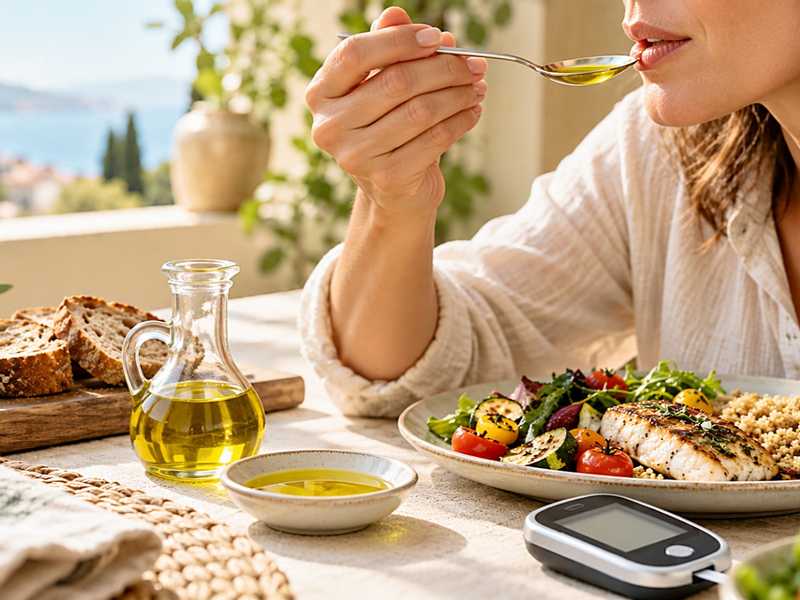
A study on mice shows that consuming olive oil before glucose slows gastric emptying and limits blood sugar spikes, but evidence in humans is limited
Translated by Qiyas from القبس — Original source
Dr. Wala’a Hafiz highlights the growing interest in the sequencing of fat and carbohydrate consumption. Meanwhile, social media platforms promote taking doses of olive oil in the morning as a means to combat aging and improve skin radiance, without scientific evidence to substantiate these claims. A recent study published in the journal *Diabetes* found that administering olive oil to rats before glucose slowed gastric emptying and mitigated the early spike in blood sugar levels. However, as the study was conducted on animals, it does not prove that the same effect occurs in humans or that consuming oil on an empty stomach in the morning offers any benefit.
What did the study test? Researchers gave one group of rats olive oil, followed by a glucose solution 15 minutes later. A second group received water before glucose, while a third group received glucose before olive oil. The researchers then compared blood sugar levels among the groups and conducted additional experiments on rats with type 2 diabetes and severe insulin deficiency. The results showed lower blood sugar spikes in the rats that consumed olive oil before glucose, along with delayed gastric emptying.
How did the researchers interpret the results? The study suggests that consuming olive oil before glucose may trigger an interplay between gut hormones and neural signals, thereby slowing gastric emptying and delaying the arrival of glucose in the intestines. *Medical News Today* quoted the study’s lead author, Daichi Yabe, a professor of medicine at Kyoto University in Japan, stating that the order in which nutrients reach the intestines may affect the speed at which glucose moves from the stomach to the intestines. Nutritionist Jennifer Palian believes that slowing gastric emptying was likely the key factor in reducing the early sugar spike in the experiment, rather than increased insulin secretion, as no significant increase in insulin was observed in the rats.
What do we know about its effects in humans? Human evidence is limited but includes a small study involving six men with type 2 diabetes. Participants consumed 30 milliliters of olive oil half an hour before a meal of mashed potatoes. The results showed slower gastric emptying, delayed blood sugar rise, and increased secretion of GLP-1, compared to consuming water before the meal or adding the oil to it. Another study indicated that eating fish or meat before rice may slow gastric emptying and improve blood sugar response. However, these limited experiments are insufficient to confirm the broad impact of food sequencing or to consider it a substitute for established treatments or dietary guidelines.
Olive oil as part of a diet: Olive oil contains monounsaturated fatty acids, notably oleic acid, as well as vitamin E and polyphenols. Nutritionist Nava Bramsma explains that these compounds possess antioxidant and anti-inflammatory properties, which may explain the association between oil consumption and improvements in certain cardiovascular and metabolic health markers. A previous study published in the *Journal of the American College of Cardiology* (JACC) linked daily consumption of more than 7 grams of olive oil to a reduced risk of death from various causes. Additionally, replacing butter, mayonnaise, or dairy fats with an equivalent amount of olive oil was associated with a reduction in mortality risk ranging from 8% to 34%.
