Education Minister Discusses Digital Project Updates and AI Solutions in Education with "Google Cloud"
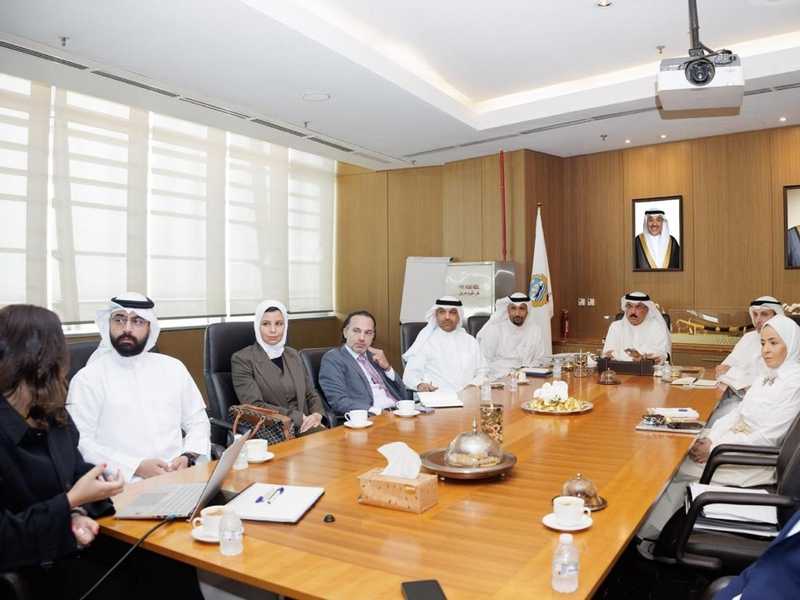
Jalal Al-Tabtabaei discusses digital education development with Google Cloud
Translated by Qiyas from القبس — Original source
As part of the Ministry of Education’s efforts to accelerate digital transformation and develop the education system, Minister of Education Engineer Jalal Al-Tabtaba’i held discussions with a delegation from Google Cloud regarding the latest developments in joint digital education projects and ways to enhance the use of modern technologies and artificial intelligence to support the teaching process, improve the competence of educational staff, and enhance learning outcomes. The meeting took place with the attendance of Deputy Minister of Education Dr. Khaled Al-Rashid, several ministry leaders, Mazen Abdullah, Director of the Education Sector for the Middle East, North Africa, and South Asia at Google Cloud, Kuwait Country Manager Engineer Shaima Al-Turkiet, and several company representatives. The meeting reviewed ongoing projects, their implementation stages, and proposed technical solutions to develop them and maximize their utility in the educational field.
The meeting also reviewed updates on the “Smart School Albus” project, whose pilot phase launched at Jumana bint Abi Talib Secondary School. Both sides discussed implementation stages, technical and operational challenges facing the project, and proposed digital solutions to address them, alongside mechanisms to measure its impact on teaching practices, teacher competence, and student engagement levels, thereby contributing to evaluating the trial’s results and identifying opportunities for future expansion.
Additionally, the meeting discussed developments in the teacher training project on using artificial intelligence tools provided by Google for Education, which targets more than 40,000 male and female teachers. The discussion covered monitoring implementation stages and expanding the scope of its use to enhance the digital skills of educational staff, support the development of teaching methods, prepare educational content, and design classroom activities using modern technologies.
The meeting also addressed opportunities to develop innovative digital solutions that respond to the needs of the educational field, enhance integration between systems and educational platforms, and focus on improving performance efficiency, simplifying procedures, and practically and sustainably leveraging technology to serve school environment requirements and support the educational development process.
Minister of Education Engineer Jalal Al-Tabtaba’i emphasized the importance of continuing to monitor digital projects according to clear performance indicators and measuring their actual impact on education quality. He stressed that digital transformation represents one of the main pillars of the education system reform plan, and that the success of technological initiatives depends on their contribution to empowering teachers, developing the school environment, and improving learning outcomes.
