Al-Saqer: 'National' Continues to Deliver Strong Performance
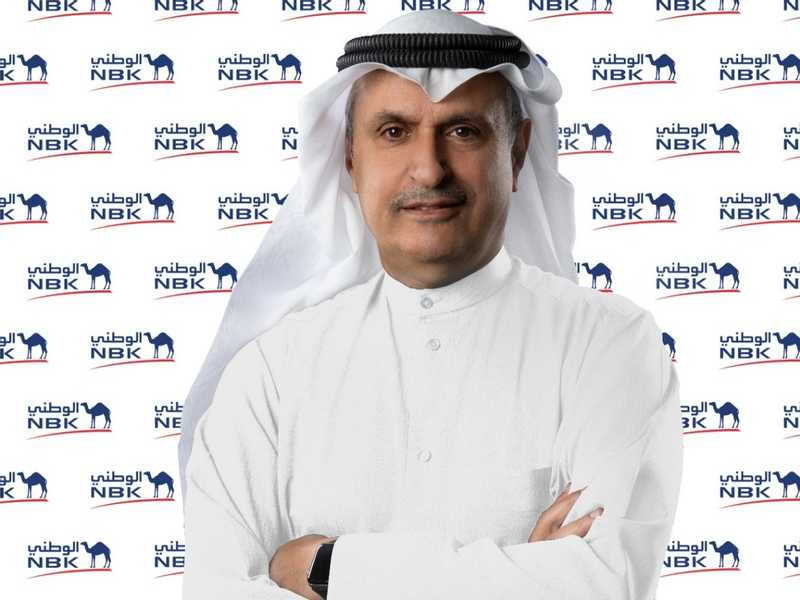
National Bank of Kuwait announced strong financial results and growth in operational revenues.
Translated by Qiyas from القبس — Original source
- Net operating revenues exceeded KD 1 billion, up 3.8% year-on-year despite challenges. National Bank of Kuwait held its analysts and investors conference for the financial results of the third quarter and the first nine months of 2026. Isam Jasem Al-Saqer, Vice Chairman and Chief Executive Officer of National Bank of Kuwait Group, presented the business environment, key milestones, and achieved financial results, alongside local, regional, and global economic outlooks.
Al-Saqer began by highlighting the bank’s financial performance, noting that NBK achieved a net profit of KD 481.7 million in the first nine months of 2026, compared to KD 467.4 million during the same period in 2025. He added that net operating revenues rose by 3.8% year-on-year to surpass KD 1 billion, emphasizing that this growth reflects the strength of the bank’s diversified business model and its wide geographic footprint, while also supporting the bank’s robust performance despite challenges in the operating environment.
He pointed out that return indicators remained strong, with the return on average assets reaching 1.39% in the first nine months of the year, while the return on average shareholders’ equity stood at 13.9%.
On the strategic front, Al-Saqer reported that the bank continued to make significant progress in implementing its digital transformation plans and enhancing its innovation capabilities. During the third quarter of 2026, the scope of integrated digital services expanded to include more key products in the personal banking sector. This included the launch of Kuwait’s first fully integrated digital experience for loan applications, the ability to open bank accounts for children, and the digital application and issuance of credit cards.
He stressed that diversifying the group’s business activities and revenue sources remains a cornerstone of the bank’s strategy, leveraging its regional and international presence, its wealth management sector, and Bank of Bahrain and Kuwait (Bahrain Kuwait Bank) – the group’s Islamic banking arm.
Al-Saqer explained that during the third quarter, the bank expanded its presence in the Gulf region by opening a branch at Qatar Financial Centre, strengthening relationships with clients in a market where NBK has maintained a long-standing presence for many years.
Regarding sustainability, Al-Saqer confirmed the continued integration of Environmental, Social, and Governance (ESG) criteria into the group’s business and operations. He noted that by September 2026, the bank had achieved 60% of its target of USD 10 billion in sustainable financing by 2030, reflecting effective implementation and the bank’s commitment to achieving long-term sustainable growth.
Future Outlook
Al-Saqer affirmed that the bank’s strong reputation and outstanding performance form a solid foundation for continued growth and reinforcing NBK’s leadership in the local market. He clarified that the bank’s strong capital base and robust liquidity levels enable it to expand lending activities in tandem with the recovery of economic activity. Meanwhile, its established and trust-based relationships with the public and private sectors continue to solidify the bank’s position at the forefront of financial institutions supporting Kuwait’s investment plans, infrastructure projects, and economic transformation.
Local Operating Environment
Regarding the Kuwaiti economy, Al-Saqer explained that economic activity regained momentum after slowing down in the second quarter of the year. Oil production recovered noticeably compared to previous low levels, although it remained below pre-conflict levels. The pace of recovery in the coming period will depend on export conditions.
For its part, he noted that non-oil activity demonstrated greater resilience, supported by progress in implementing the development agenda and a noticeable recovery in the pace of tenders for public utilities, infrastructure, and energy sectors. He anticipated that lending activity under the recently enacted housing finance law would begin to grow gradually, adding that the true growth potential would become evident in the longer term as more ready-to-distribute housing units become available. He further stated that, independently of the law’s scope, lending activity is expected to improve as more business is directed toward implementing infrastructure projects and developing these new cities.
On a separate note, Sujit Rongy, Chief Financial Officer of National Bank of Kuwait Group, said the group continued to deliver strong financial and operational performance during the first nine months of 2026, despite ongoing economic uncertainty and escalating regional geopolitical tensions since late February. He emphasized that the robustness of the business model, diversified revenue streams, and the group’s geographic spread contributed to enhancing its ability to navigate challenges and maintain strong profitability levels.
He clarified that the group achieved a net profit of 481.7 million Kuwaiti dinars during the first nine months of the year, an increase of 3.1% compared to the same period last year. Net profit for the third quarter reached 156.9 million dinars, also up by 3.1%, supported by stable operational performance and a relative decline in net credit loss provisions and impairment losses.
Rongy added that net operating income rose to 1 billion dinars, a 3.8% year-on-year increase, bolstered by a strong contribution from non-interest income sources, which accounted for 25% of total operating income, reflecting continued balance in the revenue structure. Non-interest income grew by 14.2% to reach 251.4 million dinars, while fee and commission income increased by 11.9% to 181.6 million dinars, reflecting strong contributions from various business segments and markets in which the group operates.
He noted that fee income growth was primarily driven by asset management, lending, and card business activities. Card revenues in the third quarter benefited from increased travel and air traffic during the summer season. Additionally, foreign exchange trading gains of 40.7 million dinars supported revenues, benefiting from improved transaction volumes and positive changes in exchange rates.
Rongy pointed out that international operations and Islamic banking services, the two main pillars of the group’s diversification strategy, together contributed approximately 39% of the group’s total profits, reflecting the success of the geographic and operational diversification strategy adopted by the bank.
He explained that the continued issuance of Kuwaiti dinar-denominated government treasury bills contributed to a gradual increase in the interest-bearing reserves held at the Central Bank of Kuwait, which had a somewhat positive impact on net interest income and net interest margin. He expressed the bank’s hope that the continued issuance of debt instruments would enable it to deploy liquidity in higher-yielding assets at the Central Bank of Kuwait.
The general budget, noting that the Group’s total assets reached 46.9 billion Kuwaiti dinars by the end of September 2026, an annual increase of 4.5%, while total loans and advances rose by 8.2% year-on-year to reach 28.2 billion dinars. He clarified that loan growth was primarily driven by the Kuwaiti market, with contributions from overseas operations despite challenges posed by regional developments. Customer deposits increased by 13.5% year-on-year, with growth stemming from both the domestic and international markets, and Kuwait accounting for the largest share of this increase.
He affirmed that asset quality remained stable, with the non-performing loans (NPL) ratio staying at a low level of 1.29%, while the NPL coverage ratio stood at 236%, reflecting the Group’s prudent approach to risk management and provision building. Ronqi explained that the bank holds credit provisions amounting to 940 million Kuwaiti dinars, in accordance with Central Bank of Kuwait (CBK) regulations, against expected credit loss requirements of 713 million dinars. Consequently, provisions recognized in the general budget under CBK regulations exceed expected credit losses by 227 million dinars, providing a comfortable safety margin that enables the Group to absorb any potential negative impacts arising from current conditions.
He added that the Group maintained strong liquidity levels in line with Basel III requirements, with a liquidity coverage ratio of approximately 163% and a net stable funding ratio of 107%, both exceeding the minimum regulatory thresholds. Regarding the outlook, Ronqi emphasized that the bank maintains a cautiously optimistic view regarding the stability of the operating environment in the coming quarters, despite ongoing challenges. He noted that loan growth forecasts for 2026 remain within the mid-to-high single-digit range, affirming that the overall quality of the National Bank of Kuwait’s credit portfolio remains strong. Ronqi anticipated that recoveries recorded during the first nine months of 2026 would help reduce net provisions charged against the full-year results.
Significant progress in legislative and economic reforms Al-Saqqar stated that the past period of the year witnessed tangible progress in legislative and economic reforms. He added that these developments, alongside Kuwait’s strong financial position, received positive assessments from credit rating agencies, contributing to the stabilization of the country’s sovereign credit ratings. He pointed to the approval and publication of the housing finance law in the Official Gazette, pending the issuance of its implementing regulations in the near future.
Expectations for additional project awards Al-Saqqar indicated that project award activity maintained its momentum, with the total value of awarded projects reaching approximately 3 billion dinars during the first nine months of 2026. The third quarter also saw significant international investments attracted to Kuwait’s infrastructure sector, which he regarded as a strong indicator of investor confidence in the country. He affirmed that investment activity prospects appear promising, given the continued launch of additional tenders and expectations for further project awards.
