International Warning of Expanding Famine Risk in Sudan
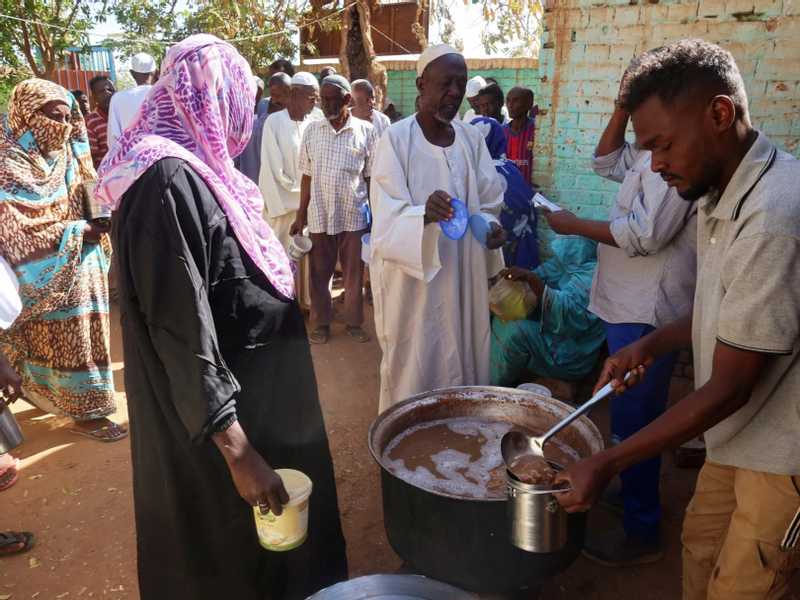
Sudan faces acute famine due to the overlap of war and historic drought.
Translated by Qiyas from القبس — Original source
Sudan faces the risk of a widening famine in the coming months, as the repercussions of a war that has raged for more than three years converge with a severe drought that has struck agricultural production areas. Meanwhile, military leadership continues to reject humanitarian ceasefire proposals, linking an end to hostilities to achieving military objectives on the ground.
Estimates from the Integrated Food Security Phase Classification (IPC) indicate that approximately 5.1 million people are already facing acute levels of hunger. The World Food Programme (WFP) expects an additional 350,000 people to fall into acute hunger by the end of 2026, with that number rising to around 1.2 million by August 2027.
A comprehensive report published by Reuters on Friday revealed that the rainy season between July and September 2026 recorded its lowest levels in Sudan in over three decades, causing crop failures, livestock emaciation, and the shrinkage of grazing lands in major food-producing regions, including Darfur, Kordofan, and Gedaref. According to data from the U.S. Geological Survey, rainfall in North Darfur dropped to its lowest level since 1984, the year that witnessed one of the worst famines in Sudan’s and the region’s history. North Kordofan state also recorded its lowest rainfall rate since 1990, while Gedaref state, which has remained a key food source throughout the war years, saw its lowest levels since 1991.
These estimates serve as an early warning that the crisis is moving toward a more dangerous phase, particularly in Darfur and Kordofan, where the impacts of drought intersect with displacement, fighting, and difficulties in accessing humanitarian aid. WFP officials stated that the organization aims to provide food to approximately five million of Sudan’s most vulnerable people, but it cannot reach all of them.
As of October 17, operations in Sudan had access to only $276 million, less than half of last year’s budget, while an additional $134 million is needed to address drought-induced hunger. The funding shortfall has led to a 50% reduction in food rations at the Tiloong camp in Darfur, despite the camp housing around 700,000 displaced persons and welcoming nearly 9,000 new arrivals between early September and mid-October.
Related news: Millions of Sudanese face declining ability to meet their needs; Sudan: Protests in army-controlled areas and market paralysis; First Committee of the UN General Assembly meetings; “Sudanese Army’s chemical weapons” on the UN agenda.
In the agricultural state of Gedaref in eastern Sudan, one senior farmer, who manages farms covering approximately 14,700 hectares, said his expected harvest would not exceed 25% of last year’s production, even if additional rains fell. The state recorded temperatures ranging from seven to nine degrees Celsius above the historical average on October 20.
These indicators come as military leadership clings to the option of war, despite repeated international warnings that continued fighting squanders any chance of saving the agricultural season and opening humanitarian corridors. The United States had proposed a 90-day humanitarian ceasefire, followed by arrangements for a permanent ceasefire and a civilian political process. However, military leadership and the Port Sudan authorities rejected the proposal, demanding the withdrawal of Rapid Support Forces (RSF) from all cities before accepting it.
Furthermore, Army Commander Abdel Fattah al-Burhan announced on October 7 that he refused to negotiate, vowing to continue operations until all territories under RSF control are regained.
This stance represents a continuation of the “military resolution” narrative espoused by the army leadership, despite neither side in the war being able to achieve a victory that would end the conflict, and despite the escalating human costs. Each additional month of fighting means disrupting agriculture, markets, and transport routes, increasing displacement, and expanding areas that are difficult for humanitarian organizations to reach. Army officials do not absolve the Rapid Support Forces of their responsibility for the catastrophe; aid agencies accuse both sides of imposing restrictions on the delivery of food and medicine. However, the army bears double responsibility due to its repeated rejection of ceasefire proposals and its insistence on preconditions for halting hostilities, which closed windows that could have saved civilians and secured the agricultural season. In response to these warnings, the Port Sudan authorities downplayed the severity of the production decline. Agriculture Minister Ismail Qureshi stated that this year’s harvest would be smaller but “would not decrease significantly” compared to last year’s, an assessment that contradicts rainfall data, farmers’ testimonies, and projections by international institutions. The current crisis reveals that the potential famine will not result from drought alone, but from the interplay of climate and a political war whose leaders have chosen to continue fighting at the expense of civilian lives. Drought strikes crops, but war prevents farming, transport, and aid delivery, while the rejection of ceasefires closes the last available windows to avert disaster. While the army leadership champions the slogan of “military resolution,” the economic crisis swells and hunger expands silently; the pressing question is no longer who will achieve military victory, but how many millions of Sudanese will pay the price for a war that its leadership, including Army Commander Abdel Fattah al-Burhan, refuses to stop.
