Gaza Starves: Humanity Faces Its Toughest Test
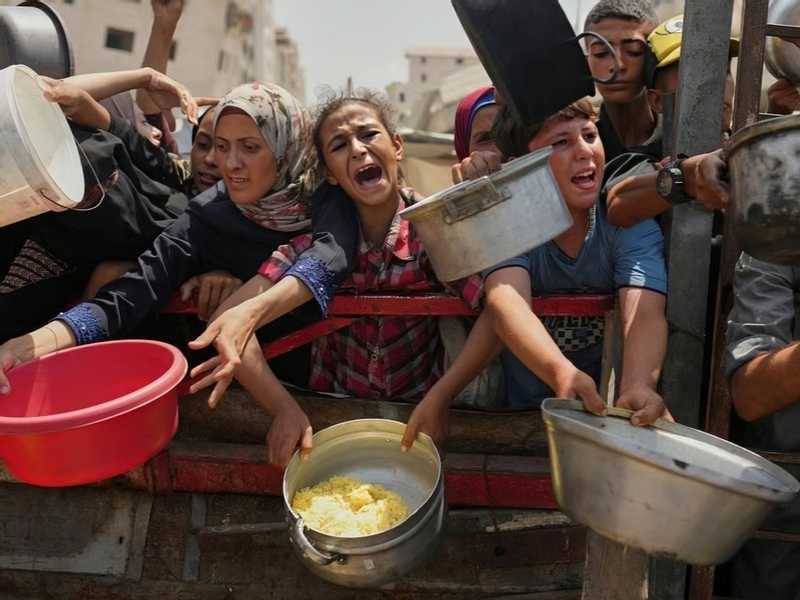
The famine crisis in Gaza worsens as the World Food Programme cuts its aid by a third, putting 500,000 Palestinians at risk of losing a primary food source amid rising prices and a shortage of humanitarian aid.
Translated by Qiyas from القبس — Original source
Gaza does not ask for the impossible; it asks for a loaf of bread to satisfy the hunger of its children and elderly, and a meal that preserves the dignity of families exhausted by war, displacement, and poverty. In the devastated strip, the war has broken bodies and altered the contours of life, turning a loaf of bread into a daily dream and a sack of flour into a hope for a family fearing it will sleep without dinner. Amid empty tables and children waiting for a meal that may never come, humanity faces its toughest test: Will the world act to ensure food reaches those in need, or will millions of Palestinians remain prisoners of hunger as the most basic elements of life erode before everyone’s eyes? In a sector whose wounds remain open three years after the war began, the specter of famine looms over the lives of hundreds of thousands of Palestinians, amid shrinking humanitarian aid, rising food prices, and dwindling capacity among residents to secure even their most basic daily needs. The suffering of Gazans is no longer limited to searching for food; it now lies in the inability to provide it, even when it is available in markets, as income sources have declined and poverty has expanded. Obtaining a sack of flour or some bread has become a daily battle for survival.
The crisis is worsening following the World Food Programme’s announcement to cut its food assistance in the sector by about a third due to funding shortages, reducing the number of beneficiaries from 1.6 million to 1.1 million, meaning approximately 500,000 Palestinians have lost a primary source of food. Food rations have also been reduced, and the number of hot meals provided daily has dropped from 250,000 to 150,000, while the program requires $450 million to continue its operations in Gaza and the occupied West Bank from October 2026 to March 2027. These figures reveal the scale of the catastrophe threatening the population: approximately 1.4 million Palestinians, nearly two-thirds of the sector’s residents, face high levels of acute food insecurity. It is estimated that around 74,200 children aged six months to five years will need treatment for acute malnutrition by April 2027, including more than 11,400 children at risk of severe acute malnutrition.
In Gaza, children’s dreams no longer extend beyond obtaining a meal to satisfy their hunger, as basic items such as eggs, milk, and vegetables have become unaffordable for many families. Families are forced to subsist on bread and tea or meals with limited nutritional value, while children face increasing risks due to the lack of balanced diets, threatening their health, growth, and ability to recover from the war’s effects. The crisis extends beyond aid shortages; rising prices and disruptions in the entry of commercial goods exacerbate the population’s suffering, particularly amid widespread unemployment and declining purchasing power. The sector has seen sharp increases in the prices of certain food items, with the price of a loaf of bread more than doubling, signaling a widening gap between families’ needs and what they can afford.
Families living in displacement tents and shelter centers face compounded burdens, as demands for food, water, medicine, and shelter converge, while available aid is insufficient to meet even the minimum requirements for life. Palestinian officials warn that cuts to relief efforts could worsen malnutrition, especially among children, pregnant and breastfeeding women, and the elderly, given the limited capacity of local institutions to bridge the growing gap.
