Agreements Drive Development
Agreements are tools for economic development and consolidating political presence.
Translated by Qiyas from القبس — Original source
Kuwait has the opportunity to enhance its role in a world where new economic balances are taking shape and the value of partnerships capable of reconciling national interests with international cooperation is expanding. Global developments, including technological transformations and shifts in trade and energy trajectories, provide proactive states with broader scope to shape their futures and diversify their options. In this context, the agreements signed by the State of Kuwait stand out as tools for economic development, consolidating political presence, and opening doors to knowledge and investment. These agreements encompass a variety of forms, including commercial and investment deals, scientific and technological partnerships, coordination frameworks, and memoranda of understanding, each with its own objectives and implementation requirements. Their significance stems from their alignment with a clear national vision that defines the economy’s needs and the opportunities and services society expects. Balanced diplomacy expands the network of partners and safeguards the independence of national decision-making, thereby strengthening the state’s capacity to navigate changes with confidence and flexibility, and making its external relations an extension of its development project. Every well-considered cooperation can add to the country’s economic assets, boost its competitiveness, and provide its citizens with a wider space to shape the future.
The real fruits of agreements materialize when their objectives are translated into projects, skills, and opportunities that citizens can directly experience. Investment cooperation gains greater value when it attracts productive activities and transfers expertise; educational partnerships become more impactful when they align with labor market needs and scientific research; and commercial agreements achieve their goals when they help national products and services access new markets. Therefore, implementation quality is the most critical benchmark for success, achieved by designating responsible entities, establishing timelines, measuring outcomes, and removing obstacles.
The European experience offers a positive example of how organized cooperation can expand development opportunities. Treaties and joint legislation contributed to the establishment of the single market launched in 1993, enabling the free movement of goods, services, people, and capital, and expanding business activities and economic exchange. The lesson to be drawn is that willpower yields deeper impact when backed by effective institutions, clear rules, and continuous follow-up. Kuwait can apply this principle in light of its specificities by linking agreements to economic diversification priorities, enhancing the participation of the private sector and small and medium-sized enterprises, and embedding partnerships with opportunities for citizen training and capacity development. This ensures the accumulation of knowledge within the national economy and the sustainability of its returns.
The positive impact of these agreements extends to the region when national projects are integrated with Gulf and Arab cooperation opportunities. Electricity interconnection, transport and port development, food security enhancement, and digital cooperation are areas that can expand shared interests, improve resource efficiency, and create a more attractive environment for investment. Every successful project adds a foundation for convergence and gives stability a developmental dimension that people experience in their daily lives and futures.
With its financial capabilities and human expertise, the State of Kuwait can contribute to steering this cooperation toward balanced and sustainable outcomes. This role is reinforced by adopting periodic reviews of the agreements, developing implementation mechanisms, and broadening coordination among government institutions, the private sector, and universities, so that they connect with the dynamics of production and innovation within society.
True investment in international relations is embodied in building human capital, expanding opportunities, and safeguarding the prospects of future generations. From this perspective, the agreements carry a horizon that transcends immediate benefits to establish a more resilient and regenerative economy. With clear vision and serious commitment, the State of Kuwait can make its international partnerships a driving force for progress, and move toward a future in which opportunities broaden for its people, while sustainability keeps pace with rapid developments.
Yours sincerely,
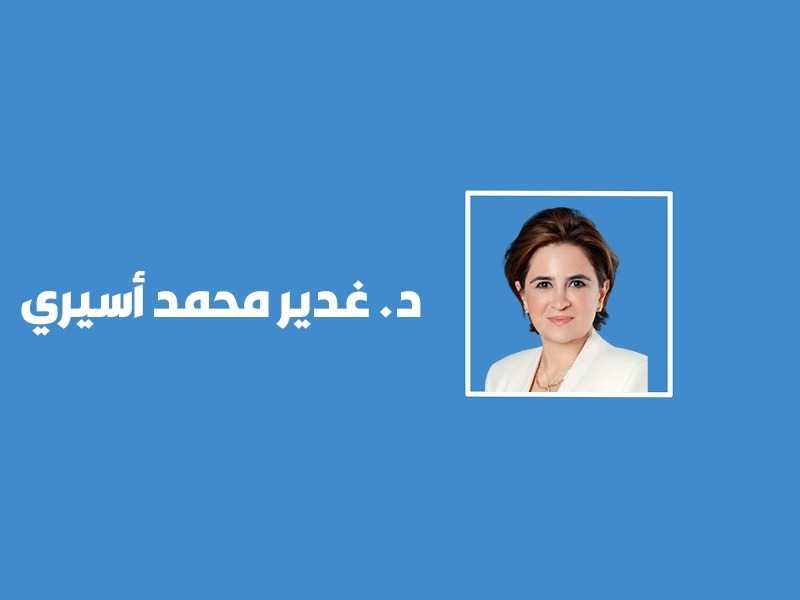
Dr. Ghadeer Mohammed Al-Asiri
