Source in 'Affairs' to Al-Qabas: New 'Cooperatives' Law Under Final Review
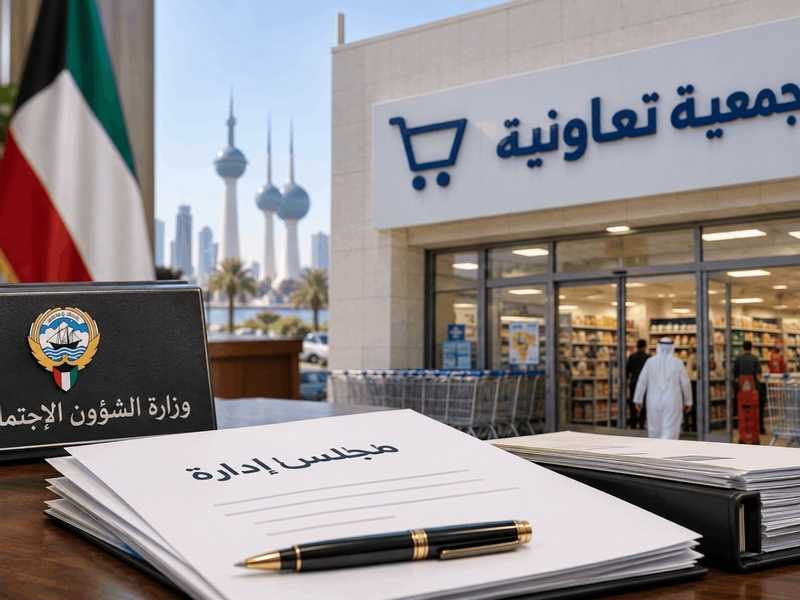
Final review of the new draft law regulating cooperative societies has been completed, specifying board membership at 7 members with a four-year term, along with new candidacy requirements and stricter penalties.
Translated by Qiyas from القبس — Original source
Faisal Mattar: The draft of the new law regulating cooperative societies, finalized by the Ministry of Social Affairs and Labor, has recently entered the final review stage, paving the way for its submission to the Council of Ministers for discussion and voting. A senior source told Al-Qabas that a meeting was held this week between ministry officials and the Fatwa and Legislation Department to review the draft’s provisions from a legal perspective and put the finishing touches on it.
The source explained that the draft sets the number of members on cooperative society boards of directors at seven, down from nine under the current law (Law No. 118 of 2013). It also stipulates a full four-year term for board membership, and requires candidates to hold a suitable university degree relevant to the nature of cooperative work, be at least 30 years old, own a property deed for a residence in the society’s area of operation, and have a good record of conduct. Additionally, candidates must not have been subject to a final judicial ruling compromising integrity and honor, nor have been dismissed from a cooperative society board or had their board dissolved.
The source noted that the draft provides for training courses for citizens wishing to join boards of directors, followed by mandatory examinations. It also calls for stricter financial and administrative oversight of board activities, expanded digitization and automation to track revenues and expenditures, and harsher penalties for proven serious violations and infractions, including imprisonment and financial fines.
The source emphasized that the law’s enactment will not lead to the dissolution of cooperative society boards or federations. Instead, boards will be reconstituted sequentially upon the expiration of their legal terms, in accordance with the new regulations and requirements, to ensure the continuity of financial and administrative operations and the supply of goods and merchandise.
