Developing Teachers and Education
A critical report highlights problems in Kuwait's education system and proposes developing teachers and curricula.
Translated by Qiyas from القبس — Original source
Education in Kuwait faces significant problems and challenges. The education system has gone through numerous phases, including the period of the coronavirus pandemic, during which education was conducted remotely, and the period of war, when education was also remote. In both phases, the standard of education was low and failed to meet aspirations. There are also problems related to curricula and their weakness, an unsuitable working environment, and the presence of damaged and unusable restrooms in some schools. It is worth noting that education in Kuwait relies largely on rote memorization and recitation in most literary and scientific subjects.
Kuwait has made progress in integrating technology into classrooms and developing curricula to be more flexible and aligned with global requirements, with a focus on digital skills, languages, and modern sciences. The goal is to create an educational environment that motivates students, but this is insufficient because it continues within the same old educational system that relies solely on recitation and memorization. Many educational outputs are generally considered weak, although there are outstanding and high-achieving students. However, many students have failed to pass aptitude and academic admission tests for various international and local universities, which is clear evidence of a major flaw and problem in Kuwait’s education system. Additionally, many students at different educational stages face significant problems and weaknesses in reading in the Arabic language subject.
We must acknowledge the existence of problems in education in Kuwait so that we can find appropriate solutions. Developing education begins with improving teachers’ performance first and creating a suitable working environment for them. This can be achieved through continuous training and development, providing modern educational tools that facilitate the process of explanation and knowledge transfer to students, and evaluating teachers fairly so that all opportunities are equal for diligent teachers.
When we take a quick look at events that have occurred in the education sector over the past four months, we see that the Ministry of Education dismissed 7,000 resident teachers and educators, despite shortages in certain specialties in many schools. Furthermore, the academic year began without some textbooks being available for certain educational stages. Finally, the Ministry of Education suddenly transferred more than 8,000 teachers and educators to other schools after the academic year had already started for a month. Do these decisions provide a suitable educational environment for teachers and students?
As for developing educational curricula and teaching methods, this can be done by introducing artificial intelligence models, abolishing the concept of education through rote memorization and recitation, and replacing it with education through discussion, dialogue, scientific research, and skills. The current examination and grading system should also be changed. It is worth noting that this is the teaching method adopted by Harvard University, Cambridge University, and most highly ranked academic institutions.
Developing education in Kuwait is not merely a government project; it is a shared responsibility. When we place teachers in the position they deserve and provide them with the necessary tools for success, we thereby ensure a bright future for future generations, so that the Kuwaiti student can play a role in Kuwait’s development.
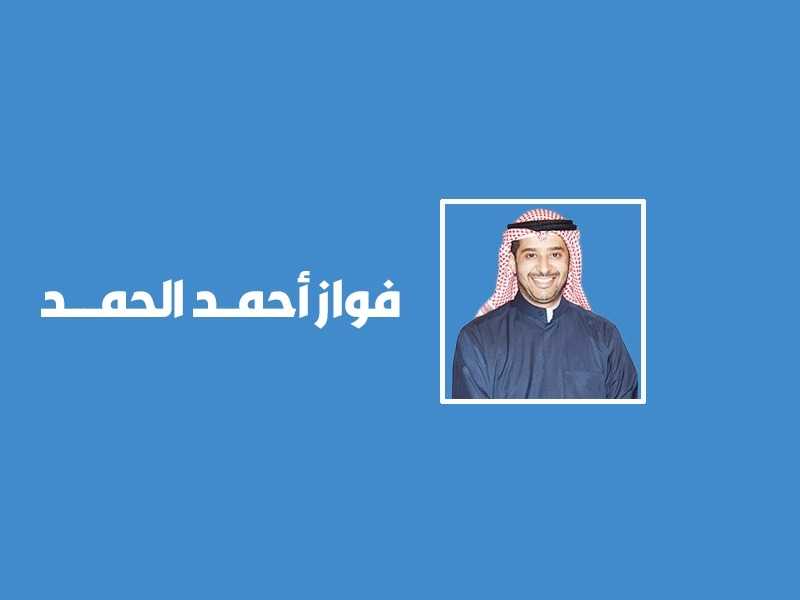
Fawaz Ahmad Al-Hamad
