News Report: Kuwaiti Ayad Continues to Plant Hope and Illuminate Paths of Knowledge for a Dignified Life for the Needy Worldwide
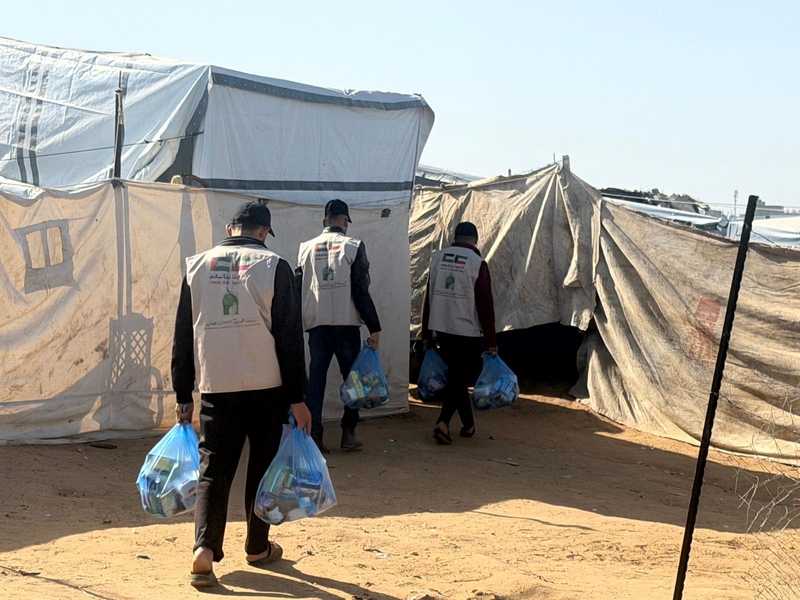
Kuwaiti institutions continue to provide food, health, education, and housing aid in African and Asian countries.
Translated by Qiyas from القبس — Original source
Bright chapters of compassion and generosity continue to be written by the State of Kuwait in the annals of global humanitarian action through initiatives that restore hope to patients’ hearts, open windows of knowledge for younger generations, and provide needy families with warmth and the means for a dignified life. This embodies the journey of a nation whose benevolent reach has extended to the most vulnerable communities, making the alleviation of suffering and the preservation of dignity a steadfast message that transcends borders and distances.
In a scene where compassion intertwines with the horizons of construction and development, Kuwaiti charitable institutions and associations, supported by the efforts of well-wishers and benefactors and guided by the wise leadership, are translating the spirit of solidarity into comprehensive humanitarian projects. These initiatives span from Benin to Tanzania and Kyrgyzstan, healing the sick, enlightening young minds, and laying the foundations for more stable societies capable of facing life’s challenges.
In the Republic of Benin, where the suffering of low-income families intensifies under the weight of living and health burdens, the Ataa Association for Humanitarian Work carried a message of Kuwaiti solidarity. This was manifested in relief initiatives benefiting approximately 1,000 people, healthcare coverage for 400 patients, and the inspection of 46 mosques built by the association, which serve around 6,900 worshippers. These efforts combine meeting basic needs with strengthening the foundations of social stability.
Dr. Omar Al-Shaqra, the General Director of the association, told the Kuwait News Agency (KUNA) on Saturday that the relief aid included the distribution of food baskets containing rice, oil, pasta, and other essential items, aimed at alleviating the cost-of-living pressures on poor families and supporting them in securing their daily needs. This reflects the association’s commitment to reaching the most vulnerable groups.
Al-Shaqra added that the health initiatives included providing medicines, nutritional supplements, and necessary medical supplies to approximately 400 beneficiaries, particularly those suffering from malnutrition. This effort involved Ahmed Al-Briki, the association’s Resources Director, in a step aimed at alleviating their suffering, improving their health conditions, and enhancing their chances of receiving necessary care.
He clarified that the field delegation inspected 46 mosques completed by the association in various regions of Benin, serving around 6,900 worshippers. He noted that the role of these mosques extends beyond holding religious rituals to include Quran memorization, teaching the Prophetic Sunnah, and contributing to the dissemination of knowledge and social values, thereby enhancing their religious and educational impact.
He emphasized that the integration of food, health, and community initiatives embodies the association’s approach of combining urgent humanitarian response with projects that have a sustainable impact. He commended the efforts of the Ministries of Social Affairs and Foreign Affairs in facilitating field visits, supporting the implementation of Kuwaiti charitable projects, and ensuring that aid reaches its rightful recipients.
From alleviating the pain of the needy to shaping the future of generations, the message of Kuwaiti goodwill extended to Zanzibar in the United Republic of Tanzania, where Al-Namaa Charity, affiliated with the Social Reform Association, in collaboration with the Bahraini Kaf Humanitarian Foundation, opened Al-Namaa Secondary School. This institution serves as a new educational beacon, offering children in needy communities broader opportunities for learning, contributing to capacity building, and preparing them for a brighter future.
Khaled Al-Shammari, Head of the Programs and Initiatives Sector at Al-Namaa Charity, told KUNA that the school’s opening reflects the institution’s belief that education is one of the most important paths to sustainable development and that investing in human capital is the true wealth of societies. He affirmed that building educational institutions represents a fundamental step in empowering generations with the knowledge and skills necessary to shape their own future.
Al-Shamri explained that the school comprises nine rooms, including five classrooms, alongside laboratories and educational workshops equipped to provide an environment that stimulates learning by combining academic achievement with practical application, thereby contributing to enhancing the quality of education and strengthening students’ opportunities to continue their academic journeys. He added that the impact of educational projects extends beyond school walls, reflecting positively on families and communities through the development of human capacities, the expansion of knowledge opportunities, and the preparation of generations equipped with the tools for development and production, enabling them to play an active role in improving their economic and social realities.
He pointed out that the partnership with the Bahraini Kafah Humanitarian Foundation embodies the depth of Gulf cooperation in charitable and developmental fields, highlighting the importance of integrating efforts and directing resources toward projects that yield long-term impacts. He praised the generosity of benefactors and philanthropists who contributed to transforming this project into an educational institution serving successive generations.
In the Kyrgyz Republic, where access to safe shelter and basic services is one of the key pillars of stability, Al-Safa Humanitarian Charity Association implemented integrated developmental projects. These included the opening of three residential villages comprising approximately 275 homes, along with health facilities, water networks, and mosques in several governorates, opening doors to a safer and more stable life for needy families and translating Kuwaiti generosity into tangible achievements that positively impact their daily lives.
Mohammed Al-Shaie, Chairman of the Board of Directors of the Association, told (KUNA) that the housing projects included the opening of a village with 100 homes in the Issyk-Kul Governorate, the “Hayat” (Life) village comprising around 75 homes in the Naryn Governorate, and another village with 100 homes in the Karakol region, all funded by Kuwaiti benefactors. He emphasized that providing adequate housing represents a crucial step toward preserving the dignity of families and enhancing their livelihood and social security.
Al-Shaie clarified that the health projects included the opening of a specialized hospital in the Naryn Governorate and a medical clinic equipped with necessary machinery and supplies, featuring an emergency department and serving a population of approximately 15,000 residents, as well as inhabitants of neighboring villages. Additionally, another clinic was opened between the Issyk-Kul and Karakol regions to expand the scope of healthcare and bring medical services closer to beneficiary communities.
He added that the Association opened water networks in villages surrounding the capital, Bishkek, and the Osh Governorate to provide safe and sustainable water sources, along with several mosques. Notably, a mosque in the Batken Governorate saw the attendance of around 500 people, including local officials, scholars, and sheikhs, contributing to strengthening the service and religious infrastructure of beneficiary communities.
He affirmed that the diversity of projects—spanning housing, health, water, and mosques—reflects the Association’s vision of transitioning from meeting immediate needs to building the foundations of stability and sustainable development. He commended the contributions of Kuwaiti benefactors and philanthropists who, through their generosity, transformed family needs into vibrant projects that open broader horizons for beneficiaries toward a better future.
These initiatives, extending from Benin to Tanzania and Kyrgyzstan, reflect a bright picture of the integration of Kuwaiti humanitarian efforts, where feeding the needy and caring for the sick converge with the construction of schools, homes, health facilities, and the provision of water. Together, they form a comprehensive system of giving that not only alleviates suffering but also addresses its root causes, consolidates the foundations of stability, and shapes a future where opportunities for a dignified life are expanded.
Thus, the State of Kuwait continues to write new chapters of its humanitarian mission, with the support of benefactors and philanthropists, through the collaboration of its charitable institutions, and with the backing of official Kuwaiti authorities that help overcome obstacles, facilitate the implementation of projects, and ensure their delivery to those entitled to them. Kuwait’s white hands remain bridges of compassion and doors of hope, offering continuous generosity that upholds human dignity and leaves a lasting impact on the lives of the needy, wherever they may be.
