IMF: Regional Economies Prepare for Strong Recovery
The International Monetary Fund and the World Trade Organization revealed expectations of a sharp economic contraction in the Middle East and Pakistan, followed by a recovery in 2027, with warnings about the permanent effects of wars on global supply chains.
Translated by Qiyas from القبس — Original source
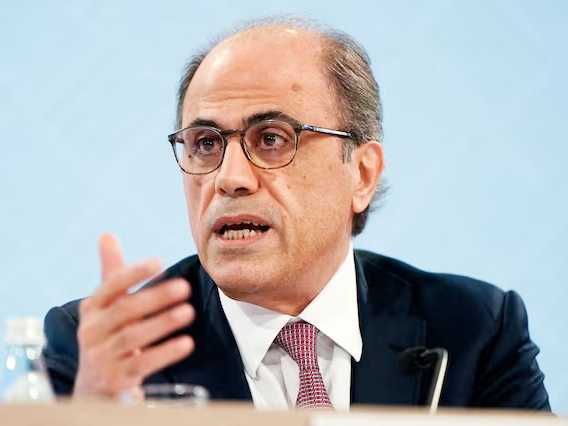
The International Monetary Fund (IMF) stated that a prolonged war in the Middle East and further disruptions to energy production, shipping routes, or critical infrastructure pose the greatest threat to the economies of the Middle East and Central Asia. Jihad Azour, Director of the IMF’s Middle East and Central Asia Department, said the war is causing highly uneven economic repercussions across the region, with directly affected countries facing severe pressures. Azour added during a press conference held on the sidelines of the IMF and World Bank Annual Meetings in Bangkok: “Projections depend primarily on how quickly energy production and trade return to normal, and on countries’ ability to maintain macroeconomic stability,” noting that the IMF will release more detailed regional forecasts on October 22.
Available surplus helped contain the impact of the energy crisis triggered by U.S.-led attacks on Iran and Tehran’s subsequent closure of the Strait of Hormuz. Pre-war surpluses, alternative routes, demand adjustments, and large drawdowns from reserves played a key role. Azour noted: “These reserve resources bought some time, but they are limited. Reserves have fallen, spare production capacity has declined, and renewed disruptions could lead to much greater price volatility.”
The IMF expects a sharp contraction of 1.3% in the Middle East and North Africa and Pakistan region after 3.3% growth in 2025, followed by a strong but uneven recovery in 2027, with projected growth of 6.6%, albeit with significant differences among countries. These projections assume a return to normal trade and shipping conditions in the first quarter of 2027, with exports gradually returning to normal levels by mid-year, while oil prices remain elevated.
Azour explained that these forecasts are based on a rapid resumption of production, noting that Qatar, for example, managed to accelerate its recovery despite widespread damage to its natural gas infrastructure. However, he clarified that the shock will have long-term negative effects on various sectors, as rebuilding damaged infrastructure will require additional spending, and risks lean to the downside.
Oil-exporting countries directly affected by the war are expected to experience a significant contraction in 2026 and a strong growth recovery in 2027 as energy production returns to normal levels, but output is likely to remain below pre-war medium-term projections. In contrast, oil-importing economies in the region have shown resilience and are expected to maintain it. The Caucasus and Central Asia region has navigated the crisis relatively well, and inflation is expected to continue declining from its high levels. The IMF forecasts growth slowing to 5.2% in 2026 and then to 5% in 2027, compared to 6.2% growth in 2025.
Azour called on policymakers to prioritize price stability and focus on rebuilding financial reserves and enhancing resilience against future shocks.
Wars are reshaping global trade routes. Ngozi Okonjo-Iweala, Director-General of the World Trade Organization (WTO), told Reuters: “Geopolitical shifts and wars in Ukraine and the Middle East will have a lasting impact on global trade flows as companies hedge against future shocks.”
She added in the interview that trade experienced a sharp contraction in the Middle East as a result of the Iran war, despite the existence of a series of solutions and alternative routes, and that recovery will take some time, noting that some of these shifts may become permanent. The World Trade Organization predicted a 17 percent decline in exports this year and a 15 percent drop in imports. She said that private sector experts anticipated a recovery once the war ends and the Strait of Hormuz reopens, as it provides a lower-cost trade route, but repeated conflicts have underscored the need for diversification and contingency planning, and some alternative trade routes are likely to persist. Speaking on the sidelines of the annual meetings of the International Monetary Fund and the World Bank, she said, “We have confirmed that bottlenecks and chokepoints are issues that must be considered for the world.” She added, “I believe some alternatives will remain, as both countries and companies seek to hedge against possibilities.” She said, “We expect broader diversification efforts to continue across various regions and countries due to repeated shocks from wars and other trade disruptions, including the massive wave of tariffs imposed by U.S. President Donald Trump.” She continued, “There is absolutely no doubt that supply chains are undergoing restructuring.” She noted that business leaders have demonstrated creativity in finding new trade routes, even though they are more costly. She pointed out that regional trade will also continue to expand, noting that African countries, for example, could significantly boost growth and trade by increasing intra-continental trade. She added, “Africans can trade with each other, create real value, and generate jobs.” She clarified that intra-African trade currently accounts for about 20 percent of the continent’s trade, while trade within the European Union represents about 60 percent of its trade. Ogunjio-Iweala said the future remains uncertain amid ongoing conflicts, tariffs, and concerns that the artificial intelligence boom may fade or collapse. She added, “The impact of AI is casting a shadow on other trade trends, which are not positive.”
