Dr. Robert Schmeling: New Device Lowers Blood Pressure in Sleep Apnea Patients
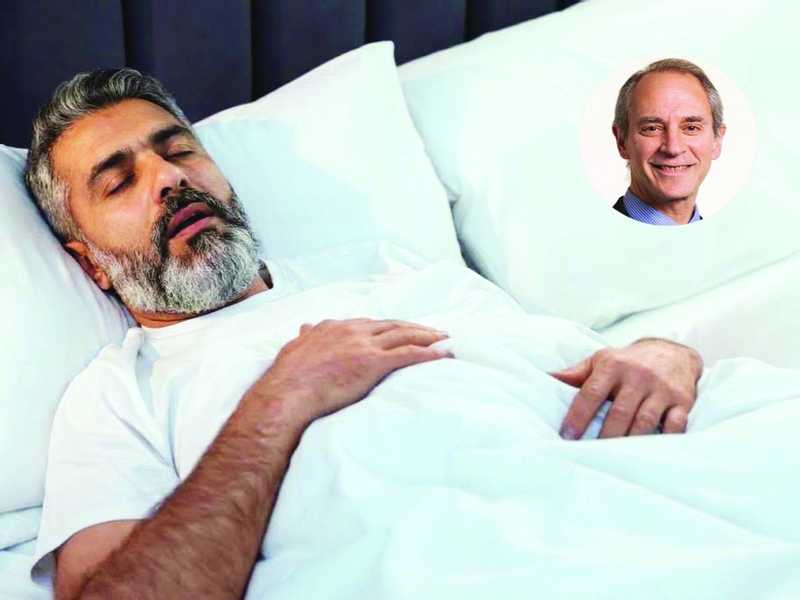
Recent study compares CPAP and MAD devices in lowering blood pressure and improving sleep quality
Translated by Qiyas from القبس — Original source
Dr. Wala’a Hafiz identifies the continuous positive airway pressure (CPAP) device as a common treatment for obstructive sleep apnea, a disorder that may be associated with high blood pressure and other health problems. A recent study suggests that a mandibular advancement device (MAD) may achieve efficacy similar to that of CPAP in lowering blood pressure among patients with sleep apnea and hypertension who are at risk for cardiovascular disease. The study, published in October in The American Journal of Medicine, included 180 individuals with moderate to severe sleep apnea and hypertension, 85% of whom were men. Researchers randomly assigned participants to use one of the two devices for 12 months. The study was reviewed by Dr. Robert H. Shmerling of Harvard Medical School.
CPAP pumps air through a mask worn by the patient during sleep to help keep the airway open, but some patients find it uncomfortable. In contrast, a MAD is made of hard plastic and custom-fitted to the patient’s teeth. It is secured to the upper and lower teeth and gently pushes the lower jaw forward to help keep the airway open during sleep.
◄ Obstructive sleep apnea is the most common sleep-related breathing disorder. It occurs when the throat muscles relax, narrowing or temporarily closing the airway, which leads to brief pauses in breathing followed by resumption, repeatedly during sleep. Each pause is called an “apnea,” and snoring is one of the most prominent common signs of the disorder.
◾ Symptoms
Nighttime symptoms of obstructive sleep apnea may include:
● Loud snoring.
● Repeated breathing pauses, which may be noticed by a spouse or partner.
● Waking up gasping or feeling as if choking.
● Frequent need to urinate at night.
Symptoms that appear upon waking or during the day may include:
● Excessive daytime sleepiness.
● Dry mouth or sore throat upon waking.
● Morning headaches.
● Difficulty concentrating.
● Mood swings, such as depression or irritability.
◾ Study details
Participants using the mandibular advancement device (MAD) used it for an average of 5.5 hours per night, compared with 4.9 hours for those using CPAP. Blood pressure reductions were modest in both groups: a drop of 1 point in the MAD group and 2.3 points in the CPAP group. Participants in both groups reported reduced excessive daytime sleepiness. Unplanned hospital admissions decreased in both groups during the first six months. Side effects included jaw pain and dental discomfort for some MAD users, while some CPAP users experienced nasal and oral dryness and pain.
◾ Recommendation
Researchers recommend continuing to use CPAP for treating moderate to severe obstructive sleep apnea, including in patients with hypertension and those at risk for cardiovascular disease. However, some patients find it difficult to tolerate or adhere to its use. Study results suggest that MAD may achieve outcomes similar to CPAP in lowering blood pressure and reducing daytime sleepiness among the study population.
