Why Did Trump and the Occupation Get Angry Over Navi Pillay's Nobel Peace Prize Win?
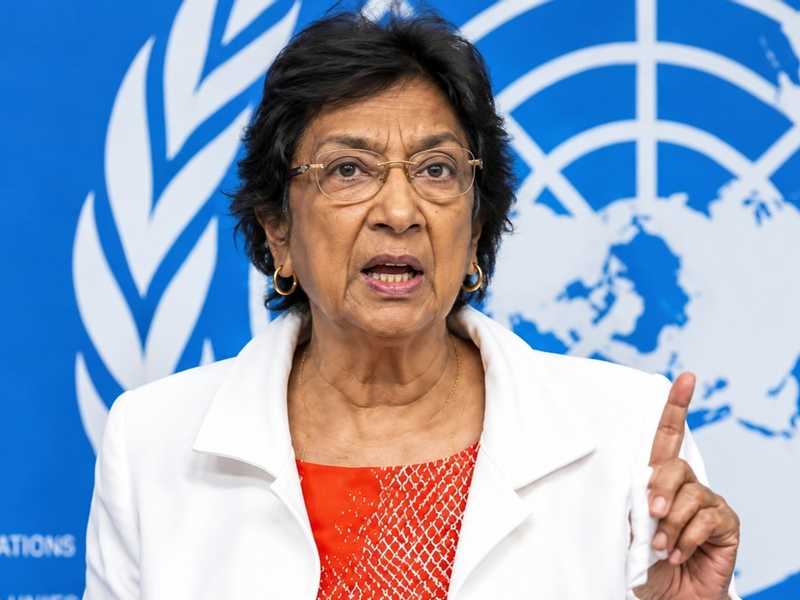
The victory of South African human rights activist Navi Pillay in winning the Nobel Peace Prize sparked anger among US President Donald Trump and the Zionist occupation entity, based on her human rights stances, particularly her leadership of a UN committee that condemned the occupation for committing genocide in the Gaza Strip, and her repeated calls for accountability for those responsible for crimes committed against Palestinians. This victory shed light on Pillay’s long career defending human rights and her clear positions on the war in Gaza, where she described what was happening as “live-streamed genocide,” a phrase reflecting the scale of the humanitarian tragedy endured by Palestinians. Pillay did not stop at condemning violations; she demanded accountability for those responsible for the crimes, urging the international community to take immediate action to prevent their continuation. At the same time, she criticized what she termed international inaction in taking effective steps to protect civilians and ensure the rights of the Palestinian people, foremost among them their right to self-determination.
The decision to award Pillay the Nobel Peace Prize triggered an angry reaction from the occupation, which strongly criticized the decision, claiming the prize represented a reward for what it described as “the biggest lie of the 21st century.” In contrast, Palestine praised the South African activist’s victory, considering that she had defended the oppressed with courage and honor, appreciating her supportive stance toward Palestinian rights and her continuous calls for justice and accountability for those responsible for violations.
US President Donald Trump’s position was no less harsh, as he belittled Pillay, stating that the prize had been awarded to “someone nobody has heard of,” in a direct criticism of the Norwegian Nobel Committee’s decision. Trump described the decision to award her the prize as “an indelible stain,” arguing that the prize had lost its credibility, in remarks that reflected his rejection of choosing a figure associated with human rights positions and criticism of the occupation.
Additionally, the United States imposed sanctions on the International Criminal Court following the victory of its former judge, adding a new dimension to the controversy surrounding the honor and linking political disputes with positions toward international judicial institutions.
Navi Pillay has a long record in international justice and human rights, having served as a judge at the International Criminal Court and the International Court of Justice, and as the United Nations High Commissioner for Human Rights. Through these positions, her name became associated with the defense of international justice and human rights, before she re-emerged prominently with her positions on the war in Gaza and her demands for accountability for those responsible for crimes and for preventing their continuation.
Pillay became the fifth South African to win the Nobel Peace Prize, placing her among South African figures who have received international recognition for their role in defending peace, rights, and freedoms.
Interestingly, Pillay’s own reaction upon learning of her victory was marked by surprise, as she commented on the news by saying, “It must be a joke.”
