6 Prominent Diplomatic Stances of Kuwait at the United Nations
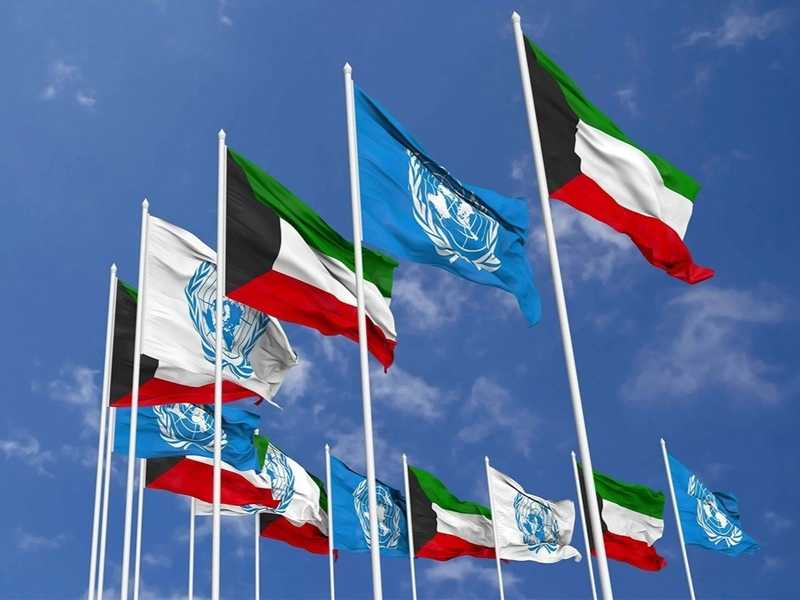
Kuwait affirms the strength of the UN in implementing its resolutions and calls for reform of the international financial structure
Translated by Qiyas from القبس — Original source
Kuwait recorded six prominent diplomatic positions before the United Nations General Assembly during the past 48 hours. These positions emerged as members of Kuwait’s Permanent Mission to the United Nations participated in the activities and events of the UN General Assembly and its specialized committees.
In its first position, Kuwait reaffirmed its firm support for strengthening international justice and its rejection of violations of international law and the principles of the UN Charter. It emphasized its commitment to enhancing multilateral cooperation, settling disputes through peaceful means, and the necessity of establishing an international system based on justice and equality, free from selectivity and double standards.
In its second position, Kuwait stressed that the strength of the United Nations is not measured solely by the number of resolutions adopted by its organs, but by the extent to which those resolutions are respected and implemented, and by the system’s ability to translate the consensus of member states into tangible results on the ground.
In its third position, Kuwait called for reforming the international financial structure to keep pace with economic transformations, enhance the representation of developing countries, expand the scope of concessional financing, redirect special drawing rights, transfer technology, and provide climate finance without increasing the debt burden on developing nations.
In its fourth position, Kuwait expressed its firm rejection of all forms of racism, racial discrimination, xenophobia, and related intolerance. It stressed that human dignity is an inherent right for all, which cannot be diminished or discriminated against for any reason. In its fifth position, Kuwait emphasized its support for UN efforts to end colonialism in all its forms and manifestations, grounded in its firm belief in the right of peoples to self-determination, respect for state sovereignty and territorial integrity, and adherence to the principles of the UN Charter and international law.
Finally, in its sixth position, Kuwait underscored the importance of enhancing international cooperation in the digital field to bridge technological gaps, expand investment in digital infrastructure, and ensure that developing countries benefit from technological advancements, thereby contributing to the achievement of the 2030 Sustainable Development Goals.
Al-Saadi to the General Assembly: The strength of the UN is measured by the implementation of its resolutions, not merely their issuance. Kuwait reiterated that the strength of the United Nations is not measured solely by the number of resolutions adopted by its organs, but by the extent to which those resolutions are respected and implemented, and by the system’s ability to translate the consensus of member states into tangible results on the ground.
This was stated in a speech by Kuwait, delivered by Third Secretary of its Permanent Mission to the UN, Abdulaziz Al-Saadi, during a general debate session of the UN General Assembly on Thursday to discuss the agenda item titled “Implementation of United Nations resolutions.”
Al-Saadi said that the purpose of adopting resolutions is not fulfilled merely by approving their texts, but by achieving the objectives for which they were issued. He emphasized the need to strengthen systematic follow-up mechanisms for implementing resolutions of UN organs, particularly the Security Council, to enable assessment of implementation levels, identify instances of non-compliance, and address them.
In this context, he recalled Kuwait’s experience during the brutal Iraqi invasion in 1990 as a prime example of the effectiveness of multilateral international action when international legitimacy is coupled with serious political will to implement it. He noted that Security Council resolutions, starting from Resolution 660, which demanded the immediate and unconditional withdrawal of Iraqi forces from Kuwait, up to Resolution 687, contributed to restoring the country’s freedom, independence, and territorial integrity.
He affirmed that this experience has proven the United Nations’ capacity to protect state sovereignty, deter aggression, restore rights, and safeguard international peace and security, calling for this model to serve as the basis for international action rather than an exception in its history. In this context, Al-Saaidi reiterated Kuwait’s strong condemnation and rejection of Iranian attacks against it since last February, involving ballistic and cruise missiles and drones, despite Kuwait’s non-involvement in the ongoing regional conflict and its refusal to allow the use of its territory, airspace, or territorial waters for any military operations against Iran.
He noted that these attacks repeatedly targeted civilian infrastructure and vital installations, including Kuwait International Airport, power and water stations, and oil facilities, resulting in martyrs and civilian casualties, injuries, and significant material and economic damage.
He documented the attacks and referred to the adoption of Security Council Resolution 2817, which affirmed the sovereignty and territorial integrity of Kuwait, the Gulf Cooperation Council countries, and Jordan. He warned that attacks continued after the resolution’s adoption by Iran and its affiliated militias in Iraq. He added that Kuwait has been keen to document these attacks and inform the Security Council through successive official letters, reaffirming its commitment to the full implementation of Resolution 2817 and the necessity of adopting a consistent and uniform standard in respecting and implementing international legitimacy resolutions without selectivity.
Dalaal Sharar to the Economic Committee: Reforming the international financial structure and enhancing the representation of developing countries. Kuwait called for reforming the international financial structure to keep pace with economic transformations and enhance the representation of developing countries, while expanding the scope of concessional financing, reallocating Special Drawing Rights, transferring technology, and providing climate finance without increasing the debt burden on developing countries.
This was stated in Kuwait’s address delivered by Diplomatic Attaché Dalaal Sharar before the Second Committee (Economic and Financial) of the UN General Assembly on Thursday, during the joint discussion on agenda items “Macroeconomic policy issues” and “Follow-up and implementation of international conferences on financing for development.”
Sharar said the global economy is going through a delicate phase characterized by slowing growth, rising debt burdens, and declining external financing flows, which necessitates reforming the global financial system and strengthening the capacity of developing countries to confront economic challenges and achieve sustainable development goals.
Freedom of Navigation
She stressed that protecting development gains requires ensuring the security of sea lanes, expressing Kuwait’s condemnation of Iran’s closure of the Strait of Hormuz and threats to freedom of navigation there, as well as its continued obstruction and disruption of navigation in the Bab al-Mandab through its proxies in the region, in violation of UN Security Council Resolution 2817. She warned of the repercussions of these practices on energy supplies and global supply chains, and the resulting rise in prices of fertilizers, food, and energy, calling for guaranteeing freedom of navigation and its safety in accordance with international law and the UN Convention on the Law of the Sea.
On the front of development efforts, Sharar outlined the contributions of the Kuwait Fund for Arab Economic Development, which has financed more than 1,000 development projects in 107 countries since its establishment in 1961, alongside its role in building national capacities, transferring expertise, and enhancing local partnerships to ensure the sustainability of development project outcomes.
Emergency Response
In this regard, she highlighted the launch of the Kuwait Emergency Response Fund last July, aimed at enhancing national preparedness, ensuring the continuity of vital services, and supporting recovery from crises.
Regarding the situation in the occupied Palestinian territories, Sharar highlighted the scale of the humanitarian and economic catastrophe in the Gaza Strip, noting that 92% of economic facilities have been damaged or destroyed, unemployment has exceeded 90%, and recovery and reconstruction needs have reached $71.5 billion. She called for support for the Palestinian economy, ensuring the flow of humanitarian aid, and empowering Palestinian institutions to lead recovery and reconstruction efforts in the sector. Concluding Kuwait’s statement, Sharar emphasized that development financing is a collective responsibility requiring reform of the global financial system and addressing debt burdens to ensure that no country or individual is left behind.
Speaking to the Financial Committee, Abdullah Al-Bouskher stressed the necessity of international cooperation to bridge technological gaps. He affirmed Kuwait’s importance of enhancing international cooperation in the digital field to bridge technological gaps, expand investment in digital infrastructure, and ensure that developing countries benefit from technological progress, thereby contributing to the achievement of the Sustainable Development Goals for 2030. This was stated in a speech delivered by Diplomatic Attaché Abdullah Al-Bouskher on Friday before the Second Committee of the United Nations General Assembly, which deals with Economic and Financial Affairs, during the discussion of agenda items 14, on “Harnessing information and communications technologies for sustainable development,” and 19, on “Globalization and interdependence.”
Al-Bouskher emphasized the importance of implementing the Global Digital Compact and the outcomes of the World Summit on the Information Society, calling for enhanced participation of developing countries in the global digital economy, knowledge transfer, and capacity building according to national priorities. He pointed to Kuwait’s support for the Independent International Scientific Panel on Artificial Intelligence and the Global Dialogue on AI Governance, stressing the importance of ensuring the effective participation of developing countries in their work.
At the national level, Al-Bouskher affirmed that Kuwait attaches special importance to harnessing information and communications technologies for development through the development of digital government services, upgrading national competencies, and enhancing international partnerships in the fields of technology and innovation within the framework of the “New Kuwait 2035” vision. In this context, he referred to the adoption of the “Kuwait Declaration on Responsible Artificial Intelligence for Global Digital Prosperity” last February, which included directions to develop skills, facilitate digital trade, and support entrepreneurship. Al-Bouskher added that Kuwait’s signing of the United Nations Convention against Cybercrime on September 25 last year embodies its commitment to enhancing international cooperation and combating the use of information and communications technologies for criminal purposes.
Speaking before the Social Committee, Omar Al-Saied expressed Kuwait’s firm rejection of all forms of racism, racial discrimination, xenophobia, and related intolerance, emphasizing that human dignity is an inherent right for all and cannot be diminished or discriminated against for any reason. This was stated in Kuwait’s speech delivered by Diplomatic Attaché Omar Al-Saied before the Third Committee of the United Nations General Assembly, which deals with Social, Humanitarian, and Cultural Affairs, during the discussion of the agenda item on “Elimination of racism, racial discrimination, xenophobia, and related intolerance.” Al-Saied stressed the necessity of the full and effective implementation of the International Convention on the Elimination of All Forms of Racial Discrimination and the Durban Declaration and Programme of Action, as they constitute two fundamental pillars of international efforts to combat racism, address its root causes, and mitigate its impacts on individuals and societies.
He emphasized the necessity of countering ideas and practices that fuel racism, foremost among them hate speech and incitement to discrimination and violence, warning that such rhetoric poses a growing threat to the cohesion and stability of societies. He highlighted the importance of dialogue, education, and respect for cultural and religious diversity in combating intolerance and fostering a culture of tolerance and mutual respect, particularly among younger generations, alongside strengthening national legislation aimed at protecting national unity and preserving social peace.
On the national level, Al-Saaid pointed to Kuwait’s discussion in Geneva last August of its combined report on its 25th and 26th periodic reports before the Committee on the Elimination of Racial Discrimination, reaffirming its commitment to continuing cooperation with United Nations human rights mechanisms. He concluded Kuwait’s statement by stressing that eradicating racism requires genuine political will and concrete measures ensuring equality and safeguarding human dignity, and is not limited to slogans and declared commitments alone.
Mohammed Al-Mulla to the Political Committee: Kuwait’s support for decolonization efforts is steadfast
Kuwait reaffirmed its firm and supportive stance toward United Nations efforts aimed at ending colonialism in all its forms and manifestations, based on its firm belief in the right of peoples to self-determination, respect for the sovereignty and territorial integrity of states, and adherence to the principles of the UN Charter and international law.
This was stated in a speech delivered by Kuwait’s diplomatic attaché, Mohammed Al-Mulla, on Friday, before the Fourth Committee (Special Political and Decolonization) of the UN General Assembly.
Al-Mulla affirmed that the Palestinian issue remains at the forefront of matters requiring the international community to assume its responsibilities to end the Israeli occupation of the occupied Palestinian territories and enable the Palestinian people to exercise their legitimate rights, foremost among them the right to self-determination and the establishment of their independent state with its capital in East Jerusalem, within the June 4, 1967 borders.
He reiterated Kuwait’s condemnation of violations by the Israeli occupation authorities against the Palestinian people and its firm rejection of settlement and annexation policies, forced displacement, and any attempts to alter the legal and historical status of the occupied Palestinian territories, including East Jerusalem. He stressed the necessity of adhering to a ceasefire in the Gaza Strip, ensuring the unhindered delivery of humanitarian aid, protecting civilians, and creating the necessary conditions for recovery and reconstruction, thereby paving the way for a just, comprehensive, and lasting peace.
On the regional front, Al-Mulla expressed Kuwait’s strong condemnation of Iranian attacks that targeted its territory and that of several sister countries, and its firm rejection of any actions undermining the sovereignty, security, and stability of states in the region. He called on Tehran to fully implement Security Council Resolution 2817 of 2026.
He reaffirmed Kuwait’s firm position condemning the continued Iranian occupation of the three UAE islands—Abu Musa, the Greater Tunb, and the Lesser Tunb—and its full support for the sovereignty of the State of the UAE over the islands, their territorial waters, airspace, continental shelf, and exclusive economic zone.
Al-Mulla stressed that any Iranian decisions or practices regarding the three islands are null and void and do not alter the historical and legal facts confirming UAE sovereignty over them. He called on Iran to resolve the issue peacefully through direct negotiations or by referring the matter to the International Court of Justice.
He also emphasized the importance of preserving the security, safety, and freedom of international navigation in the Strait of Hormuz, and the necessity of halting all practices that threaten commercial vessels or impede navigation, thereby ensuring the stability of international trade. Regarding the Western Sahara issue, Al-Mulla reiterated Kuwait’s support for the United Nations efforts led by the Secretary-General and his Personal Envoy, Staffan de Mistura, to reach a just, lasting, and mutually acceptable political solution. He affirmed Kuwait’s support for the autonomy initiative proposed by the Kingdom of Morocco and welcomed United Nations Security Council Resolution 2797 of 2025.
Concluding the country’s statement, Al-Mulla reaffirmed Kuwait’s commitment to the principles of the United Nations Charter and its support for efforts to end occupation and colonialism, and to find peaceful and just solutions to existing conflicts, thereby enhancing international peace and security.
Al-Mutairi to the Sixth Committee: Consolidating International Justice and Respecting International Law
Kuwait reiterated its firm support for strengthening international justice and its rejection of violations of international law and the principles of the UN Charter, emphasizing its commitment to enhancing multilateralism, settling disputes by peaceful means, and the necessity of establishing an international system based on justice and equality, free from selectivity and double standards.
This was stated in a speech delivered by Kuwait’s Diplomatic Attaché, Mohammed Al-Mutairi, on Friday, before the Sixth Committee (Legal) of the UN General Assembly during the discussion of Agenda Item 84, titled “The Rule of Law at the National and International Levels.”
Al-Mutairi underscored the importance of the International Court of Justice as the principal judicial organ of the United Nations and the necessity of respecting and implementing its rulings in accordance with relevant legal obligations, stating that the rule of law constitutes the foundation for achieving peace, security, development, and respect for human rights.
He recalled Kuwait’s experience with the Iraqi aggression in 1990, which highlighted the importance of resorting to the UN Charter, respecting state sovereignty and territorial integrity, and the inadmissibility of acquiring territory by force. He affirmed that respecting international law and implementing Security Council resolutions represent a fundamental guarantee for the security and stability of states, particularly small states.
On the national level, he pointed to Kuwait’s continued development of its legislative and judicial systems, enhancing the capacity of judicial institutions, facilitating access to justice, empowering women, and ensuring equal opportunities, thereby promoting transparency, accountability, and good governance.
In conclusion, Al-Mutairi reiterated Kuwait’s commitment to strengthening the rule of law at both the national and international levels, supporting efforts to achieve justice and accountability without discrimination, and building a more just and equitable international system.
