Canadian poet Anne Carson wins the 2026 Nobel Prize in Literature
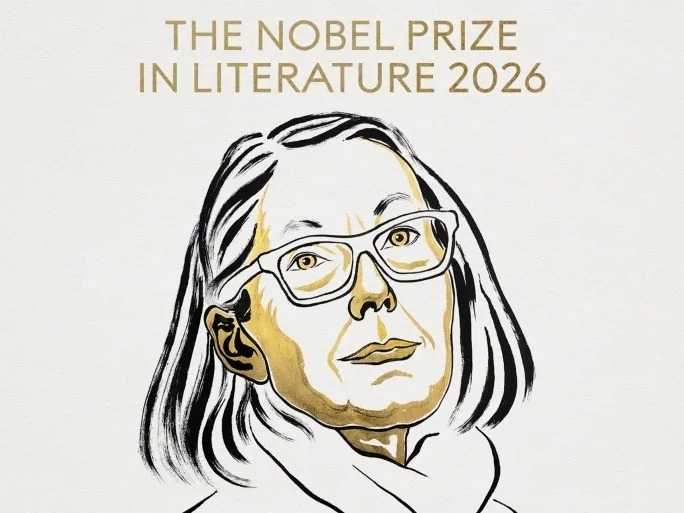
Canadian poet and essayist and translator Anne Carson has been awarded the 2026 Nobel Prize in Literature “for her bold and innovative work, which, in a playful dialogue with classical tradition, has given new forms to contemporary literature.” The 76-year-old writer is renowned for her hybrid style, blending poetry and prose, and for her ability to connect contemporary narratives with ancient myths. The Swedish Academy stated that “most of her literary output focuses on the intersection of the linguist’s obsession with words and the poet’s desire for new meanings,” and she herself has affirmed that the rooting of words is the starting point for all her work.
The Academy’s permanent secretary, Ingmar Carlberg, informed the writer of the news in Iceland, where she currently resides, adding, “We didn’t have much time to talk. She was surprised and very happy, which was clear from the tone of her voice.” Carson commented on her win in a brief interview with Icelandic public television, saying, “This is madness. They’re all crazy,” before adding, while holding onto her hat to keep it from blowing away in the wind, “Here we listen to the wind, and we live to the rhythm of the wind, and that’s what I was doing.”
With the announcement from Stockholm, Carson becomes the 19th woman among the 123 laureates since the prize’s inception in 1901, and the second Canadian on its list after novelist Alice Munro, who won in 2013. (American-born Saul Bello, who won in 1976, was born in Quebec.) Canadian Prime Minister Mark Carney described the honor as “a source of pride for Canada,” writing on the X platform that Carson “has introduced new readers to old stories and changed our perspective on literature.”
The Hungarian novelist and poet László Krasznahorkai was not selected. Carson will receive the prize, worth 12 million Swedish kronor (slightly more than $1.2 million), on December 10.
Among Carson’s notable works are “Glass, Irony and God,” “The Red Record: A Poetic Biography,” “Nox,” “Float,” and “Beauty: A Essay in Twenty-Nine Tangos.” In 2019, through her performance piece “Norma Jeane Baker of Troy,” she drew a connection between two famous beauties from different historical eras: Helen of Troy and Marilyn Monroe. In 2021, she published “The Trojan Women: A Graphic Retelling,” a visual retelling of Euripides’ ancient play, and last year presented her translation of Sophocles’ “Electra,” starring Brie Larson, in London.
A professor of classics for more than 30 years, Carson often draws inspiration from Greek literature, frequently infusing her translations of ancient works with a contemporary touch. Olson stated, “Her collaboration with visual artists, choreographers, opera and theater directors demonstrates the freedom with which she approaches literary expectations and systems of rules.” He added, “This is what underlies the exceptional significance her work has enjoyed on the international stage of art and literature since the 1990s.”
