'Sudden Transfers' Confuse the Education Ministry
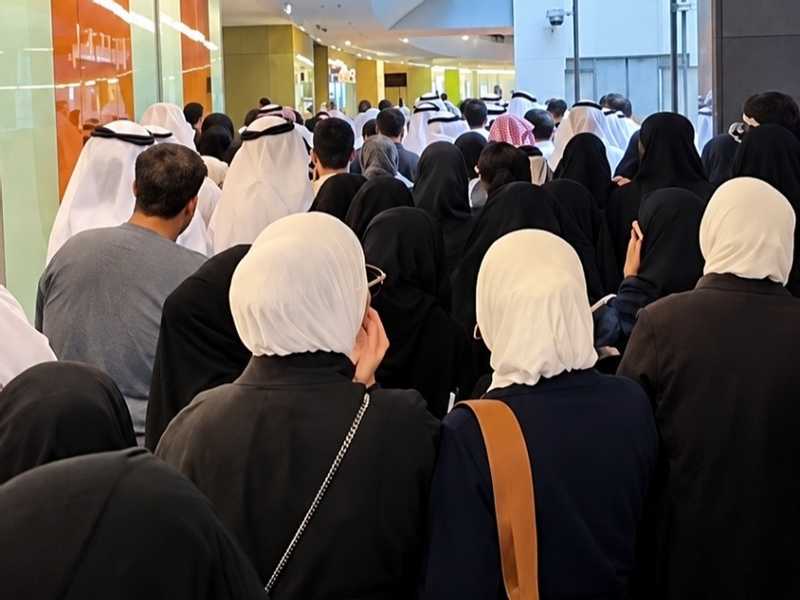
Teacher transfer decisions have caused chaos and confusion, amid complaints of arbitrariness.
Translated by Qiyas from القبس — Original source
Decisions by the Ministry of Education to transfer and redistribute 8,703 teachers and supervisors have plunged the educational field into confusion and chaos. Yesterday, a large number of those affected gathered to demand a review of their transfers, citing arbitrariness and erratic decision-making. The move came after the start of the academic year, without regard for school needs, distances, or the family circumstances of the transferred staff.
Yesterday, the Ministry of Education announced that the window for electronic appeals against the decisions would be open from October 7 to 9. However, several affected individuals stated that the three-day period is far too short given that nearly 8,000 staff members were transferred, and the period includes a weekend holiday.
The protests began as teachers received transfer notifications one by one via the "Sahl" application yesterday and the evening before, revealing their new workplaces. Some complained about the sudden transfer after the academic year had begun and students had settled with their teachers, before heading to the Ministry to demand a reconsideration of the implementation.
While the Ministry justified the decisions as a redistribution aimed at addressing disparities between schools and achieving fairness in workloads and positions, those affected argued that the cases they presented revealed improvisation in decision-making and flaws in implementation, raising questions about the accuracy of the surplus and needs assessment prior to the transfers.
Teachers questioned how staff could be transferred from schools that still have staffing shortages, arguing that removing them merely shifts the deficit from one location to another rather than resolving it, and disrupts school administrations that had already prepared schedules and distributed classes at the start of the term. They noted that in other cases, teachers were transferred and replaced by others, questioning the purpose of such moves and their relation to addressing surpluses, and called for clarification on the criteria used to select those transferred and the schools they were assigned to.
They described the decisions as "arbitrary and unconsidered," emphasizing that their objection is not to addressing surpluses per se, but to the erratic nature of the implementation and the lack of clarity regarding the basis for certain cases. They called for a review of the needs of both the schools being transferred from and to, and for verification that each transfer serves a genuine purpose. They suggested announcing locations with shortages and allowing interested teachers to apply, thereby balancing school requirements with teachers' preferences.
Teachers criticized the timing of the transfers, insisting that the redistribution should have been completed before the start of the academic year to allow schools time to prepare schedules and teachers to organize their commitments according to their new workplaces. They explained that students had already become accustomed to their teachers and settled in; changing them at this stage, coinciding with the exam period according to their complaints, would disrupt the continuity of teaching and force new teachers to assess student levels and progress from scratch.
The Ministry had announced that the average transfer distance for the relocated staff did not exceed 11.2 kilometers, and that the implementation balanced meeting school needs with the job stability of educational staff. However, teachers insisted that some transfers were to schools much farther than this average, calling for an examination of each individual case rather than relying on a general average that does not reflect the longer distances involved.
**Details of the Complaints:**
The Ministry of Education announced yesterday that the window for electronic appeals against the decisions would be open from October 7 to 9. Affected individuals confirmed that the three-day period is extremely short compared to the nearly 8,000 transfers, and that the period includes a weekend.
Protests began as teachers received transfer notifications via the "Sahl" application, revealing their new workplaces. Many complained about the sudden transfer after the academic year had started and students had settled with their teachers, before proceeding to the Ministry to demand a review of the implementation.
While the Ministry justified the decisions as a redistribution to address disparities between schools and achieve fairness in workloads, those affected argued that the cases they presented revealed improvisation in decision-making and implementation flaws, raising questions about the accuracy of the surplus and needs assessment.
**Arbitrary Implementation**
Teachers questioned how staff could be transferred from schools with existing shortages, arguing that this shifts the deficit rather than solving it and disrupts school administrations that had already prepared schedules. They noted cases where teachers were replaced, questioning the utility of such moves and calling for clarification on selection criteria. They described the decisions as "arbitrary and unconsidered," emphasizing that their objection is to the erratic implementation and lack of clarity, not the concept of addressing surpluses. They called for reviewing school needs and ensuring each transfer serves a real purpose, suggesting the announcement of shortage locations for interested applicants.
**Disruptive Timing**
Teachers criticized the timing, insisting redistribution should have been completed before the term began to allow schools and teachers to prepare. They noted that students had settled with their teachers, and changing them during the exam period would disrupt teaching and burden new teachers with assessing student progress. They stressed that teaching requires mental and psychological effort, and that stability in the workplace aids performance. They called for considering the impact of transfers on classroom work and staff distribution.
**Family Commitments**
Complaints extended to family commitments, with some affected individuals stating they had arranged school drop-offs and daily schedules based on their previous workplaces, only to be suddenly transferred to areas far from their homes.
**Long Distances**
While the Ministry cited an average transfer distance of 11.2 kilometers, teachers insisted some transfers were much farther. They called for examining each case individually rather than relying on averages that mask longer distances. They argued that the distance from new schools to their residences increases commuting burdens and affects their commitments, asserting that true stability requires a practical study of distances and family circumstances when reviewing appeals.
Critics demanded that the review of their requests correct the affected cases and address their concerns regarding school needs, transfer timing, and distances, thereby achieving the goal of redistribution while preserving the stability of teachers and students.
**Where is the "Teachers' Shield"?**
Critics questioned the Teachers' Association's stance on the repercussions of the transfers, asking, "Where is the teachers' shield? Where is the Association regarding issues that directly affect teachers?" They stated they had not yet seen a clear position or comment, calling on the Association to represent the affected, present their complaints to the Ministry, follow up on their appeals, and defend their demands for a review of the implementation.
**Demands of the Affected:**
1. Review transfers from schools that have staffing needs.
2. Clarify the criteria and reasons for replacing one teacher with another.
3. Consider distances and family circumstances.
4. Implement redistribution before the start of the academic year.
5. Announce shortage locations and allow interested teachers to apply.
**Ministry of Education: Strengthening Direct Communication with the Educational Field**
The Ministry of Education emphasized its commitment to strengthening direct communication with the educational field, listening to teachers' and educators' comments, and addressing them with care and responsibility to resolve issues and clarify procedures. This aims to enhance cooperation and understanding to serve the stability of the educational process and the public interest.
In a press statement, the Ministry said a group of teachers and educators visited the Ministry building following the issuance of the redistribution decisions to inquire about the decisions and express their observations. It clarified that relevant officials met with a representative group of the attendees, listened to their comments and inquiries, and explained the procedures and regulations related to redistribution. Officials confirmed that all comments and appeals would be studied and considered within the established frameworks and regulations.
The Ministry expressed its great appreciation for teachers and educators as the builders of generations and the cornerstone of the educational process, commending their efforts and dedication to serving students. It stressed that its doors and officials are open to listening to their comments and addressing them with care and responsibility.
**The Status of the Teacher**
The Ministry highlighted that teachers and educators serve as educational role models for their students, carrying educational and professional responsibilities. It relied on their proper handling of various situations and decisions, and their expression of comments and demands in a manner befitting the status and mission of the teacher. It called for expressing comments through official channels and procedures that ensure they are heard and considered with transparency and objectivity.
It pointed out that the window for submitting electronic appeals against the redistribution decisions is open, allowing those affected to submit their requests, state their reasons, and follow up without the need for paper visits. It confirmed that all submitted requests would be studied and considered transparently and objectively, according to established regulations and criteria, ensuring fair treatment for each case.
**Justice in Distribution**
The Ministry stressed that the redistribution decisions were part of a plan to address disparities in the distribution of educational and supervisory staff among schools, and to achieve greater justice and balance in the distribution of the workforce according to the actual needs of the educational field.
It explained that the plan aims to enhance school stability and improve the efficiency of the educational process, ensuring that staff are directed to the most needy locations. It confirmed that serving students and advancing education in the State of Kuwait is a goal that unites all workers in the educational field, regardless of their positions and responsibilities, and that the teacher is a fundamental partner in achieving this.
It added that it will continue to listen to the field and address comments within regulatory frameworks, serving the public interest, protecting workers' rights, and supporting the stability of the educational process.
It concluded by emphasizing that everyone works from their position to serve Kuwait and its people, and that the success of any reform step relies on cooperation, understanding, and prioritizing educational interests to achieve a stable and just school environment that benefits learners and educational quality.
