Electricity Minister: Water Issues Are Among National Security Priorities
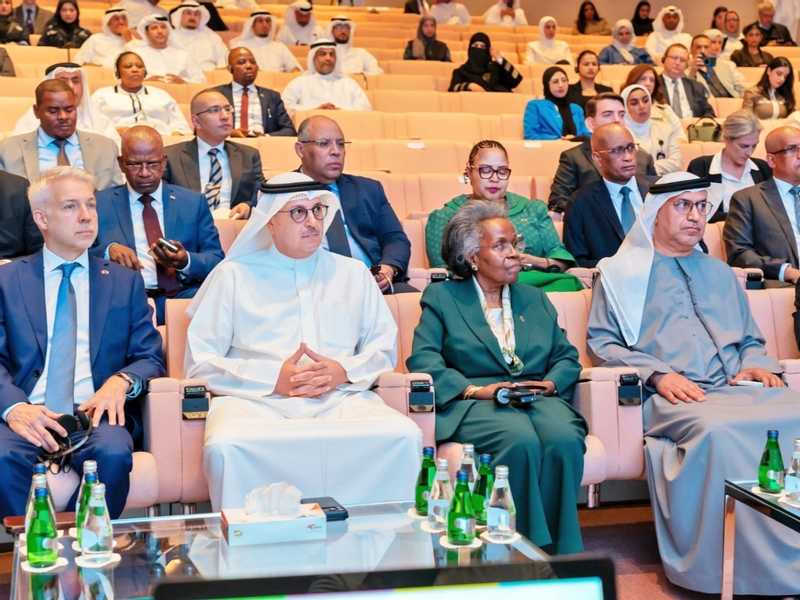
Minister of Electricity, Water, and Renewable Energy Dr. Subaih Al-Muhaizim affirmed that water security represents one of the most prominent developmental challenges in the world.
Translated by Qiyas from القبس — Original source
May Al-Sukairy – Minister of Electricity, Water, and Renewable Energy, Dr. Sabih Al-Makhziem, affirmed that water security represents one of the most prominent developmental challenges facing the world. He noted that water issues are no longer limited to providing a basic life resource, but have become directly linked to food security, energy, economic development, health, social stability, and the capacity to address the impacts of climate change.
This statement was made during a speech at the high-level dialogue titled “The Future of Water Security for All,” held in preparation for the United Nations Water Conference 2026, scheduled to take place in Abu Dhabi next December.
Dr. Al-Makhziem stated that Kuwait recognizes the importance of water security challenges, particularly given its geographical and climatic conditions and the scarcity of its natural water resources. Consequently, the country has accorded strategic priority to the water sector, working to develop systems for water production, transmission, storage, and distribution, while leveraging modern technology and enhancing operational efficiency to support supply sustainability and increase the readiness of the water system to meet current and future needs.
He pointed out that Kuwait records a population coverage rate exceeding 99% for safely managed drinking water services, according to data from the Joint Monitoring Programme (JMP) of the World Health Organization and UNICEF on water supply, sanitation, and hygiene.
Dr. Al-Makhziem emphasized that water sector challenges transcend national borders and cannot be addressed in isolation. He underscored the importance of strengthening regional and international cooperation, exchanging expertise and experiences, developing partnerships, and utilizing technological, research, and financial solutions capable of transforming promising ideas into executable projects that yield tangible impact.
For her part, Ghada Taher, Representative of the UN Secretary-General and Resident Coordinator in Kuwait, affirmed that the water issue requires collaboration among various stakeholders. She noted that the participation of governments, the diplomatic corps, financial institutions, the private sector, and academic circles in the dialogue reflects the reality that “no single entity can solve the water issue alone.”
Taher stated that approximately 2.1 billion people worldwide still lack access to safe drinking water, while around 4 billion people experience severe water scarcity for at least one month annually. She emphasized that these challenges are directly linked to health, food, livelihoods, dignity, and stability.
For his part, Ambassador Dr. Mutlaq Al-Nuaimi, the UAE Ambassador to Kuwait, affirmed that the dialogue represents an opportunity to exchange expertise, discuss common priorities, and formulate practical recommendations and initiatives that contribute to preparations for the UN Water Conference 2026. The conference will be hosted by the UAE in partnership with the Republic of Senegal in Abu Dhabi from December 8 to 10 next year.
