Francis Halzen wins Nobel Prize in Physics
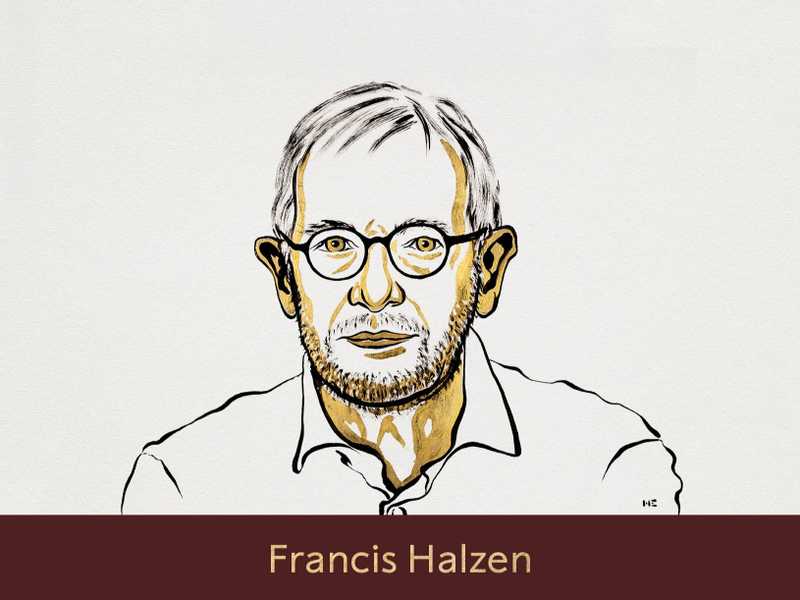
Belgian-American particle physicist Francis Halzen has been awarded the 2026 Nobel Prize in Physics in recognition of his pioneering work in establishing an observatory to track some of the most elusive particles in the universe—high-energy neutrinos—and to understand how they are produced. Halzen realized that ice in Antarctica could be used to detect neutrinos, often referred to as “ghost particles” because they pass through Earth and our bodies without leaving a trace, interacting with matter only in extremely rare instances. At a press conference, Eva Olsson of the Royal Swedish Academy of Sciences said these particles “carry messages containing information from the cosmos. They open the door to distant galaxies and tell us about stellar explosion processes.” The committee noted that the neutrino interactions collected by the IceCube observatory in Antarctica provide researchers with insights into how high-energy neutrinos are formed, and may even reveal previously unknown cosmic phenomena. Mark Persson, Chair of the Nobel Committee for Physics, said in a statement, “Francis Halzen led an international team of researchers and engineers who provided us with an extraordinary tool.” He added, “His perseverance and scientific vision have paved the way for a new kind of astronomy.”
