Decree-law on media regulation law officially issued
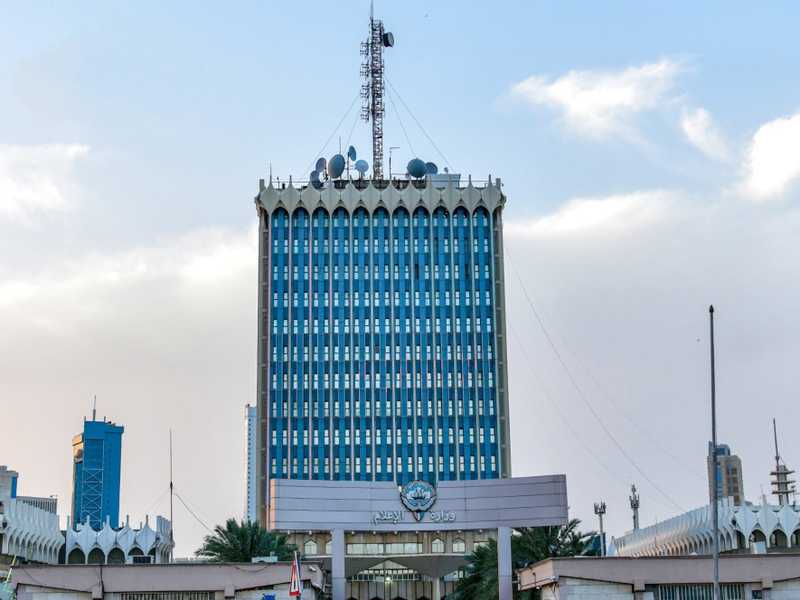
Issuance of Decree-Law No. 102 of 2026 regulating the media sector in Kuwait, repealing previous laws and requiring establishments to regularize their status within six months.
Translated by Qiyas from القبس — Original source
Ibrahim Muhammad – The Official Gazette (Kuwait Today) published Law Decree No. 102 of 2026 Issuing the Law Regulating Media in its issue No. (1811), issued today, Sunday, which enters into force. Article Two of the aforementioned Law Decree assigned the competent Minister to issue the executive regulation for this law within six months from the date of publication of the Law Decree in the Official Gazette, as well as to issue the necessary decisions to implement its provisions. Article Three obliged the owners of the media activities mentioned in this law and operating at the time of its implementation to regularize their status in accordance with its provisions within six months from the date of issuance of the executive regulation, with the license being revoked in case of failure to regularize their status within that period. Article Four repealed Law No. (3) of 2006 concerning Publications and Publishing, Law No. (61) of 2007 concerning Audiovisual and Radio Media, and Law No. (8) of 2016 Regulating Electronic Media, as well as any other provision conflicting with the provisions of this law. Article Five of the aforementioned Law Decree required the ministers, each within their respective competence, to implement the provisions of this Law Decree, which shall be published in the Official Gazette and take effect after six months from the date of its publication.
The explanatory memorandum for Law Decree No. 102 of 2026 Issuing the Law Regulating Media stated that this law represents a comprehensive qualitative leap to restructure and update the media system in the state. The explanatory memorandum clarified that this law aims to address legislative gaps resulting from rapid technological developments, while consolidating constitutional principles governing press freedoms and freedom of expression. The explanatory memorandum emphasized that the media environment has undergone radical transformations due to the digital leap, which has reshaped concepts of broadcasting, publishing, and influence. It indicated that this law is based on flexible legislative engineering, focusing on establishing fixed general principles and provisions, while referring emerging detailed, procedural, and technical matters to its executive regulation to ensure rapid and efficient adaptation to technological changes.
The explanatory memorandum pointed out that this law dedicates space to affirming the general and constitutional principles governing media activity, foremost among which is the guarantee of freedom of opinion, expression, press, printing, and publishing. The explanatory memorandum defined the scope of regulating media patterns that have emerged over time, such as technical terms related to broadcasting, rebroadcasting, frequency, channel, station, and programs, as well as new concepts like electronic media, electronic media entity, its owner, and user, electronic domain, and social media platforms. The explanatory memorandum affirmed that freedom of opinion is guaranteed and that every person has the right to express and publish their opinion by speech, writing, or otherwise, without prejudice to rights and freedoms, and within the limits determined by law to protect public order, morals, respect for the rights and dignity of others, and their reputation, as well as to safeguard national security and national unity. It also affirmed that freedom of the press, printing, publishing, and media is guaranteed and regulated by the provisions of this law; thus, the media activities stipulated therein, as well as books and publications displayed at official book fairs, are not subject to prior censorship. However, the activity of displaying cinematic films, books, and other non-periodic publications printed or published within the State of Kuwait is subject to prior approval from the competent ministry before printing, distribution, and publication.
The explanatory memorandum referred to provisions concerning newspapers and publications, audiovisual and radio media, technical broadcasting and rebroadcasting services, electronic media, the activity of callers and advertisers on social media platforms, news agencies, correspondents of Arab and foreign newspapers and channels, artistic production companies, cinematic films, cinemas, artistic, musical, and vocal concerts, as well as advertising and promotion. The explanatory memorandum also highlighted provisions regarding violations, crimes, and penalties for those contravening the provisions of this law or engaging in media activity without a license, through the imposition of financial fines in addition to administrative sanctions.
