British Ambassador Qudsi Rashid: Discussions to Supply Kuwait with Modern Defense Technologies
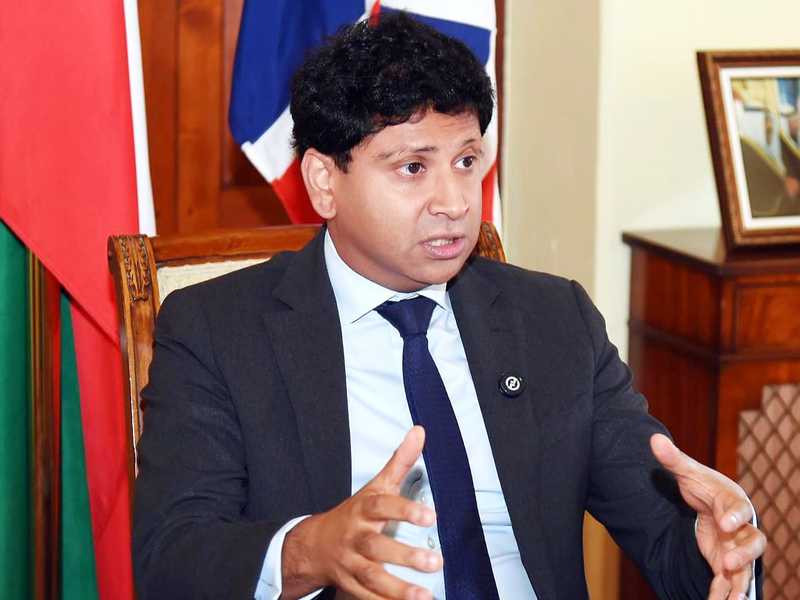
Maysa Al-Sukari: The British Ambassador to Kuwait, Qudsi Rashid, emphasized that Kuwait’s security and stability remain a steadfast priority for his country, reaffirming the continuation and development of defense cooperation between the two nations to address current and future threats. Speaking during a meeting with representatives of local newspapers, Rashid stated that the Kuwaiti-British defense partnership is “deep and multifaceted,” having evolved over decades to include military training, defense education, operational cooperation, security consultations, and high-level dialogue between the armed forces and governments of both countries.
In this context, Rashid revealed that British companies are holding discussions with Kuwaiti military authorities regarding the supply of modern defense technologies to Kuwait. He clarified that Britain stood by Kuwait during attacks by Iran, working closely with Kuwaiti partners to support regional security and stability. He noted that his country deployed the “Rapid Centurion” air defense and counter-drone system in Kuwait following Iranian strikes in the region.
Rashid stated that the system has been in Kuwait since April last year, and British military personnel responsible for its operation remain in the country, continuing their work in air defense efforts in coordination with the Kuwaiti side. He added that Britain has provided additional support through “ORCUS” capabilities against unmanned aerial systems, alongside ongoing exchanges of expertise, training, and operational experience to enhance Kuwait’s readiness to face evolving threats.
Rashid stressed that the challenges facing the region cannot be addressed by a single state alone, and that international cooperation is essential to reduce tensions, enhance stability, and protect the rules-based international order.
Details follow:
The British Ambassador to Kuwait, Qudsi Rashid, reiterated that Kuwait’s security and stability are a firm priority for Britain, emphasizing the continuation and development of defense cooperation to confront current and future threats. He pointed to the presence of the British “Rapid Centurion” air defense and counter-drone system in Kuwait, alongside “ORCUS” capabilities, as well as the exchange of expertise, training, and operational coordination.
During a meeting with local press representatives, Rashid described the Kuwaiti-British defense partnership as “deep and multifaceted,” developed over decades. It encompasses military training, defense education, operational cooperation, security consultations, and high-level dialogue between the armed forces and governments of both nations.
He explained that Britain stood by Kuwait during the crisis with Iran, working closely with Kuwaiti partners to bolster regional security and stability. He highlighted that his country deployed the “Rapid Centurion” system in Kuwait after Iranian strikes in the region to help protect British and Kuwaiti personnel and interests.
Rashid confirmed that the system remains in Kuwait since April last year, with British military personnel continuing to operate it in coordination with Kuwaiti counterparts. He added that Britain has provided additional support through “ORCUS” anti-unmanned aerial system capabilities, alongside ongoing exchanges of expertise, training, and operational experience to strengthen Kuwait’s readiness against changing threats.
British officers were also mentioned in this context. Rashid noted that cooperation extends beyond equipment to include British officers monitoring air operations at the air defense command center, as well as British military personnel working alongside Kuwaiti and other allied forces within command headquarters to contribute to the protection of Kuwaiti airspace.
He further stated that British companies are in talks with Kuwaiti military authorities to supply the country with modern defense technologies. Rashid said Britain views defense cooperation with Kuwait on two levels: first, addressing current threats, and second, joint efforts over the next three to five years to develop capabilities needed to face future threats.
He pointed out that the British Military Mission has been a cornerstone of defense cooperation between the two countries for over 30 years, with its personnel permanently stationed in Kuwait, working with the Kuwaiti Armed Forces to provide training, advice, and expertise across a wide range of defense fields.
Regional Challenges
Rashid stressed that regional challenges cannot be handled by one state alone, and that international cooperation is vital to de-escalate tensions, enhance stability, and safeguard the rules-based international order. He affirmed Britain’s support for dialogue, diplomacy, and collective action among regional and international partners to address shared challenges and reduce escalation risks.
Regarding the latest developments on the Free Trade Agreement and its entry into force, Rashid said deepening economic ties between Kuwait and the UK was one of his main priorities last year, expressing pride in the progress made in strengthening trade links and supporting business and investment opportunities across multiple sectors.
He considered the conclusion of negotiations on the Free Trade Agreement between the UK and the Gulf Cooperation Council (GCC) a significant milestone laying the foundation for a more ambitious economic relationship in the coming years. He clarified that the agreement has not yet entered into force, and that Britain and the GCC states, including Kuwait, are required to complete necessary domestic procedures for ratification. He confirmed that there is no clear timeline for its entry into force at present.
He noted that the agreement will facilitate trade and investment, remove barriers and tariffs, ease the movement of goods and services, create new opportunities for businesses, and support economic diversification and long-term growth in both countries.
British Military Movement to Support Kuwait
Rashid said he arrived in Kuwait on October 1 last year and did not expect Kuwait to face Iranian attacks. He explained that the escalation did not alter his priorities, but made his primary mission to demonstrate Britain’s political, diplomatic, and military support for Kuwait.
He noted that the attacks recalled the 1990 invasion experience, reaffirming his commitment to ensuring Britain fulfills its friendship and partnership obligations to Kuwait. He pointed to visits by British ministers and military officials to Kuwait during the attacks to show solidarity, as well as the deployment of personnel, equipment, and defense capabilities to support Kuwait.
Change in UK Position on Israeli Occupation
Regarding measures and decisions announced by his country concerning the boycott of Israeli products, Rashid said Britain has changed its stance on the Israeli occupation of the West Bank as part of its efforts to preserve the two-state solution. He explained that the official British position now considers the occupation itself illegal and unacceptable under international law, whereas previously the focus was on the illegality of settlements.
What is the “Rapid Centurion” System?
Ambassador Qudsi Rashid clarified that “Rapid Centurion” is an integrated British system, not a single aircraft or piece of equipment. It includes means for surveillance, detection, tracking, and countermeasures against drones, and is linked to command centers to determine how to respond to air threats.
He explained that the system covers a specific portion of airspace, as a single system cannot cover the entire country, noting that other systems cover different areas.
244,000 Electronic Travel Authorizations
The British Ambassador, Qudsi Rashid, revealed that Britain had issued approximately 244,000 Electronic Travel Authorizations (ETA) to Kuwaiti citizens by June 2026, with strong ongoing demand for travel to the UK for tourism, business, education, and family visits.
14,000 Kuwaiti Students in UK Universities
Rashid affirmed that education is one of the strongest pillars of Kuwaiti-British relations, estimating the number of Kuwaiti students studying in British universities at around 14,000, including government-sponsored scholars and self-funded students. He noted that this figure is approximate.
12 British Schools in Kuwait
Rashid pointed out that Kuwait hosted the first British school in the Gulf and currently includes 12 member schools of the British Schools in the Middle East Association, alongside other schools offering the English curriculum and educating thousands of students.
He highlighted cooperation between the British Council and universities, researchers, and institutions in both countries in areas such as health, artificial intelligence, digital technologies, water security, sustainability, and skills development.
