News Report: Legislative Reforms... Providing Solutions to the Housing Issue
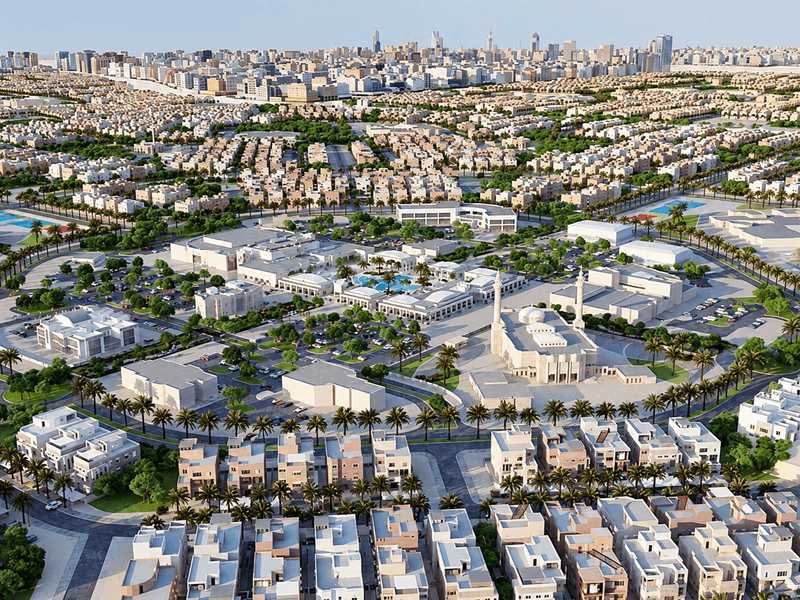
The system of legislative and executive reforms recently adopted by the Kuwaiti government in the housing file represents a strategic turning point, moving the country into a new phase of achieving urban sustainability that aligns with state objectives and meets citizens’ needs. The draft decree-law on housing finance for housing care beneficiaries, approved by the Council of Ministers on September 22 last year, constitutes the latest legislative link in a series of government decisions aimed at ensuring the sustainable provision of dignified housing for citizens.
The implementation of the housing finance law is expected to create additional financial instruments that support upcoming housing projects, reduce waiting periods for housing care beneficiaries, and activate the real estate sector. Minister of State for Municipal Affairs and Minister of State for Housing, Abdul Latif Al-Mashari, stated that the draft law comprises 15 articles. Article 2 defined the scope of application and validity of its provisions for the purpose of purchasing a residential unit from a real estate developer or constructing a plot allocated by the Public Authority for Housing Care, in accordance with the conditions and controls set by the Authority for projects that have been implemented or are currently under implementation.
Article 4 of the law outlined provisions regarding supported or non-supported housing finance and the method of repayment, allowing for a combination of both in accordance with the controls and procedures established by the Central Bank of Kuwait. Decree-Law No. 89 of 2025, which amended certain provisions of Law No. 118 of 2023 concerning the establishment of companies to build and economically develop cities or residential areas (the Real Estate Developer), enabled the Public Authority for Housing Care to diversify the forms of companies it establishes and their capital, in line with the nature of the project and based on feasibility studies for each specific project.
The Real Estate Developer legislation, which officially entered into force in early August 2025, is one of the main pillars for developing the housing sector and a vital element in achieving sustainable housing care. Its role extends to contributing to the construction of integrated urban communities that meet citizens’ needs and aspirations. The law aimed to enhance the private sector’s contribution to implementing housing projects, granting developers greater freedom to offer diverse residential products according to the varying needs and capacities of beneficiary families and in different sizes. Furthermore, the law empowered the (Housing Care) system to set controls, standards, and technical specifications for buildings, suburbs, areas, and neighborhoods for each project individually, ensuring design integration and quality of life in these projects.
The government’s announcement regarding the imminent qualification of real estate developers for three investment opportunities in the first phase of the Real Estate Developer program, in accordance with the law’s provisions, represents a fundamental step in supporting urban growth and enhancing the capacity to overcome challenges facing the housing file. These investment opportunities consist of three packages comprising 5,000 residential units in the cities of Al-Mutlaa, Saad Al-Abdullah, and Jabir Al-Ahmad.
In a new step to accelerate the Real Estate Developer project, the Public Authority for Housing Care announced at the end of last August the qualification of 22 alliances comprising 41 Kuwaiti and international companies to participate in the next phase of procedures for launching three major housing projects, thereby supporting the acceleration of project implementation. Ahmad Al-Ansari, Acting Deputy Managing Director for Investment and Private Sector Projects at the Authority, stated that the qualification of these alliances follows directives from the Council of Ministers, noting that this step contributes to developing integrated housing projects that meet citizens’ needs and align with the state’s objectives in urban development.
The Public Authority for Housing Care had previously conducted detailed and comprehensive feasibility studies for the first projects to be implemented under the Real Estate Developer framework. The first three sites were carefully selected, and preliminary designs for these homes and areas were prepared to ensure project viability. During the second Kuwait National Development Projects Conference (ENCON5), held in mid-June last year, Minister of State for Municipal Affairs and Minister of State for Housing, Abdul Latif Al-Mashari, emphasized that the housing file represents a fixed national priority and enjoys the attention and support of the political leadership. Minister Al-Mashari noted that the Public Authority for Housing Care has recently worked at a rapid pace to amend several important policies and laws.
The Governmental Coordinating Committee for Monitoring the Implementation of Services Related to Housing Projects, formed by a Council of Ministers decision, is tasked with unifying efforts to implement all services related to housing projects, ensuring their completion according to the best sustainability standards and accelerating their implementation pace. The committee is responsible for taking all measures and procedures to expedite the completion of projects related to the housing sector in the country, removing obstacles that may arise, coordinating between entities to formulate joint plans, and determining the procedures for providing, operating, and maintaining services related to existing and future residential cities and suburbs. It also designates the entities responsible for taking over buildings or services belonging to government entities, in accordance with the time schedules of various housing projects, and monitors the efforts of each entity in this regard.
The committee includes eight government entities: the Ministries of Finance, Public Works, Electricity and Water, Renewable Energy, and Transport, as well as the Kuwait Municipality, the Public Authority for Agriculture and Fish Resources, and the Kuwait Credit Bank.
Concurrently, the Ministerial Committee for Monitoring the Implementation Status of Agreements and Memoranda of Understanding signed between the Government of the State of Kuwait and the People’s Republic of China continues to work on accelerating the development projects included in the MoUs between the two countries, which encompass cooperation in the field of housing development. The MoU signed with the Chinese side aims to expand the scope of mutual cooperation and create long-term strategic communication in the field of housing project development, enhance capacities for developing integrated and advanced residential cities, and accelerate the pace of providing housing care to citizens.
The Council of Ministers directly monitors the work of entities in housing projects and supports them to ensure their ability to fulfill their assigned commitments. Periodic reports issued by the Public Authority for Housing Care reveal that the Authority’s projects are witnessing notable progress in completion rates, amid the continued implementation of infrastructure and building works in several residential cities.
Government efforts aim to construct approximately 170,000 residential units over the next ten years, distributed across several areas. There is a strong emphasis on adopting new, more flexible, and efficient models that leverage international expertise and keep pace with economic and urban changes, while preserving the specificity of Kuwaiti society and the requirements of Kuwaiti families.
Kuwait has allocated two programs in its development plans to build cohesive infrastructure and create environmentally harmonious residential areas. These programs include a set of policies, foremost among them building environmentally friendly cities based on green building principles, green infrastructure, and smart technology, in addition to improving land and facility management and creating sustainable alternatives to the current housing system.
Government directions focus on providing land, raising the efficiency of the administrative system for housing projects, and enhancing implementation processes by activating the role of the private sector and ensuring the provision of high-quality living standards.
