American Imprisoned for 41 Years Wrongfully; DNA Analysis Saves Him from Execution
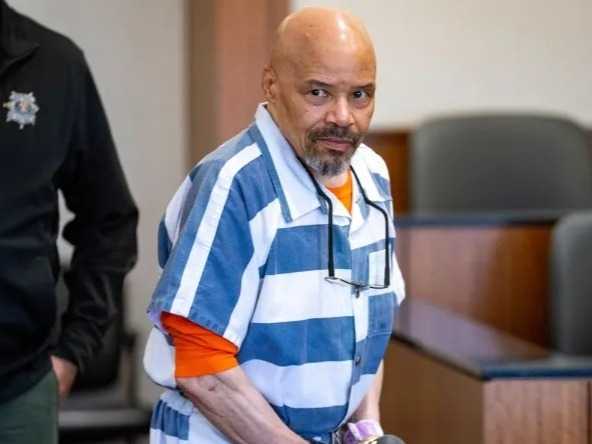
A judge in Utah released Douglas Stuart Carter on bail after nearly 41 years behind bars in a 1985 murder case. The decision followed new DNA analysis that excluded Carter from samples found at the crime scene, after years of appeals revealed investigative misconduct and two witnesses recanted parts of their testimony.
Carter, 71, was convicted of killing Eva Olsen and sentenced to death, but he has consistently denied committing the crime, stating that the confession he signed during interrogation was coerced. Olsen was stabbed in the back, abdomen, and neck, and then shot in the back of the head. A kitchen knife from the home was found near her body, but no firearm was recovered.
Police suspected that Carter, who was living with his mother in Utah, killed Olsen during a robbery. He later left the state after being considered a suspect in another assault case, before being arrested in Nashville, Tennessee. There, he confessed during questioning, but later claimed it was made under threat and coercion.
There was no physical evidence linking him to the crime scene, but the jury convicted him based on the confession and the testimony of Epifanio Tovar and his wife Lucia, whose statements supported parts of the prosecution’s narrative. He was sentenced to death in 1985. The Utah Supreme Court overturned the sentence in 1989 and ordered a new sentencing hearing, after which he was again sentenced to death in 1992.
In 2011, Epifanio Tovar and his wife Lucia, witnesses whose testimony was pivotal in Carter’s conviction, were found in Mexico. Both stated that police pressured them to give false testimony, provided them with financial assistance, and asked them to conceal this support from the court. According to the Utah Supreme Court ruling, the Tovar family received approximately $4,000 from police to cover expenses including rent, food, and bills.
The ruling also concluded that lead investigator George Pierpont directed Epifanio to falsely testify that Carter had spoken before the crime about his intent to rape, rob, and flee in a car. Tovar later stated that Carter never said such things. The prosecution later used this statement during the 1992 sentencing phase, before the second death sentence was issued. The court further found that police threatened the couple with arrest, deportation, and separation from their son.
In September 2025, the Utah Supreme Court upheld the overturning of Carter’s conviction and sentence, ordering a new trial, after finding that the case involved violations including withholding evidence from the defense, inducing perjury, and failing to correct known false statements. Carter’s attorneys also argue that witnesses saw a white man leaving the crime scene, and that an investigator withheld information pointing to the victim’s husband, Orla Olsen, who died in 2009.
Earlier this month, the prosecution announced that new DNA analysis excluded Carter as the source of blood found on a door handle at the crime scene, as well as the genetic material on the knife handle. Carter’s attorney, Neil Hamilton, is calling for the charges to be dropped, stating, “If it were up to the state of Utah, he would have been executed 15 or 20 years ago, before we discovered the misconduct.”
Carter will remain under electronic monitoring during his bail period while awaiting the new trial. He has not been legally exonerated, and the murder charge still stands, but the evidence to be presented this time differs significantly in key respects from that which led to his conviction more than four decades ago.
