Dr. Nadiyah Al-Ayisi to Al-Qabas: Early Detection and Treatment Advances Boost Breast Cancer Recovery Chances
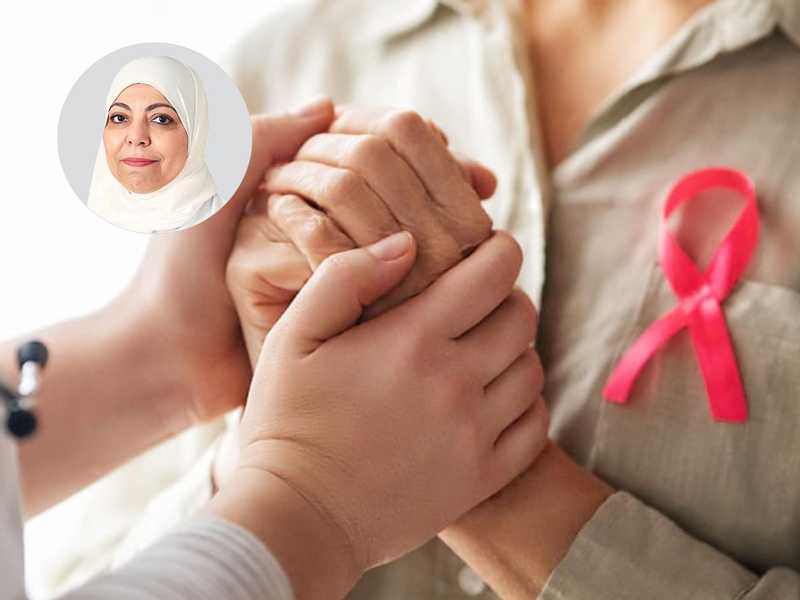
Consultant in Breast Imaging at Al-Salam Hospitals discusses advancements in detection and treatment methods and the importance of health awareness.
Translated by Qiyas from القبس — Original source
Dr. Wala Hafiz: The discussion of breast cancer is no longer associated with panic or confusion. In recent years, there has been significant progress in early detection methods and treatment approaches, granting millions of women better chances for treatment and a return to their normal lives. While awareness of risk factors and warning signs remains important, the most crucial message is that a woman’s knowledge of her own body and adherence to appropriate screenings can make a real difference.
Coinciding with October, Breast Cancer Awareness Month, Al-Qabas spoke with Dr. Nadiyah Nasser Al-Enezi, a Breast Imaging (Mammography) Consultant at Al-Salam Hospitals, who highlighted the importance of steps that help women care for their health, ranging from prevention and risk assessment to early screening and the latest treatment trends.
**Prevention Starts with Lifestyle**
Dr. Al-Enezi noted that while not all cases of breast cancer can be prevented due to uncontrollable risk factors, women can reduce their risk by maintaining a healthy weight, engaging in regular physical activity, and avoiding smoking. Additionally, knowing one’s family medical history helps doctors determine if a woman requires follow-up care different from routine screening.
**Is Weight Gain Linked to Cancer?**
Dr. Al-Enezi stated, “Excess weight is generally associated with an increased risk of developing certain types of breast cancer. Therefore, focusing on physical activity and a balanced diet is not just about appearance or weight; it is part of long-term health care.”
**Early Screening**
Dr. Al-Enezi pointed out that the Kuwait Ministry of Health recommends mammograms starting at age 40, as do the American College of Radiology. However, there are exceptions: mammography may begin at age 30 if there is a family history of the disease or a history of prior chest radiation therapy at a young age.
**Screening Without Symptoms**
Dr. Al-Enezi emphasized that “the absence of symptoms does not eliminate the need for screening. One of the key benefits of early screening is its ability to detect changes that cannot be felt or seen with the naked eye. Therefore, feeling that ‘everything is normal’ is not a substitute for recommended screening.”
**Signs Warranting a Doctor’s Visit**
Dr. Al-Enezi stressed that women should not wait for symptoms to appear before undergoing a mammogram. She said, “A new lump in the breast or under the arm is a sign that requires evaluation, but breast cancer does not always present as a lump.” Other signs may include a new change in the size or shape of the breast, nipple retraction, bloody nipple discharge, changes in breast skin, or a persistent change that differs from the breast’s usual nature.
She added, “In some cases, signs of disease are detected at a very early stage, before obvious symptoms appear. Conversely, having one of these symptoms does not necessarily mean cancer is present, as many breast changes are benign.” She affirmed, “Any new change deserves evaluation. Regular follow-up contributes to early detection, not fear.”
**Importance of Monthly Self-Examination**
Regarding self-examination, she noted that what matters most today is “breast awareness”—meaning a woman knows the normal look and feel of her breasts and pays attention to any new changes. This awareness does not replace mammograms or recommended medical exams, but it helps women notice changes that warrant consultation.
**Mammogram Results: Do They Confirm Cancer?**
Dr. Al-Enezi emphasized that an abnormal mammogram result does not necessarily mean cancer is present. Such a result may require additional imaging, an ultrasound of the breast, other tests, or occasionally a tissue biopsy to confirm the nature of the change. Therefore, women should not interpret a request for additional testing as a cancer diagnosis.
She added, “It is also important to correct a common misconception about biopsies; taking a sample does not cause cancer to spread. Rather, it is a fundamental means of obtaining an accurate diagnosis when needed.” She clarified that biopsies are performed when malignant diseases are suspected, and sometimes for certain benign conditions. There is a widespread but incorrect belief among many people that a biopsy might cause malignant disease to spread. Another common misconception is that mammography can cause cancer, despite international studies proving that screening is a safe and accurate procedure that preserves women’s health.
**Surgery and Radiation Therapy**
Dr. Al-Enezi confirmed that in many cases, breast-conserving surgery combined with radiation therapy can be performed instead of a full mastectomy. The most suitable option is determined based on the tumor’s size, location, characteristics, and stage.
**Important Questions**
Dr. Al-Enezi mentioned that there are three key questions every woman should ask a specialist as part of awareness:
1. What is my breast density?
2. When should I repeat the screening?
3. Do I need additional tests due to my family history or risk factors?
**A Message to Every Woman**
Dr. Al-Enezi delivered a final message to every woman: “Breast cancer is not a story that begins with diagnosis and ends with fear. It is a story of continuous progress in detection, treatment, and recovery chances. The best thing a woman can do for herself is not to wait for a problem to arise before she starts caring for her health.”
She concluded, “Early screening does not mean we expect the worst; it means we give ourselves a better chance for treatment.”
