Two Joint-Stock Companies Established to Manage and Develop 'Al-Nuaimat Economic' and 'Al-Nuwaysib Free' Zones
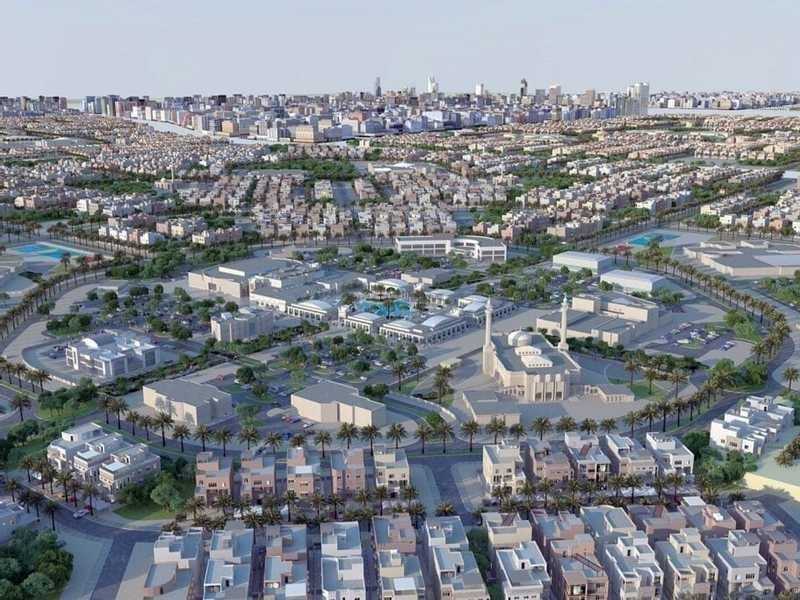
Kuwaiti officials are moving to take new steps to activate the Nuaaim Economic Zone and Al-Nuwayasib Free Zone projects by establishing two separate public joint-stock companies with specific objectives, each responsible for managing and developing one of the projects. This initiative aligns with the broader strategy to strengthen public-private partnerships and expand the base of non-oil investments. According to a document reviewed by Al-Qabas, government entities are finalizing contractual, legal, and technical arrangements to complete the project files, paving the way for updating feasibility studies and evaluating implementation opportunities in partnership with the private sector.
The proposed arrangements include establishing a public joint-stock company for each project, ensuring legal and financial separation between the Nuaaim Economic Zone and the Al-Nuwayasib Free Zone. The Direct Investment Promotion Authority, in coordination with the Public-Private Partnership Projects Authority and the Central Tenders Board, is evaluating international consulting firms to select one that will update the studies for the Nuaaim Economic Zone project and prepare a comprehensive feasibility study for the Al-Nuwayasib Free Zone project.
Under the document, the winning consulting firm will provide technical and financial support for the establishment of the two companies, including drafting the establishment contracts, articles of association, and shareholders’ agreements. It will also determine control and management arrangements and percentages for the developer or investor in accordance with relevant Kuwaiti laws. Additionally, the firm will assist government entities in completing the necessary procedures to issue the decree establishing the two companies.
Assessing the Private Sector’s Capacity
Among the consulting firm’s key tasks is evaluating the private sector’s capacity to implement and deliver the projects, alongside studying the legal, technical, financial, and investment aspects. The study will measure the developmental impact of the projects, their contribution to implementing state policies, their expected operational lifespan, and their ability to meet future economic needs. It will also estimate the financial impact on the state budget.
Furthermore, the study will consider the private sector’s perspective regarding the expected and realistic demand volume, ease of implementation, revenue diversification, and the projects’ impact on employing national labor, gross domestic product (GDP), and enhancing the competitiveness of the Kuwaiti economy.
The authorized capital for each company will be determined based on the project size and financing needs, following the completion and updating of feasibility studies. Once each project is officially launched and the winning investor is selected to manage and implement it, the relevant public joint-stock company will sign the official partnership agreement.
Citizen subscriptions in the two companies are scheduled to take place after the projects enter the actual operational phase and begin generating operational profits, thereby linking citizen participation to a more mature and stable stage of the projects.
A Platform for Economic Diversification
The government aims to provide new and attractive investment opportunities for direct investments, support income source diversification, and reduce reliance on oil through the development of these economic and free zones. The projects also seek to develop promising investment opportunities, facilitate foreign investment procedures, identify public-private partnership opportunities, and support non-oil exports.
Additional objectives include transferring technology and technical expertise to the Kuwaiti market, encouraging exports of national products, and enhancing Kuwait’s competitiveness in regional and international markets. A key goal of the projects is to expand economic and commercial integration areas between Kuwait and the Kingdom of Saudi Arabia, leveraging their proximity to the Saudi border and their connection to road networks and trade corridors.
Nuaaim: An Industrial and Logistics Gateway
The first phase of the Nuaaim Economic Zone covers approximately 6 square kilometers, located in the western part of the Al-Jahra Governorate, about 70 kilometers west of Kuwait City’s urban area, along the route leading to the Saudi border crossing. The area adjoins sites designated for industrial and agricultural projects and is connected to the proposed Gulf Cooperation Council (GCC) railway project, with access via the Salwa Highway.
The zone includes a proposed strategic industrial plan to host large-scale transport activities, alongside relocating heavy industries from southern coastal areas and consolidating them in a unified location.
Al-Nuwayasib Free Zone: A Strategic Location
The Al-Nuwayasib Free Zone spans approximately 12 square kilometers in southern Kuwait, adjacent to the Saudi border. Its location connects it to the main highway network, facilitating easy access and linking it to trade and logistics corridors. This supports its targeted role as a free zone capable of attracting investments, commercial and industrial activities, and logistics services.
