Pakistani Ambassador to Al-Qabas: Defense cooperation with Kuwait enters a "new phase"
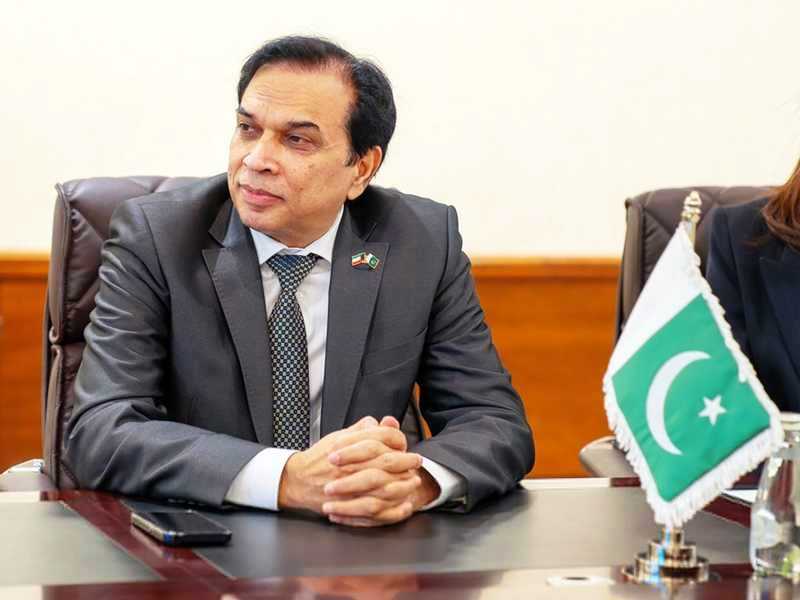
Mee Al-Sakri – Dr. Zafar Iqbal, the Ambassador of the Islamic Republic of Pakistan to the country, affirmed that Kuwaiti-Pakistani defense cooperation is witnessing continuous development toward expanding institutional links, building capabilities, and enhancing practical cooperation. He noted that the Defense Cooperation Agreement signed in 2023, and ratified by Kuwait in July 2026, was followed by the signing of the 2026 Protocol of Agreement last August, which provided additional momentum to the cooperation trajectory between the two countries.
In a special statement to Al-Qabas, Iqbal said that the recent meeting between the Director of Joint Operations of the Kuwaiti Armed Forces and the Commander of the Pakistani “Kuwait Duty Force” reflected the nature of institutional military cooperation between the two countries and took place within the framework of implementing the frameworks agreed upon by both sides.
He clarified that the 2026 Protocol of Agreement stipulates the expansion of cooperation areas to include training, capacity building, and border management, alongside other areas agreed upon by the two countries. He explained that the meeting reviewed the practical aspects of implementing the cooperation and coordination frameworks, while specific operational arrangements are being followed up through the established channels between the two sides.
In response to Al-Qabas’s question on whether defense cooperation between Kuwait and Pakistan is entering a new phase that goes beyond training and exercises to a more integrated military partnership, the Pakistani ambassador stated that the relationship is “evolving beyond its previous focus on training and exercises.”
He added that the 2023 Defense Cooperation Agreement established a broader institutional framework, encompassing military training and education, joint exercises, exchange of expertise, and other areas agreed upon by both sides. He pointed out that Kuwait’s ratification of the agreement in July 2026, followed by the Protocol of Agreement in August, “provided additional momentum to this process.”
He affirmed that the current phase focuses on institutional links, capacity building, and practical cooperation in areas jointly identified by both sides.
Regarding the possibility of developing joint Kuwaiti-Pakistani mechanisms to address regional threats and protect Gulf security amid accelerating security developments, Iqbal said the two countries “regularly exchange views on regional security developments.”
Concerning plans for new Kuwaiti-Pakistani military exercises in the coming period and the areas they might focus on, the Pakistani ambassador affirmed that joint exercises and training are a solid component of defense cooperation between the two countries.
He clarified that the 2023 Agreement specifically stipulates joint exercises, while the new protocol works to expand the general framework of cooperation. He noted that future activities will be determined by the two armed forces based on their training requirements and priorities.
Iqbal explained that the Kuwait Duty Force, which includes officials from the Pakistani Armed Forces, was established to facilitate the implementation and activation of the Defense Cooperation Agreement between Pakistan and Kuwait and the subsequent Protocol of Agreement.
He stated that the force’s composition brings together relevant military expertise to coordinate work with the Kuwaiti side, follow up on agreed cooperation areas, and assist in translating the bilateral defense cooperation framework into practical programs.
He added that this includes “examining emerging security challenges and relevant capacity development areas,” noting that the 2026 Protocol of Agreement allows for cooperation in “other mutually agreed areas in the field of defense cooperation,” going beyond training and capacity building.
Regarding the possibility that Pakistan may have offered Kuwait new defense systems or technologies to counter drones and missiles, Iqbal clarified that his country possesses capabilities in the field of defense production and is open to defense industrial cooperation with friendly countries in areas of mutual interest.
He added that the broader cooperation framework allows for cooperation in mutually agreed defense areas, including technical cooperation and capacity building.
In light of Houthi attacks and rising regional tensions, Al-Qabas asked the Pakistani ambassador about Islamabad’s assessment of the level of risks facing Gulf security and maritime routes, and whether it sees the need to enhance defense cooperation between Gulf states and Pakistan. He stated that his country views the security and stability of the Gulf as of paramount importance, emphasizing that Gulf security and freedom of navigation are vital for regional stability, as well as for international trade and energy flows.
He said that Pakistan supports efforts aimed at protecting regional stability, sovereignty, and freedom of navigation, “while avoiding further escalation.”
He added that the “changing regional security landscape makes continued defense and security cooperation between Pakistan and Gulf states particularly important.”
Regarding whether Islamabad considers Gulf security directly linked to Pakistan’s security, and how this can be translated into practical military and security cooperation, especially with Kuwait, Iqbal affirmed that his country has “always considered the security and stability of the Gulf closely linked to its own security and economic interests.”
He explained that this is practically translated into defense training, professional exchanges, capacity building, cooperation in maritime security, institutional links, and cooperation in other areas mutually agreed upon by the concerned governments.
He affirmed that cooperation between Pakistan and Kuwait is “already moving in this direction” through the 2023 Agreement and the 2026 Protocol.
