Dr. Azhari Al-Amiri to Al-Qabas: 8 Signs That Call for Early Intervention in Your Child’s Orthodontic Treatment
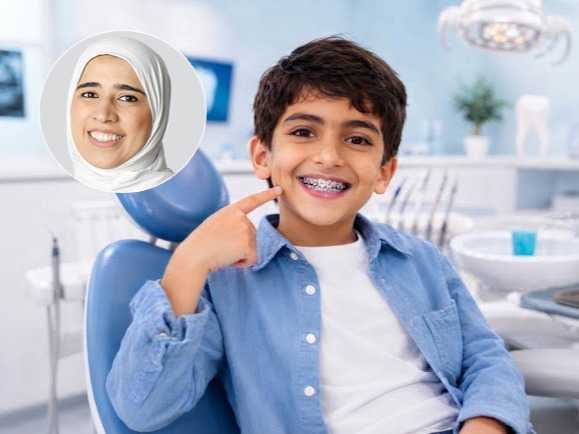
Dr. Wala'a Hafiz: Orthodontics is no longer solely about aesthetics. Early intervention in children helps correct jaw and tooth growth issues and supports proper occlusion and function. In an interview with Dr. Azhari Al-Amiri, a consultant in orthodontics and maxillofacial surgery, she explained to Al-Qabas the importance of early assessment, signs indicating the need for orthodontic treatment, potential complications and treatment methods, and common mistakes made during treatment.
Cases Requiring Intervention
Dr. Al-Amiri clarified that there are specific cases and signs that warrant early parental intervention to address their children's dental issues, which may necessitate orthodontic treatment. These include:
01. Maxillary Deficiency
This deficiency can be anteroposterior or transverse. Anteroposterior deficiency occurs when the upper jaw is smaller than the lower jaw, leading to anterior crossbite, also known as Class III malocclusion, where the upper front teeth are positioned behind the lower teeth. This condition may require the use of a "face mask." Transverse deficiency occurs when the upper jaw is narrow from side to side, causing the upper molars to position inward and the lower molars outward, necessitating the use of a maxillary expander.
02. Mandibular Deficiency
This condition is known as Class II malocclusion, where the lower jaw is retruded relative to the upper jaw, resulting in a significant horizontal gap between them.
03. Early Loss of Primary Teeth
Early loss of primary teeth can lead to the loss of space reserved for permanent teeth, as adjacent teeth may shift and occupy the space of the missing tooth. In such cases, the dentist may need to place a space maintainer. For example, early extraction of a primary molar can cause adjacent primary teeth to drift forward and occupy the space intended for other teeth, potentially delaying the eruption of the permanent molar and causing it to remain impacted within the jaw. The same can occur with the extraction of any other primary molar.
04. Persistent Oral Habits
Among the most prominent oral habits requiring early intervention are:
- Thumb-sucking: This may require the placement of a fixed appliance on the posterior teeth, featuring rods or barriers that contact the front teeth from behind to prevent the child from sucking their thumb.
05. Mouth Breathing
If a child breathes through the mouth instead of the nose, the orthodontist or pediatric dentist should refer the patient to an otolaryngologist (ENT specialist) to rule out causes of mouth breathing, such as adenoid hypertrophy or tonsillitis.
06. Tongue Thrusting
Patients with this habit require an appliance similar to that used for thumb-sucking, fixed behind the front teeth to help eliminate the habit. Various solutions and appliances can be used depending on the specific case.
07. Deep Bite
This occurs when the upper teeth overlap the lower teeth excessively, covering more than half of the lower teeth, and sometimes covering them completely or contacting the gums. In such cases, the orthodontist may place a fixed or removable appliance to help open the bite.
08. Open Bite
In this condition, the upper and lower teeth do not touch, with a gap between them, often appearing in the anterior region despite proper occlusion of the posterior teeth. Sometimes, the gap is present in the posterior region, requiring orthodontic intervention and the use of specific appliances alongside orthodontic treatment to address the issue.
Health Complications
Dr. Al-Amiri emphasized that neglecting dental and jaw problems at an early age can lead to complications affecting oral and dental health, as well as overall health, potentially impacting essential functions such as chewing, speech, and breathing. She highlighted the following major complications:
First: Functional Complications
■ Chewing Difficulties: Improper tooth alignment can make it difficult to cut and grind food efficiently.
■ Speech Problems: Certain malocclusions, such as open bite, can cause difficulty in pronouncing certain letters correctly.
■ Mouth Breathing (Pediatric Breathing): Breathing through the mouth can contribute to maxillary constriction, leading to dry mouth and reduced saliva production, thereby increasing the risk of tooth decay, gum disease, and bad breath due to dryness and bacterial proliferation.
■ Temporomandibular Joint (TMJ) Disorders: Excessive pressure on the joint can lead to chronic jaw pain and frequent headaches.
Second: Health and Psychological Complications
■ Digestive Issues: Loss of teeth or improper alignment can reduce chewing efficiency, potentially causing indigestion.
■ Low Self-Confidence: Uneven tooth appearance can affect a patient's self-confidence, leading them to avoid smiling or feel embarrassed, which may result in social withdrawal.
■ Facial Asymmetry: Jaw imbalance or differences in growth patterns can affect facial harmony and appearance. In some patients, these issues may be associated with psychological and social effects, such as low self-esteem.
Third: Oral Dental Complications
Dr. Al-Amiri outlined several oral health complications related to teeth, including:
■ Tooth Decay and Caries: Crowded teeth can be difficult to clean and maintain, leading to food debris and bacterial accumulation, thereby increasing the risk of decay.
■ Increased Risk of Tooth Fracture: Protruding teeth, especially in the upper jaw, are more susceptible to fracture during falls or impacts.
■ Gum Disease: Crowded teeth can be difficult to clean, leading to food debris and bacterial accumulation around them, causing plaque and tartar buildup, gum irritation, and inflammation.
Diagnosis and Treatment
Orthodontists can typically detect jaw and tooth problems in children at an early age through necessary examinations starting from age seven, including X-rays, dental impressions, and required measurements. At this stage, the first permanent molars have begun to erupt, and the child is in a growth phase, allowing for the guidance of jaw and tooth growth toward proper alignment using appropriate orthodontic appliances.
Dr. Al-Amiri stated: "Early orthodontic treatment aims to address cases with problems in one of the jaws or issues involving both primary and permanent teeth. Preventive or early intervention helps reduce the need for subsequent orthodontic treatment and may even eliminate it entirely in some cases."
She added: "According to research in this field, preventive and therapeutic intervention in orthodontics is always recommended, whether for primary or permanent teeth, with the goal of achieving a definitive resolution or monitoring the condition's progression and completing treatment in a later stage."
Treatment Differences
Dr. Al-Amiri explained that some malocclusion cases can be treated with orthodontics alone, while others may require surgical intervention to correct jaw position. This depends on the nature of the problem, its severity, and the patient's growth stage. Cases treatable with orthodontics alone involve moving teeth within the jawbone, typically mild to moderate cases. However, in adults, after jaw growth is complete, some structural discrepancies may be difficult to correct with orthodontics alone, necessitating jaw surgery. These include:
■ Structural Discrepancies: Such as severe protrusion of one jaw, jaw-facial disharmony, or severe retrusion of one jaw.
■ Certain Open Bite or Deep Bite Cases: Especially those not treated early, making correction difficult with orthodontics alone.
■ Certain TMJ Disorders Associated with Malocclusion: These may include severe facial pain, difficulty opening and closing the mouth, persistent jaw clicking, cartilage erosion or severe joint damage, or irreducible dislocation. These conditions may be accompanied by chronic headaches, neck pain, and ear pain or pain in the surrounding area.
Common Mistakes During Orthodontic Treatment
Dr. Al-Amiri noted that among the most common mistakes patients make during orthodontic treatment are:
- Neglecting Daily Care: Failing to clean teeth regularly with an appropriate orthodontic toothbrush, leading to food debris accumulation around wires and brackets.
- Consuming Hard Foods: Such as nuts, caramel, and chewing gum, which can bend wires or break brackets, affecting treatment progress.
- Non-Compliance with Elastic Bands: Some patients may neglect wearing the elastic bands recommended by the orthodontist, which can delay treatment and hinder tooth movement and occlusal correction.
- Missing Regular Appointments: Some patients may delay or miss monthly follow-up appointments, leading to tartar buildup around teeth, wires, and brackets, and increasing the risk of tooth decay and gum disease.
Important Warnings
Dr. Al-Amiri concluded by stating: "Patient neglect and delays in regular follow-ups can prolong treatment duration and affect outcomes. In some cases, this may lead to root damage or resorption. Additionally, irregular tooth movement can result in undesirable outcomes, and early removal of orthodontic appliances before treatment completion can negatively impact the final result."
