Gulf employees lead the world in artificial intelligence usage
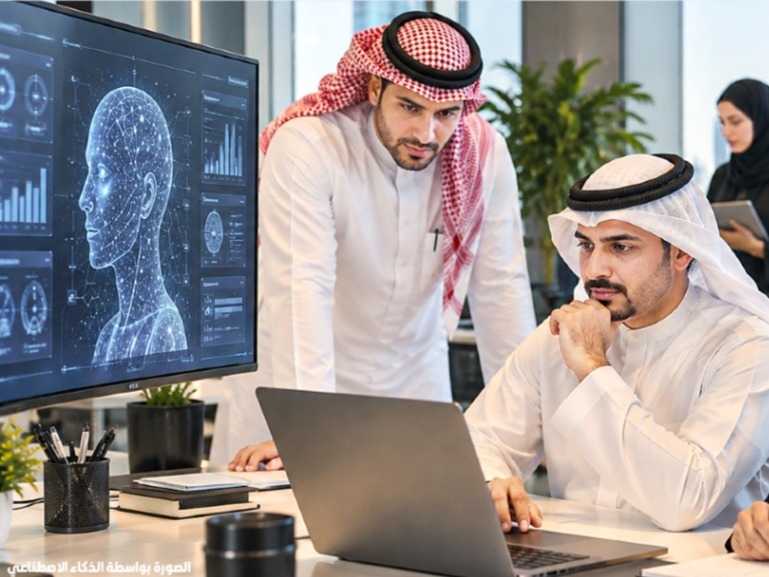
A new global report by Boston Consulting Group (BCG) reveals that Gulf countries have solidified their position among the world’s leading regions in adopting artificial intelligence (AI) and generative AI within the workplace. The region’s workforce has rapidly transitioned from experimenting with new tools to effectively integrating them into daily tasks and operations.
The fourth edition of the group’s global report, titled “Strategy Matters More Than Tools,” shows that 93% of frontline employees in the Gulf use AI multiple times a week or more, while the figure rises to 95% among managers and leaders. The study, based on responses from employees in Kuwait, Saudi Arabia, the UAE, and Qatar, places the Gulf alongside India as a global leader in workplace AI adoption, significantly surpassing the global average of 74% among frontline employees.
Although individual markets, including Brazil and South Africa, recorded higher country-level rates, Gulf nations collectively remained at the forefront, clearly outpacing markets such as France, Italy, and the United States, which fell below the global average.
Productivity Gains
The benefits of AI use are no longer limited to speeding up specific tasks; the study reveals a significant reduction in working hours. Fifty-eight percent of frontline employees in the Gulf stated that intelligent tools save them at least eight hours per week, a figure that rises to 67% among managers and leaders. This equates to nearly a full workday saved each week, highlighting the potential impact of technology on productivity when individual gains are translated into cumulative results at the corporate and institutional level.
Robert Shaw, Managing Director and Partner at BCG X, the digital arm of Boston Consulting Group, noted that the exceptional adoption rates in the Gulf Cooperation Council (GCC) countries reflect a decisive shift by the workforce from experimentation to the genuine integration of technology. He emphasized that high-performing Gulf institutions distinguish themselves not merely by deploying tools, but by investing in developing their teams’ capabilities and enhancing their efficiency in using these tools, thereby converting technological superiority into productivity gains and a competitive advantage.
Evolving Roles
The transformation extends to the nature of jobs and the skills required to perform them. Eighty-five percent of frontline employees said AI has changed the skills required for their roles, while the figure reached 92% among managers and leaders. However, this rapid change has not negatively impacted job satisfaction. Sixty-nine percent of frontline employees and 77% of managers and leaders reported feeling happier at work after adopting AI tools.
The speed of this transformation is even more evident when comparing global usage over the past three years. The proportion of frontline employees using AI regularly jumped from just 20% in 2023 to 74% in 2026, while the proportion of managers using the technology nearly doubled over the same period.
Agents of the Future
The Gulf labor market is preparing for a more advanced phase with the rise of AI agents—systems capable of executing complete tasks with limited human intervention. Sixty percent of frontline employees in the region expect these agents to handle at least half of their current responsibilities within the next three years, a figure that rises to 66% among managers and leaders.
Awareness of these systems has also increased sharply compared to last year, particularly among leadership, coinciding with a more than twofold increase in the global integration of AI agents into daily workflows since 2025. However, BCG warned that governance, oversight, and accountability frameworks have not evolved at the same pace, necessitating that institutions build clear frameworks defining the boundaries of autonomous system usage and responsibility for their decisions and outcomes.
Limited Concern
Despite expectations that intelligent systems will assume a significant share of current responsibilities, concerns about job loss remain limited in the Gulf. Only 28% of frontline employees expressed fear that AI would cause them to lose their jobs, compared to 29% of managers and leaders. The results indicate that the majority of workers view technology as a tool that enhances their ability to achieve results rather than a direct threat, even as they anticipate that an increasing portion of tasks will shift to autonomous systems.
The Readiness Gap
In contrast to the rapid acceleration in usage, the report highlights a global challenge regarding training. Only 36% of participants reported receiving adequate preparation to handle the transition, despite 72% of regular users confirming that the skills required of them have changed significantly.
The gap is even wider in terms of institutional communication. Only 33% of frontline employees globally believe that leadership communicates clearly with them about AI, while just 28% perceive a strong alignment between management messaging and what institutions are actually implementing.
Rami Mostafa, Partner and Managing Director at Boston Consulting Group’s Dubai office, stated that sustaining the gains from the initial phase of AI adoption requires strategic direction from leadership and aligning institutional messaging with employees’ actual daily responsibilities. He emphasized the importance of building appropriate operating models and governance structures in the Gulf to translate individual productivity gains into benefits that extend across the entire organization.
