Chairman of the Environment Committee in the Municipal Assembly: Converting vacant lands into parking lots is an investment that improves our urban environment
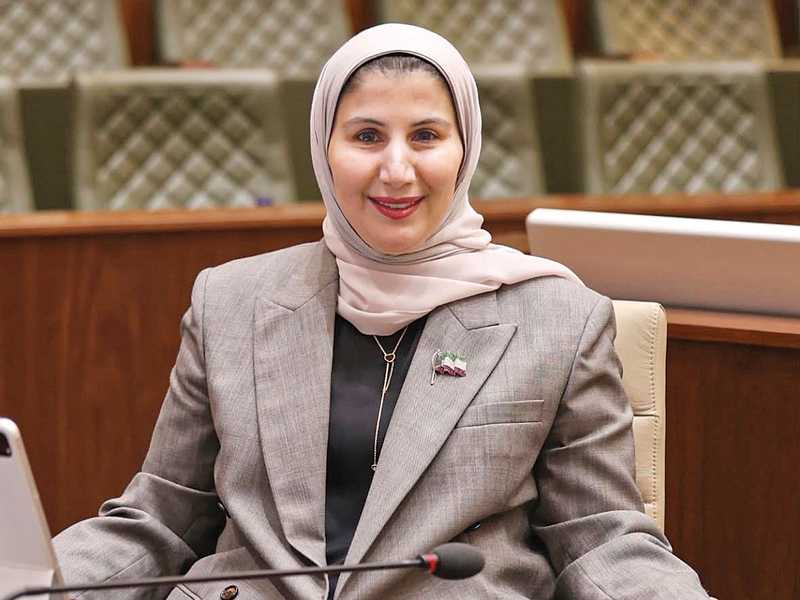
Aliya Al-Farsi, Chair of the Environment Committee of the Municipal Council, affirmed that expanding investment in the construction of parking facilities presents an opportunity to improve our urban environment and enhance parking services, provided that it is accompanied from the outset by planning and standards that prioritize sustainability.
In a press statement, Al-Farsi said, “I support the decision issued by the Council of Ministers to utilize vacant lands as temporary surface parking lots,” noting that this highlights the importance of addressing the phenomenon of urban heat islands. She explained that extensive areas of asphalt and concrete, combined with a lack of vegetation and shading, contribute to the absorption and storage of heat, leading to higher temperatures in the urban environment. This, in turn, results in environmental impacts, increased energy consumption, and a decline in urban environmental quality.
Al-Farsi emphasized the importance of her proposal, submitted more than a year ago, for the “Establishment of a Sustainable Code for Parking Facilities in the State of Kuwait,” which, unfortunately, has not received a response from the Municipality’s executive body to date.
She supported the initiative to implement temporary parking on vacant lands, viewing it as a practical opportunity to begin implementing the recommendations in her proposal and to adopt sustainability specifications and standards in the design and construction of parking facilities. She suggested starting by setting minimum environmental requirements for new parking lots, such as planting trees and installing air-permeable shading structures, and selecting materials and surfaces that limit heat absorption, among other solutions suitable for Kuwait’s environment. The goal is to mitigate the urban heat island effect and reduce its impacts, rather than allowing new parking projects to exacerbate the problem.
Al-Farsi stressed the need to learn from the experiences of neighboring Gulf countries, such as the Kingdom of Saudi Arabia and the State of Qatar, in testing and applying cool paving technologies. These technologies use light-colored, reflective materials and coatings to limit surface heat absorption.
She added, “With the move to establish temporary parking on vacant lands, we have an opportunity to form a technical team to set minimum environmental specifications and standards suitable for Kuwait’s climate, thereby helping to curb the worsening of urban heat islands.”
