Exploitation of Government Lands and 'Empty Spaces' as Parking Lots
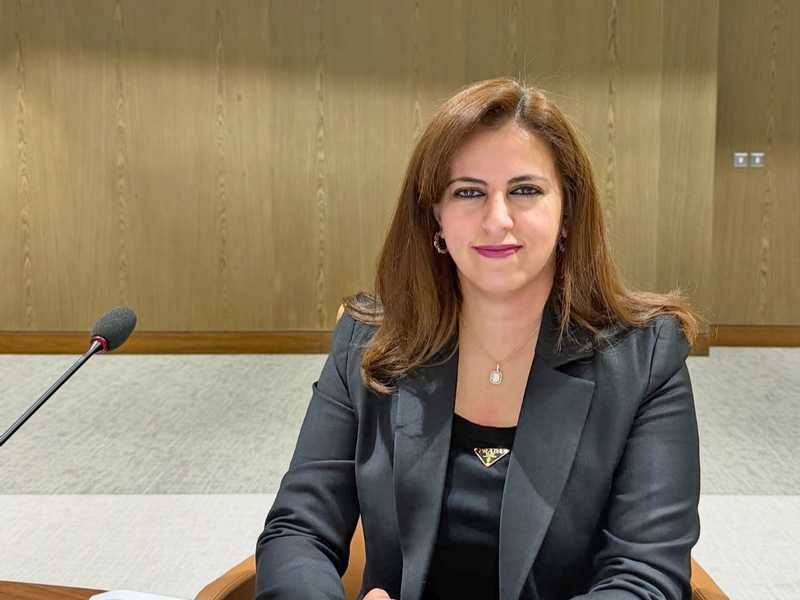
The Technical Committee of the Municipal Council discussed several files, most notably the utilization of government lands and empty spaces as temporary parking lots to regulate traffic, in addition to approving the expansion of the Salima border crossing and reassigning sites for government companies.
Translated by Qiyas from القبس — Original source
The Technical Committee of the Municipal Council resumed its work following the recess and the Council’s return to sessions, discussing a number of files and cases of technical and regulatory importance. Committee Chairperson Eng. Munira Al-Amir stated that the committee discussed ten key cases during its meeting, including files related to infrastructure and sewage, the reallocation of sites for the Kuwait Public Transport Company, and the expansion of the Salwa border crossing. Additionally, a strategic file concerning support for the land-based facilities and installations of the Al-Durra offshore field project was reviewed, along with requests to add floors to the parking building in the East area, reorganize a plot in Hawalli, utilize vacant lands designated for government entities as temporary parking lots, and regulate and utilize sites within road rights-of-way as parking areas.
In line with the committee’s direction toward supporting practical solutions for the shortage of parking spaces and reducing traffic congestion, Eng. Munira Al-Amir clarified that the Technical Committee approved modifying a previous Municipal Council decision to allow the temporary use of sites within road right-of-way boundaries for establishing surface parking lots, in implementation of Clause 1 (Paragraph B) of Cabinet Resolution No. 868. She noted that this move aims to provide short- and medium-term solutions for areas experiencing high traffic density and a lack of parking spaces, emphasizing that these parking lots are temporary and subject to removal whenever road projects need to be implemented, expanded, or upon request by the Ministry of Public Works, Kuwait Municipality, or any service ministries.
She confirmed that the committee established a set of controls to ensure these parking lots do not affect road network efficiency or traffic safety. Key controls include determining each site in coordination with Kuwait Municipality and the Ministries of Interior and Public Works, obtaining approvals from relevant service ministries before finalizing any site, and ensuring that proposed parking does not conflict with existing or future services and infrastructure. Furthermore, temporary parking must connect to the internal road networks of areas without creating new direct entrances or exits from main or express roads, while adhering to safety requirements and safe distances at intersections and road entrances/exits. Coordination with the Ministry of Finance regarding related sites and procedures is also required.
In the same context, the Technical Committee Chairperson confirmed that the committee approved utilizing vacant lands designated for government entities as temporary surface parking lots until the projects designated for those sites begin implementation, in accordance with Clause 1 (Paragraph A) of Cabinet Resolution No. 868. She explained that this approach represents one of the practical solutions for utilizing unused government lands during the transitional period preceding the implementation of designated projects, thereby contributing to providing additional parking spaces and making use of available land without affecting government entities’ plans or future projects scheduled for those sites.
She stressed that the utilization of any site would be linked to the implementation phase of the project designated for it. Coordination with Kuwait Municipality, the Ministry of Public Works, and the Ministry of Interior is required to determine the feasibility of utilizing each site and its specific conditions, alongside obtaining approval from the government entity owning the allocation to ensure that temporary utilization does not conflict with the project’s implementation program. She clarified that newly established parking lots would be removed immediately upon request by the government entity designated for the site, with the entity that implemented the parking responsible for their removal, subject to coordination with the Ministry of Finance regarding related procedures.
Flexible Measures
Engineer Munira Al-Amir confirmed that the Technical Committee views these temporary solutions as flexible measures to address current needs without compromising the future planning of the sites. She pointed out that the success of these solutions depends on prior coordination among government entities and full compliance with the technical, traffic, and service requirements for each site individually.
Regarding the request from the Ministry of Public Works to allocate a sewage path to connect a sewage pumping station with the end of an existing path within the South Sabah Al-Ahmed residential city (N11), Eng. Munira Al-Amir clarified that the committee approved the request for a path approximately 1,900 meters long and 10 meters wide. She further noted that the committee also approved the Ministry of Finance’s request to reallocate Kuwait Public Transport Company sites at the Shuwaikh garage and Abdullah Port from the General Authority for Industry to the Ministry of Finance, in implementation of the relevant Cabinet Resolution.
Salwa Crossing
In another file, Eng. Munira Al-Amir revealed that the Technical Committee approved the General Customs Administration’s request to expand the Salwa border crossing site by an additional area of approximately one million square meters. She explained that the total area of the site after expansion will reach approximately 2,339,132 square meters. The expansion will be utilized for dry and wet storage areas, shaded and open storage areas, and additional services for crossings, in line with the government use of the site.
She added that the committee also discussed the request to cancel the allocation of the site for the Third Olefins and Second Aromatics project (D2) and reallocate it to the Kuwait Gulf Oil Company (KGOC) to support expansion operations related to the project and the land-based facilities and installations of the Al-Durra offshore field project (OPF) in the Zour area. She clarified that the site covers an area of 2.5 million square meters.
