Gifted Schools: An Environment to Support Creativity and Innovation
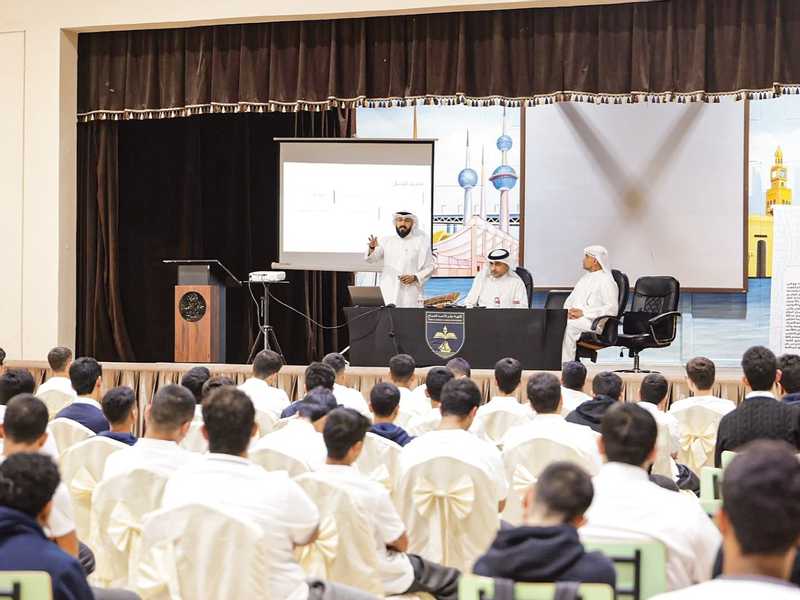
Education Minister Jalal Al-Tabatabai has approved the regulations governing schools for the gifted, establishing a comprehensive regulatory framework that enhances these schools’ capacity to provide a specialized educational environment responsive to the nature, needs, and abilities of gifted learners, and supporting the transformation of talents into scientific achievements that serve Kuwait’s future.
In a statement on Tuesday, the Ministry of Education said the 70-article regulation, divided into nine chapters, sets out a complete operational framework for these schools, ranging from nomination, identification, and admission mechanisms to the academic curriculum, enrichment programs, and assessment, extending to student monitoring and the guarantee of their rights.
The ministry added that the regulation’s provisions apply to schools for the gifted, students enrolled in them, and members of the supporting teaching, administrative, and technical staffs. It noted that the study phases are to be determined by the Education Minister, with implementation beginning at the intermediate level, covering grades six through nine, starting from the 2026–2027 academic year. The dates for implementation in other phases will be determined by ministerial decision. The regulation clarified that schools for the gifted are administratively, academically, and financially affiliated with the Gifted Affairs Office.
It further explained that schools for the gifted follow the official curricula of the Ministry of Education, with the addition of an enrichment subject as a core academic course, consisting of two weekly periods. This enrichment component includes academic enrichment, practical projects, thinking and problem-solving skills, as well as achievements in activities and competitions, thereby contributing to shifting the educational process from a focus on academic achievement alone to developing learners’ capacities in research, application, and creativity.
Emphasizing the creation of a creative environment, the ministry stated that the regulation took into account the nature of education designed for the gifted by ensuring suitable classroom conditions, limiting each classroom to a maximum of 16 students. The ministry also provides transportation for students from various regions of the country, coordinated with official working hours and scheduled educational programs.
The Ministry of Education pointed out that the regulation established a special assessment system for the enrichment subject, totaling 100 points: 60 points for the project, 20 points for achievements in activities and competitions, and 20 points for work encompassing thinking skills, participation, interaction, behavior, and handling of tools. This reflects the focus of gifted schools on achievement, application, and skills alongside academic knowledge.
The statement noted that a student’s continued enrollment in a school for the gifted is contingent on two clear criteria: a final overall grade of no less than 90%, and a score of no less than 75 points in the enrichment subject. These requirements ensure that the level of these schools remains aligned with their founding purpose, and that enrollment represents a commitment to a comprehensive support program for the target group.
In a related development, the academic year began today for students admitted to the “Masarat” (Pathways) system at the secondary level. A total of 2,991 male and female students commenced their studies in 12 schools designated for implementing the system, distributed across the six educational regions, with two schools (one for boys and one for girls) in each region.
The Ministry of Education stated in a press release that the implementation of the “Masarat” system represents a developmental step toward providing more diverse and flexible educational options, enhancing the learner’s role in constructing their academic pathway and making informed educational decisions. This contributes to developing their capacities and better preparing them to continue their university education and professional careers.
