WHO Regional Director to Al-Qabas: Kuwait's health system is strong in facing emergencies
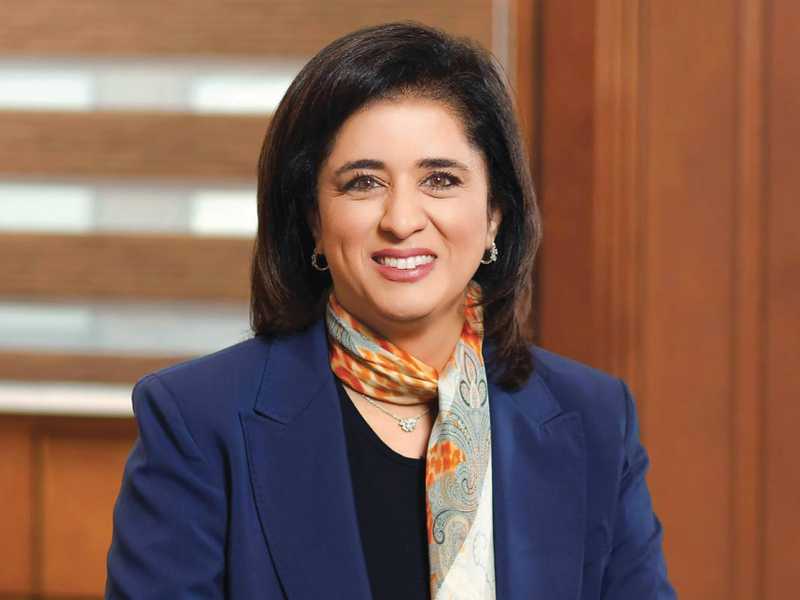
Mai Al-Sukari: Dr. Hanan Balakhi, WHO Regional Director for the Eastern Mediterranean, affirmed that Kuwait possesses genuine strengths in its health system, particularly in combating infectious diseases and maternal and child health. She noted that these capabilities are underpinned by a robust health surveillance system and a comprehensive package of primary health care services.
In a special interview with Al-Qabas, Balakhi stated that Kuwait has not merely been a donor in the health and humanitarian fields, but a partner and leader in global health discussions. She praised Kuwait’s contributions to addressing crises, including providing $60 million to the WHO’s strategic preparedness and response plan for the COVID-19 pandemic. She highlighted that Kuwait was the first country in the region to support the WHO’s contingency fund for emergencies, as well as its operations in Turkey and Syria following the 2023 earthquakes. Furthermore, she cited Kuwait’s contributions to efforts in Sudan, Pakistan, Afghanistan, and Ukraine.
Balakhi added that Kuwait ranks among the top 40 largest donors to the WHO and plays a pivotal role as the coordinator for the Eastern Mediterranean region in Geneva, describing its performance in this capacity as “exemplary.”
**A Regional Model**
Balakhi viewed Kuwait’s humanitarian experience as capable of becoming an important regional model, not only due to the scale of its contributions but also because of its ability to bring together governments, UN agencies, and partners around a collective response to crises. She commended Kuwait’s decision to host a dedicated WHO office in 2021, at its own request, considering the establishment of a five-year cooperation strategy extending to 2027 as a practical model of country-led partnership.
She warned that health challenges related to obesity, diabetes, and heart disease require evidence-based policy-making. She pointed out that the WHO does not impose a single policy on governments regarding unhealthy foods or sugary drinks, but rather provides evidence, guidelines, and international expertise to help countries make their own decisions.
Amid rising security tensions in the region and the potential for displacement, psychological stress, and supply chain disruptions, Balakhi emphasized that Kuwait’s performance during the COVID-19 pandemic serves as a strong test of its response capacity. She noted the existence of a National Health Security Action Plan developed in collaboration with the WHO. She stressed that emergency preparedness is never a completed task; it requires continuous training, funding, and updating. “The biggest mistake we can make is to start preparing for emergencies only after they occur,” she said.
Regarding the “Healthy Cities” project, Balakhi affirmed that Kuwait’s experience in Al-Yarmouk and Abdullah Al-Salem reflects a growing recognition that health is not shaped within the health sector alone, but is also influenced by the environments where people live, work, and study. She praised community initiatives linked to the project, such as raising environmental awareness, involving residents in recycling and water conservation, and expanding walkable green spaces. However, she stressed that the success of such projects must be measured by their actual outcomes, asking, “Do people’s daily habits and health status actually change?”
She stated that Healthy Cities can play a significant role in combating obesity, high blood pressure, and diabetes by encouraging more active and healthy lifestyles, benefiting both individuals and the health system through disease prevention.
**Kuwait: A Partner**
Balakhi reiterated that Kuwait “was not just a donor, but a partner and leader in global discussions,” citing its participation in key issues such as the WHO pandemic agreement and the Access to Pathogens and Benefit-Sharing (PABS) system. She expressed appreciation for this engagement, clarifying that the WHO is the principal health agency of the United Nations and that, during her tenure as Regional Director for the Eastern Mediterranean, she ensured that every country’s voice was heard.
She emphasized that the strongest relationship with any donor is not based on dependence, but on trust built through transparency regarding results. She explained that if elected, she would work to build on such partnerships with Kuwait, expanding and diversifying funding to make it more flexible and predictable, while increasing transparency about the results achieved by the support.
Responding to a question about the need for a unified Gulf health insurance model, Balakhi stated that health care financing arrangements are a “sovereign decision for each country,” and it is not the WHO’s role to impose a unified model. However, she affirmed the real value of common standards, particularly regarding care quality, patient safety, and data.
**Preparedness for Crises**
Regarding Kuwait and Gulf countries’ preparedness to face a wide-scale health crisis amid regional tensions, security risks, displacement, psychological pressures, and potential supply chain disruptions, Balakhi stated that Kuwait’s experience during the COVID-19 pandemic represents a “strong test” of its response capacity. She noted that Kuwait managed to launch a rapid response involving the government and society, and developed a National Health Security Action Plan in collaboration with the WHO. However, she stressed that health preparedness “is never complete”; it requires continuous training, resources, and updates as the nature of regional risks evolves. She said that one of the core principles in her vision is for the WHO to be useful to countries “before a crisis, not just after it erupts.”
**Gulf Emergency Stockpile**
On the possibility of creating a joint Gulf emergency health system involving a unified strategic stockpile of medicines and supplies, along with joint plans to face epidemics, disasters, and crises, Balakhi stated that her experience on the front lines of the MERS-CoV outbreak in the region made her directly aware of how quickly health threats can cross borders. However, she clarified that health response remains a national competence. She indicated that if elected, she would work toward a WHO that encourages country-led solutions, helps build sustainable national capacities, and enables global cooperation.
