FIFA includes "Gulf Cup 27" in its international calendar
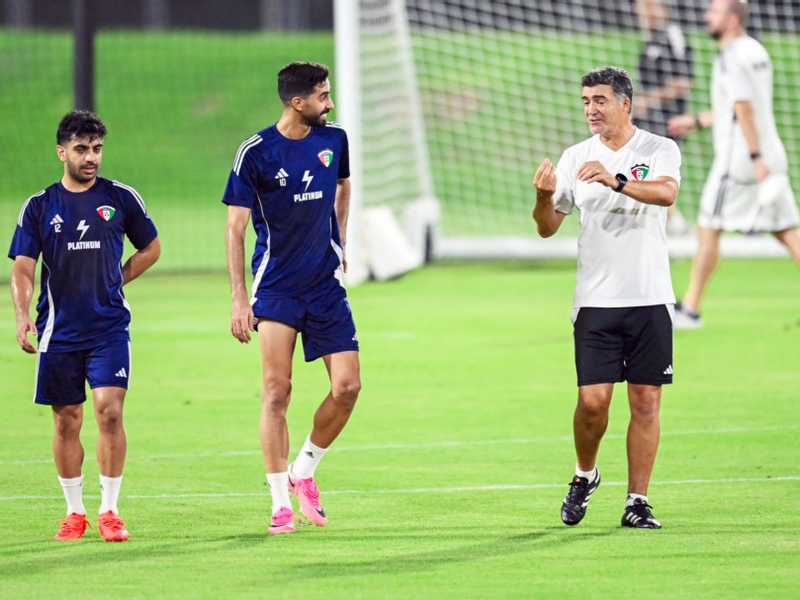
The national football team continues its daily training sessions at its camp in Qatar, in preparation for the 27th Gulf Cup (Gulf 27). The squad will resume its daily training in two sessions, morning and evening, following yesterday’s friendly match against Qatari side Al-Lusail. This arrangement is part of Portuguese coach Helio Sousa’s efforts to provide playing time for the players currently at the camp, allowing him to assess their readiness for the tournament, particularly given the absence of eight players from Al-Kuwait Club from the current national team gathering.
The team will continue training on both technical and physical aspects over the next two days before traveling to Jeddah, which will host the Gulf Cup. The squad will be fully assembled next Thursday with the arrival of Al-Kuwait Club players, after they conclude their participation in the second leg of the AFC Challenge League against Al-Wehda FC of the UAE in the first matchday of Group A, scheduled for next Wednesday.
In a related development, FIFA has officially included the Gulf 27 tournament in its international calendar and in its global ranking system. This makes the upcoming edition in Jeddah the first Gulf Cup to be held within FIFA’s international match dates.
The Gulf Cup will take place from October 23 to November 6, coinciding with the international break. This timing allows participating national teams to call up their foreign-based professionals and compete with their strongest lineups. According to the international recognition, matches in the tournament will be counted as official international fixtures in the records of the participating teams. Each national team is guaranteed at least three official international matches in their records, with the possibility of adding more depending on their performance and the number of games played.
The Gulf Football Union aims to adopt this approach in future tournaments by scheduling all its main competitions within FIFA’s international windows. This strategy leverages the approximately 16-day international break, enhancing the technical quality of the competition and enabling national teams to field their primary squads. Additionally, match results will impact the FIFA World Rankings.
The international recognition also covers the disciplinary aspects of the tournament. The regulations, rules, and sanctions applied will be approved by FIFA, ensuring that disciplinary sanctions are reflected in players’ and teams’ records in other competitions, in accordance with established regulations.
