Kuwaiti humanitarian work: A growing presence around the world
Kuwaiti humanitarian efforts continue to expand their international footprint through projects and initiatives that go beyond providing immediate aid to building more sustainable foundations for the lives of beneficiary communities. This approach is rooted in a deep-seated humanitarian legacy that places serving humanity and reaching people wherever they are at the core of Kuwaiti charitable work. These efforts span diverse sectors, including education, orphan care, water provision, outreach to remote communities, and the development of health and educational services. This variety reflects the ability of Kuwaiti charitable institutions to accurately assess community needs and transform the contributions of benefactors into projects with direct and lasting impact.
From Southeast Asia to the depths of the Amazon rainforest, and reaching water-scarce villages in India, recent Kuwaiti initiatives have presented a multifaceted image of humanitarian action united by a single goal: improving human life and providing tools that facilitate education, stability, health, and the building of a better future.
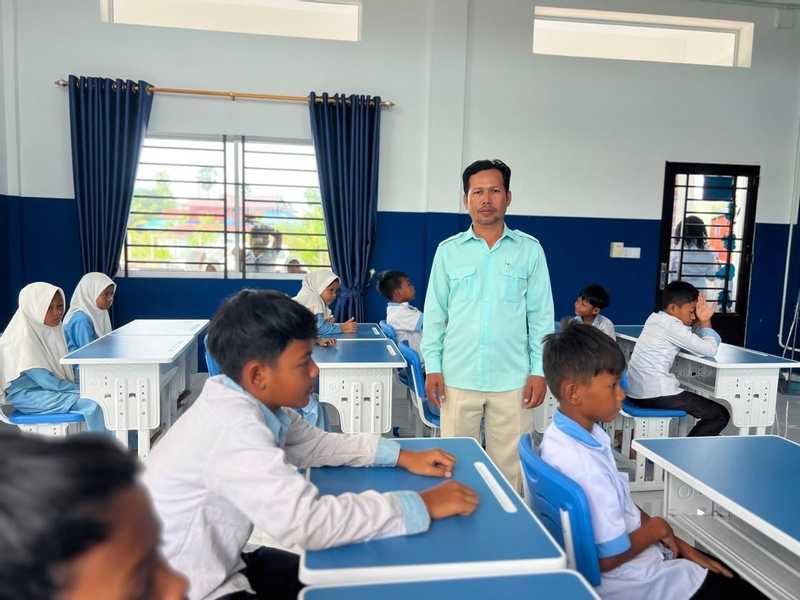
In the Kingdom of Cambodia, the Ata’a for Humanitarian Work Association opened the Ata’a Islamic Center as part of an integrated educational and humanitarian project benefiting approximately 100 students. The center includes an orphanage, eight classrooms, and a mosque, offering an environment that combines accommodation, care, and education. Dr. Bader Al-Hutai, a member of the board of directors at the Ata’a for Humanitarian Work Association, told the Kuwait News Agency (KUNA) on Saturday that the center houses an orphanage providing comprehensive accommodation, alongside eight classrooms where students study the official curriculum approved by the Kingdom of Cambodia, as well as Islamic studies, the Arabic language, and the Holy Quran. The center also features a mosque serving both the students and beneficiaries.
Al-Hutai added that the project extends the association’s interest in educational initiatives that achieve sustainable impact on the lives of children, particularly orphans. He noted that providing care, education, and training in a single environment contributes to giving students a better opportunity to continue their educational journey. He clarified that the center’s role is not limited to academic education but offers an integrated system combining formal education, upbringing, and religious instruction, thereby contributing to the scientific and moral development of the student’s personality and equipping them with the necessary tools to shape their future.
Al-Hutai emphasized that the association is keen on monitoring its projects, documenting implementation stages, measuring their impact, and strengthening trust with donors, who are considered partners in humanitarian work. He confirmed the continued expansion of educational and humanitarian projects with sustainable impact.
In another humanitarian path extending to one of the most remote regions of the world, the Kuwaiti Association for Humanitarian Work reached several villages and indigenous communities deep within the Amazon rainforest in the Republic of Ecuador. The association provided basic assistance while assessing the needs of these areas for health, educational, and developmental services.
Khalid Al-Kandari, secretary general of the Kuwaiti Association for Humanitarian Work, told KUNA that the association places special importance on reaching remote areas and hard-to-reach groups, driven by its commitment to ensuring that the contributions of benefactors in Kuwait reach their rightful recipients wherever they are. Al-Kandari added that the association’s efforts in Ecuador included providing food supplies, solar-powered lanterns, and school supplies and materials to several villages and indigenous communities deep in the Amazon, following direct assessment of the living conditions and needs of the local population.
He noted that the association discussed with local authorities the needs of these areas for basic services, particularly clinics, medical centers, and schools, aiming to transition from direct aid to long-term, more sustainable developmental projects. Al-Kandari explained that the association is also studying several projects serving Muslims and new Muslims, including the establishment of centers that provide spaces for worship and education. He affirmed that Kuwaiti humanitarian work seeks to reach individuals, understand their needs, and select projects that have the greatest impact on their lives.
In India, Namaa Charity, affiliated with the Social Reform Association, continued its water projects as part of the “Khayr Yuroohim” (Charity Quenches Them) campaign by opening 10 semi-artesian wells, benefiting approximately 3,500 people. This step aims to provide sustainable sources of potable water in the most vulnerable communities.
Khalid Al-Shammari, head of the Programs and Initiatives Sector at Namaa Charity, told KUNA that the opening of the wells translates the objectives of the “Khayr Yuroohim” campaign, which seeks to convert benefactors’ contributions into sustainable developmental projects addressing one of the most critical basic human needs. Al-Shammari added that the project provided water to approximately 3,500 beneficiaries, noting that the presence of a safe and sustainable water source alleviates the hardship families face in searching for water and directly contributes to supporting health, stability, and improving living conditions in beneficiary communities.
He emphasized Namaa’s commitment to expanding water supply projects and selecting well locations based on community needs, ensuring maximum impact for beneficiaries and long-term utilization of the projects. He stated that each well represents an extended impact of benefactors’ contributions, calling on donors to continue supporting water projects that combine meeting direct humanitarian needs with achieving sustainable developmental impact on the lives of families and communities.
These projects reflect the broadening scope of Kuwaiti humanitarian work and its ability to reach different environments, cultures, and geographies while maintaining a fundamental goal: placing human needs at the heart of the initiative and transforming aid into opportunities for education, health, stability, and development. The initiatives also underscore the continued transition by Kuwaiti charitable institutions from direct relief to building more sustainable projects, ensuring that the impact of humanitarian work extends beyond the project implementation period and enhancing Kuwait’s presence and humanitarian mission across the globe.
