Gulf States Face Strong Recovery in 2027
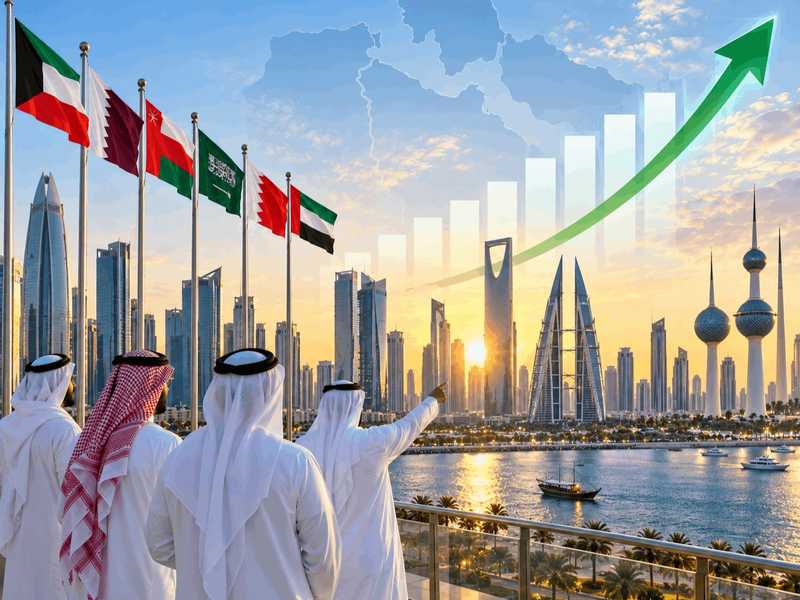
Waleed Mansour – Oxford Economics has predicted that 2027 will mark a turning point for Gulf economies, as the region enters a phase of strong economic recovery. This growth will be driven by energy exports regaining much of their momentum and an improvement in non-oil activity, alongside governments’ efforts to leverage current developments to accelerate economic diversification plans and reprioritize spending.
A recent report by the firm stated that Gulf economies are expected to recover quickly from the fallout of the regional war, restoring international confidence and limiting long-term damage to sectors such as tourism, migration, and foreign direct investment. Oxford Economics forecast real GDP growth for the Gulf Cooperation Council (GCC) countries at 6.8% in 2027, following an estimated contraction of 5.4% this year. It expects output to return to its pre-war peak by mid-2027.
**Uncertainty Remains**
Despite the anticipated strong recovery, the report suggests that geopolitical uncertainty will persist. While gradual improvements in shipping traffic through the Strait of Hormuz are expected, disruptions are likely to remain a recurring feature in the coming years. The firm’s baseline scenario assumes a steady improvement in shipping flows resulting from bilateral and multilateral arrangements, without a full and smooth restoration of traffic.
The report noted that part of the projected growth in 2027 will stem from a low base effect following this year’s contraction, but a significant portion will also come from strong compensatory growth and the restoration of economic activities disrupted during the crisis.
Oxford Economics expects Saudi Arabia to grow by approximately 6.4% in 2027 after a 2.3% contraction this year. The UAE economy is projected to grow by 6.6%, while Qatar is expected to surge by 11.5%, benefiting from a stronger recovery after being more severely affected in 2026.
**Energy Exports**
A key component of the recovery scenario hinges on the resumption of ship movements and oil and gas exports through major sea lanes. The report highlighted that shipping disruptions have extended to the Bab el-Mandeb strait, where traffic has fallen by about one-third since the attacks began in August, adding pressure to oil export options.
According to the report, Saudi Arabia has managed to divert a significant portion of its oil exports previously routed through Hormuz to the East-West pipeline. However, new restrictions at Bab el-Mandeb have heightened challenges. Conversely, Kuwait, Qatar, and Bahrain face greater challenges due to their current lack of alternatives to the Strait of Hormuz, making them among the biggest beneficiaries of the restoration of navigation. Oman remains the least affected due to its location outside the strait, while the UAE has managed to redirect a large portion of its energy exports via the Fujairah port.
Oxford Economics expects UAE oil production to rise to 4.85 million barrels per day in 2027, with production capacity reaching 5 million barrels per day. Across the GCC as a whole, the firm forecasts the hydrocarbon sector will grow by 21.7% next year after a 24.2% contraction in 2026. Its improvement is expected to account for approximately 70% of the total projected GCC GDP growth in 2027.
**Non-Oil Recovery**
In the non-oil economy, the report observed a gradual return of activity in recent months, although indicators remain below their long-term averages. Surveys of Saudi companies show a return to growth, while UAE data indicates a temporary decline. Non-oil activity in Qatar continues to contract. However, tourism and travel will require a longer period to regain previous levels.
Airspace closures, delay risks, and disruptions have pushed travelers toward alternative destinations and routes, while most international airlines outside the GCC have not resumed flights to the region. IATA estimates indicate that passenger traffic in the Middle East fell by 10% year-on-year in July, after adjusting for distance traveled, compared to a 58.6% drop at the start of the war. The firm expects a strong recovery in international travel and visits, but does not anticipate a full recovery in tourism before 2028.
**Inflation and Interest Rates**
Regarding prices, the report anticipates easing inflationary pressures as supply chains and shipping flows improve. Although headline inflation is expected to rise in the coming months, Oxford Economics projects an annual average of around 1.7% in 2027, compared to a consensus estimate of 2%. Food and beverage prices were among the main sources of pressure, particularly in countries lacking alternative shipping routes to Hormuz.
Kuwait, Qatar, and Bahrain were forced to import some goods by air or land from safer ports, leading to noticeable cost increases. Saudi Arabia, the UAE, and Oman were affected by higher shipping and insurance fees. The report expects these pressures to gradually recede as navigation recovers.
On monetary policy, Oxford Economics expects GCC central banks to continue tracking US monetary policy moves, with two additional interest rate cuts of 25 basis points each during the second half of 2027. This will coincide with a focus on providing sufficient liquidity to support the recovery of the banking sector and maintain confidence in the pegs of Gulf currencies.
**Post-Shock Phase**
The report views the post-shock phase as an opportunity for Gulf states to reprioritize public spending and accelerate diversification. Although the average Brent crude price is expected to fall by 18.2% in 2027 compared to 2026, the recovery of exports is projected to drive a 13.4% rise in Gulf government revenues, reaching the highest total level since 2022.
Oxford Economics forecasts GCC government spending will rise by 5.1% in 2027, down from an expected 7.5% growth in 2026, with greater resources directed toward security and diversification, as well as domestic priorities, notably education and healthcare.
The report emphasized that protecting critical infrastructure will drive additional investments in ports, pipelines, water desalination plants, and energy facilities, alongside efforts to find alternative routes for exports away from chokepoints at Hormuz and Bab el-Mandeb. This may include the construction of new pipelines, ports, and facilities, providing more diverse and secure routes for Gulf exports, thereby reducing the potential damage that regional tensions could inflict on oil flows and trade in the future.
