News Report: Kuwait Leads in Literacy
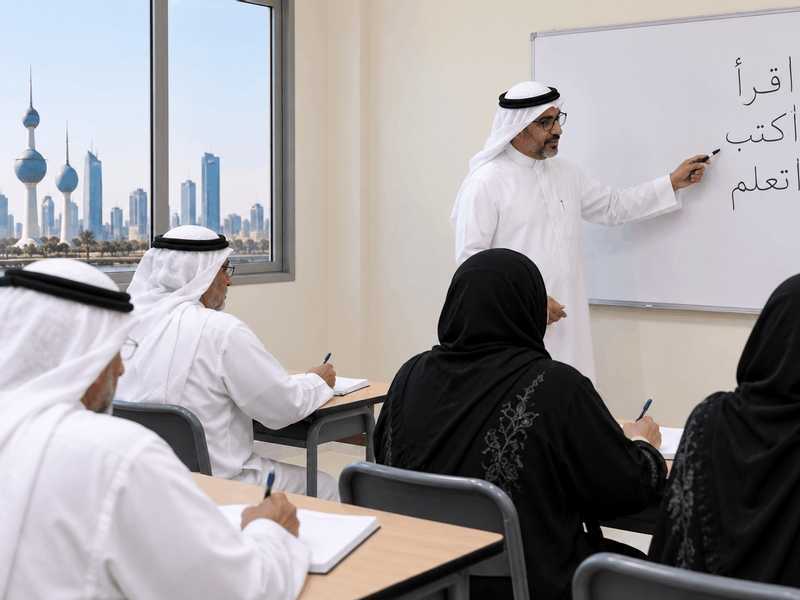
The world today, Tuesday, commemorates the 60th anniversary of the United Nations Educational, Scientific and Cultural Organization’s (UNESCO) 1966 declaration designating September 8 as International Literacy Day, reminding peoples of the importance of this right as one of the fundamental human rights. Kuwait joins countries worldwide in observing this day, which in 2026 carries the theme “Literacy for People, Planet, and Prosperity,” aiming to remind policymakers, specialists, and the public of the significance of literacy in building more sustainable, equitable, and peaceful societies, and in mastering reading and writing skills. UNESCO’s celebrations this year focus on assessing global progress toward the Sustainable Development Goals for 2030 and honoring the winners of UNESCO’s International Literacy Prizes, awarded to innovative programs in the field.
In Kuwait, this day coincides with a number of notable achievements aimed at enhancing the education process for all segments of society, through increased budgetary allocations for the sector, alongside vigorous efforts to reduce the country’s illiteracy rate and the opening of several specialized centers for adult education. According to UNESCO’s 2024 data, Kuwait recorded near-universal literacy rates among women, with rising enrollment in higher education, particularly in scientific fields, where their share reached approximately 2 percent, while the male illiteracy rate stood at about 0.14 percent.
Recognizing since the dawn of its renaissance the importance of education, Kuwait prioritized it above all else, facilitating every means to achieve it. This parallel attention extended to providing educational opportunities for generations of fathers and mothers who had missed the train of education; thus, the Ministry of Education opened adult literacy and education centers across the country starting in 1957. Since independence in the early 1960s, the country has seen the enactment of laws regulating the education process, including Law No. 11 of 1965 concerning compulsory education. Its first article stipulated that “compulsory education shall be free for all Kuwaiti children, male and female, from the primary stage through the preparatory stage, and the State shall be committed to providing school buildings, textbooks, teachers, and all resources ensuring the success of compulsory education in terms of human and material capabilities.”
Kuwait recognized that obtaining advanced education and distinguished outcomes requires attention to educational spending; consequently, the education sector at all levels has accounted for a high proportion of the state budget. Kuwait’s expenditure on education ranks among the highest globally. Kuwait’s efforts to eradicate illiteracy among its citizens have passed through three stages: the first began in 1950 and continued until 1957; the second spanned 1957 to 1981; and the third culminated in the issuance of the Literacy Eradication Law in 1981, comprising 23 articles aimed at completely eliminating illiteracy.
Kuwait continues to advance steadily in the field of literacy through its Development Vision “New Kuwait 2035,” which embodies all elements and provisions of sustainable development, particularly in developing human capital and providing inclusive, equitable, and high-quality education for all. In 2025, Kuwait continued its efforts in education and literacy, with recent data showing a sustained rise in reading and writing proficiency among society members, alongside the state’s continued allocation of a high percentage of its annual budget to the education sector.
As the trajectory of education in the State of Kuwait continues to evolve to keep pace with modern changes, efforts to develop education no longer focus solely on combating illiteracy and adult education; they have expanded to include leveraging technology and artificial intelligence and developing the learning environment. In 2026, several educational initiatives and events highlighted this development, most notably the launch on February 11 by the Ministry of Education of a project to implement artificial intelligence tools in collaboration with Google, aiming to integrate AI technologies into the educational process according to the latest global standards.
On May 4, the Ministry of Education approved the working hours for in-person classes at adult literacy and education centers, ensuring the continuity of the educational process and regular attendance for students, reflecting the Ministry’s ongoing commitment to literacy and adult education programs and its dedication to providing an organized learning environment that enables learners to continue their studies.
