"The Bluest of Eyes" – A Tale of Four Seasons
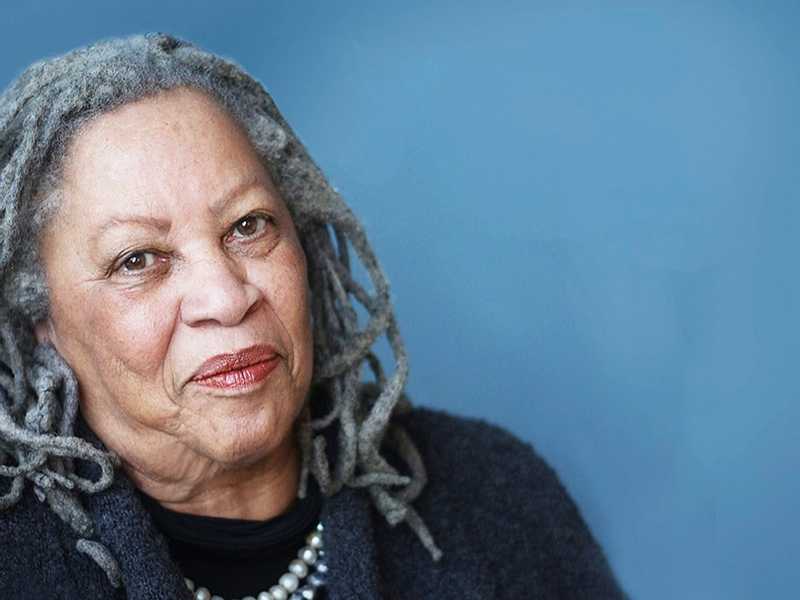
Menna El-Shafie: The novel’s premise is drawn from reality, even though it is imbued with much imagination, particularly the desire of the protagonist, the Black child Pecola, who dreamed of having blue eyes against her black skin, so as to distinguish herself with the beauty of whites. That is when beauty becomes a life obsession, especially for girls. Beauty was associated only with white skin and blue eyes, while blackness was marginalized. Pecola’s dream seems simple, but it is impossible to the point of pain. Morrison says, “If her eyes were different... she would be different.” In another place, she says, “She prayed every night... for her eyes to turn blue.” All these dreams, wishes, and prayers for Pecola are not so much about the color blue as they are about society’s and the world’s view of her appearance and color, and their acceptance of her as she is; a child whose features and black skin lack even the slightest trace of feminine beauty. More importantly, it is about her own view of herself, so that she accepts her shape and brown skin color; because ugliness extends from the woman to invade the human soul when one accepts it and surrenders to it. I believe Pecola’s desire for beauty resembles the desire of many girls in every era and every society; some seek a beauty that satisfies their femininity and their desire to be accepted and loved by those around them, but the difference lies only in the societies and their standards. Beauty is not confined to one color, white skin and blue eyes, but it changes and renews itself to become more just and inclusive, until it resembles all of us. Consequently, Pecola’s dream is repeated to this very moment in the world! When time resembles place! The novel is set in the city of Lorain, Ohio. As for time, it is during World War II, in 1941. The novel’s events and chapters are interspersed with echoes of past years from the 1920s and 1930s, recounting parts of the lives of Black people in some American cities and states, particularly the South, including Alabama. There, Morrison addresses themes of slavery, humiliation, insult, and contempt, while boldly shedding light on the unspeakable: the sexual abuse of young girls, and most painfully, the blaming of the victims and the lack of accountability for the perpetrators; especially since the novel’s protagonist, the child Pecola, was subjected to it, which worsened her psychological state until she became like a madwoman living among garbage. Morrison says, “We threw all our garbage on her... she absorbed it alone.” And in another place, she says, “We hurt people and leave them to think the hurt is their fault.” In other words, that society projects all its cruelty, judgments, and psychological distortions onto the weak, while the poor victim bears all these burdens on his shoulders, making pain and suffering a harsh and heavy way of life. This is what happened to the child Pecola, who bore all this garbage, harm, and pain from society. In another place, she says, “Quietly, as if it were a hidden secret... the oleander flowers did not bloom in the autumn of 1941.” And this is not just about the oleander flowers; the meaning here, or the metaphor, is that even flowers refuse to bloom in a society that murders the innocence of childhood. Innocence... lost childhood! Morrison takes us to harsh and difficult worlds experienced by childhood, especially girls; childhood is not allowed to live its normal life in peace, like any other childhood. Often, innocence is mixed with other things that distort it and do not suit it, until this becomes the true daily state of childhood. Morrison says, “Adults don’t talk to us... they just give us orders.” Meaning there is a long distance between the world of childhood and the world of adults; in that society, children’s feelings, emotions, fears, desires, and needs are ignored, and only what they should do is dictated to them. And she says in another place, “Perhaps there was no such thing as childhood... only the beginning of pain.” What a shocking and harsh sentence. Honestly, this is what we found perfectly embedded between the pages of the novel. And in another place, Morrison says, “Love is not more beautiful than its owner.” She hints that broken, exhausted, and burdened hearts, weighed down by deprivation and cruelty, will yield only more disappointments. After all this pain, disappointment, and silence, Morrison summarizes the novel with this sentence: “The devastation was complete.” Devastation is what affected childhood entirely; innocence itself was broken in that society, such that it cannot be repaired or beautified. The novel is a deep human wound, transcending the story of a child who dreams of blue eyes. A novel of four seasons! Time in Morrison’s work is not fixed, but fluid, like the four seasons; it grows and changes with them. The novel begins with autumn, then winter, then spring, and ends in summer. Each season has its events, stories, and echoes, and even its distinct language, as if it were a life cycle in itself. There are many temporal echoes and flashbacks in the novel that interweave and intersect, sometimes becoming difficult to understand; this is because the novel’s language abounds in allusion more than explanation, yet it leaves a magical impact on the soul. As a reader, I forgot most of its events and stories, but I retained from it a vague feeling with no name, which drove me to read it again, even though it is a novel of pain and suffering! As Morrison says in one of the novel’s pages: “I stripped the misery, colored green and blue, from my mother’s voice, all the sadness from the words, and left me convinced that pain was not only unbearable, but also sweet.” Three stages! *The Bluest Eye* is the first novel by the American writer Toni Morrison, published in 1970. Undoubtedly, it is a distinctive novel, but it was dismissed, and some considered it trivial. It did not receive its true share of fame until 1995, when it returned strongly after being read with a different awareness, becoming one of the most famous and important literary works that honestly addressed issues of race, identity, racism, and more. It was also translated into Arabic in the same year. The third stage was in 2013, 43 years after its publication, when it was banned in some American states and cities; because it exposed sexual abuses and the lives of Black people, and most painfully, it was removed from schools, universities, and school libraries. All of Morrison’s novels, including this one which revolves around the orbit of racial discrimination, vividly and boldly depicted the lives and psychological and social struggles of Black people in America. It also explores how Black people, due to the struggle for survival and the difficulties of life, are always moving between states and cities. All these stories, tales, and novels brought Morrison the Nobel Prize in Literature in 1993.
