Iran persists in its aggression
Iran continued its treacherous aggression against Kuwait, persisting in an adversarial approach that undermines all efforts to de-escalate tensions and constitutes a serious violation of international law and principles of good neighborliness. The defense system bravely and efficiently countered the heinous attacks targeting the country, while the armed forces maintained readiness to protect the nation. The General Staff of the Kuwaiti Army announced that air defenses intercepted hostile missile and drone attacks at dawn on Thursday, following Iran’s heinous aggression. It noted that any sounds of explosions heard were the result of air defense systems intercepting hostile attacks, urging everyone to adhere to safety and security instructions issued by the competent authorities.
In this regard, the Ministry of Foreign Affairs expressed Kuwait’s condemnation and strongest rejection of the repeated heinous Iranian attacks on the country, the latest of which occurred at dawn on Thursday. These attacks represent a blatant violation of Kuwait’s sovereignty, a direct threat to its security, stability, and the safety of its citizens and residents, and a serious breach of international law, the UN Charter, and Security Council Resolution 2817.
In a statement, the Ministry reaffirmed that the continuation of these brazen attacks reflects an adversarial stance and constitutes a dangerous escalation that threatens the security and stability of the region, while systematically undermining diplomatic efforts aimed at calming tensions and de-escalation. The Ministry stressed that Kuwait reserves its full right to take all necessary measures to safeguard its sovereignty, preserve its security, and defend its territory and vital installations against any aggression or threat, based on its inherent right to self-defense under Article 51 of the UN Charter and international law.
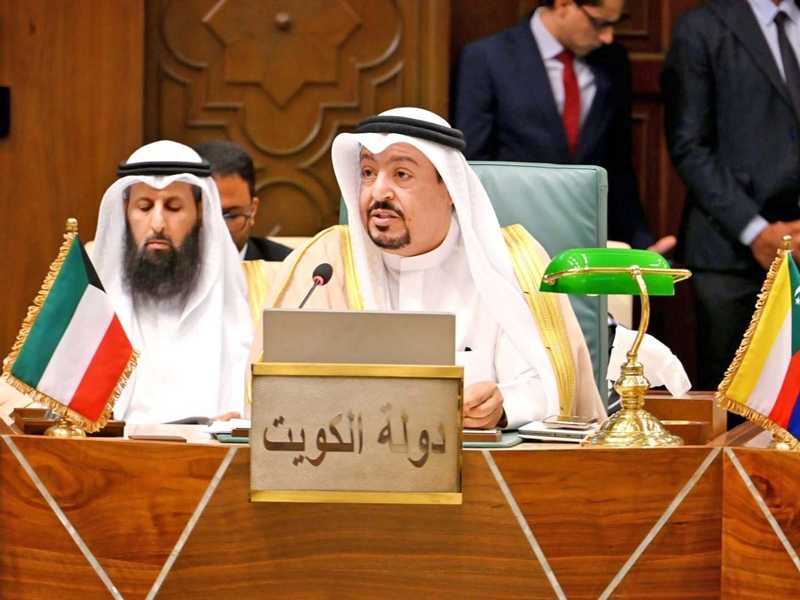
In this context, Assistant Undersecretary for Technical Services at the Ministry of Finance, Saad Al-Alaati, stated on Thursday that Iran’s heinous attacks on Kuwait and Gulf Arab states pose a threat to security and stability, necessitating joint Arab action to enhance solidarity, unify positions and efforts to confront current and future challenges. This was said in Kuwait’s address delivered by Al-Alaati at the 118th Ministerial Session of the Arab Economic and Social Council, which commenced under the presidency of the Kingdom of Saudi Arabia at the Arab League headquarters in Cairo.
Al-Alaati said, “Rapid developments have shown that the concept of security is no longer limited to its traditional dimensions but has become comprehensive, encompassing economic and food security, energy security, sustainability of supply chains and trade routes, and stability of financial markets.” He added that the ability of countries to continue development paths and preserve their gains now depends on their capacity to consolidate economic resilience, institutional stability, and preparedness to confront crises and rapid changes.
He called for accelerating steps toward Arab economic integration, strengthening linkages between national economies, developing more resilient and efficient Arab supply chains, supporting food and energy security, and encouraging joint Arab investments and projects. He emphasized the importance of the role of the Economic and Social Council as a key platform for formulating Arab economic and social policies, enhancing coordination among member states, and translating decisions and recommendations into practical programs and initiatives with tangible impacts on development and stability in Arab countries.
Al-Alaati expressed Kuwait’s appreciation for the vision proposed by Arab League Secretary-General Nabil Fahmy for the upcoming phase, which is based on key pathways including adopting more proactive Arab diplomacy, consolidating a culture of follow-up and implementation, restructuring the General Secretariat, investing in human capital and technology, and linking policy with development. He viewed this vision as representing an important strategic dimension for developing the system of joint Arab action and enhancing its capacity to keep pace with rapid transformations and translate decisions and recommendations into tangible results.
Al-Alaati reaffirmed Kuwait’s commitment to supporting the process of joint Arab action and strengthening its institutions, based on its belief that the strength of Arab action rests on unity of vision, integration of capabilities, institutional efficiency, and the ability to transform decisions and recommendations into programs and projects that achieve tangible developmental and economic impacts. He expressed Kuwait’s hope that the session’s proceedings would yield practical decisions and initiatives that contribute to enhancing Arab economic and social integration, boosting the capacity of Arab countries to confront challenges and rapid changes, and supporting sustainable development paths that fulfill the aspirations of Arab peoples for greater security, stability, and prosperity.
Al-Alaati highlighted the importance of the Economic and Social Council as one of the fundamental pillars of the joint Arab action system and an important platform for enhancing economic and social cooperation and integration among Arab countries. He stressed the importance of continuing joint Arab action and enhancing economic and social integration to support stability and development and confront the challenges facing the region.
