Dr. Reem Al-Nabari to Al-Qabas: 'Cosmetic procedures' are safe in summer... with conditions
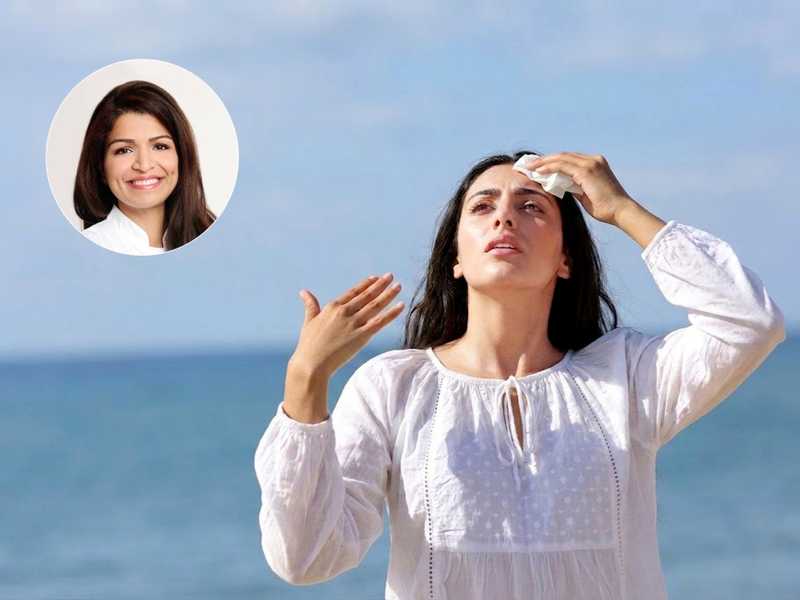
Dr. Wala Hafez As summer temperatures in the Gulf reach record highs, many people are increasingly turning to cosmetic procedures in preparation for special occasions, weddings, and the new year, often unaware that timin
Translated by Qiyas from القبس — Original source
Dr. Wala Hafez
As summer temperatures in the Gulf reach record highs, many people are increasingly turning to cosmetic procedures in preparation for special occasions, weddings, and the new year, often unaware that timing can be the decisive factor between an ideal outcome and unwanted complications that may affect the skin for months. In dermatology and cosmetic clinics, doctors see every summer cases that could have been entirely avoided if patients had known the following information, as explained by Dr. Reem Al-Neybari, a consultant in dermatology and cosmetic medicine, in an interview with Al-Qabas.
**The Impact of Sunlight on Our Skin**
Dr. Al-Neybari pointed out that what we call “sun rays” is not a single beam, but a full spectrum of radiation. She highlighted three main types:
**Type 1: Long-wave Ultraviolet A (UVA) Rays**
These are the most dangerous in the long term, as they penetrate deep layers of the skin and reach the dermis, where collagen and elastin fibers are located. They gradually break down these fibers, causing what we call “photoaging,” including early wrinkles, sagging, and dark spots. Dr. Al-Neybari noted, “The concerning aspect of this type is that it penetrates clouds, window glass, and car windows, maintaining relatively constant intensity throughout the day and across all seasons. This is why we see more pronounced pigmentation and signs of aging on the left side of the face—the side facing the driver’s window—in individuals who spend long hours driving.”
**Type 2: Short-wave Ultraviolet B (UVB) Rays**
These are primarily responsible for sunburns and redness. They mainly affect the superficial layers of the skin and are the strongest stimulators of melanin production, leading to tanning and pigmentation. Their intensity peaks at midday and during the summer months.
**Type 3: Often Overlooked – Infrared Radiation and Heat**
Many overlook this third type. High temperatures, even without direct sun exposure, dilate blood vessels in the skin, increase inflammation, and stimulate pigment cells. Recent studies have confirmed that heat alone can worsen pigmentation issues such as melasma. This explains why many women in the Gulf suffer from melasma despite using sunscreen. Dr. Al-Neybari emphasized that ambient heat plays an independent role separate from UV radiation.
**The Sensitive Gulf Skin**
Dr. Al-Neybari explained that skin is medically classified according to the Fitzpatrick scale (a scientific system for categorizing human skin tones), ranging from Type I (very fair, burns easily, does not tan) to Type VI (very dark). She stated, “Most Gulf skin types fall between Types III and V. These skin types are characterized by active pigment cells that respond quickly. While this offers a natural advantage in protecting against sunburns, it is a double-edged sword: any inflammation or irritation to the skin, whether from acne, a wound, or a cosmetic procedure, can leave behind dark pigmentation that lasts for months. This is the crux of the relationship between sunlight and cosmetic procedures.”
**A State of High Alert**
Dr. Al-Neybari stressed that skin is in a “state of high alert” after cosmetic procedures. She explained, “Every effective cosmetic procedure is fundamentally based on one concept: creating a ‘controlled and precise injury’ to the skin to stimulate regeneration and the production of new collagen.” For example, “chemical peels remove damaged superficial layers, lasers create precise thermal channels, microneedling creates microscopic holes, and injections cause localized punctures and irritation.”
However, in the days following the procedure, the skin is in an active healing phase. Its protective surface barrier is compromised or weak, blood vessels are dilated, inflammatory cells are highly active, and pigment cells are on high alert. Dr. Al-Neybari said, “Imagine exposing skin in this condition to the scorching Gulf sun. The expected result is what we medically call ‘post-inflammatory hyperpigmentation’—dark brown or grayish patches appearing at the site of the procedure.”
She added, “These patches may be more visible and harder to treat than the original problem the procedure was intended to address. The painful irony is that treating these pigmentation issues often requires new peels or laser sessions, along with a longer and stricter protection period. In other words, neglecting just a few days of protection can cost the patient months of additional treatment and doubled expenses.”
**Common Myths**
Dr. Al-Neybari clarified several common myths that should be corrected to avoid severe consequences:
* **Myth 1: “Since I’m staying indoors, I don’t need protection after a cosmetic procedure.”** This is incorrect. UVA rays penetrate window glass. Sitting near a sunny window or driving exposes sensitive skin to real damage.
* **Myth 2: “My skin is dark and not affected by the sun.”** The opposite is true in the context of cosmetic procedures. Darker skin is more prone to post-inflammatory pigmentation and requires stricter, not less, protection.
* **Myth 3: “It’s cloudy today, so sunscreen is unnecessary.”** Clouds block only a small portion of UV rays. Up to 80% of them can reach the ground on cloudy days.
* **Myth 4: “Cosmetic procedures are forbidden in summer.”** This is an overgeneralization. Many procedures are perfectly safe in summer provided instructions are followed, while others are better postponed. Distinguishing between the two is the role of the specialist physician.
**Adhering to Instructions**
Dr. Al-Neybari concluded by emphasizing that the sun is not an absolute enemy; it is a source of life, vitamin D, and mood regulation. However, it becomes a fierce adversary when it meets skin in the healing phase. She noted that cosmetic procedures in summer are possible and safe, provided there is one condition: understanding the nature of each procedure and strictly adhering to pre- and post-procedure instructions, with smart protection from sun and heat being paramount.
