Iran loses the 'Hormuz' battle
In a sign of escalating American economic pressure on his country, Iranian President Masoud Pezeshkian acknowledged weaknesses in Iran’s capacity to withstand sanctions, becoming the first high-ranking Iranian official to publicly admit their impact on the nation’s economy. Speaking in an interview with state television, Pezeshkian said, “Some claim that sanctions have no effect whatsoever. I don’t really know how to respond to those people,” adding, “We are in a state of war, and we must accept the conditions imposed by war.” He revealed that “exports and imports have declined by between 25% and 35% in recent months,” noting that “gasoline prices will eventually need to rise to keep pace with the decline in trade activity.”
Pezeshkian’s admission comes as the war with his country enters its seventh month, amid a diplomatic stalemate and the prospect of reaching an agreement between the United States and Iran to end the conflict remaining distant in the foreseeable future.
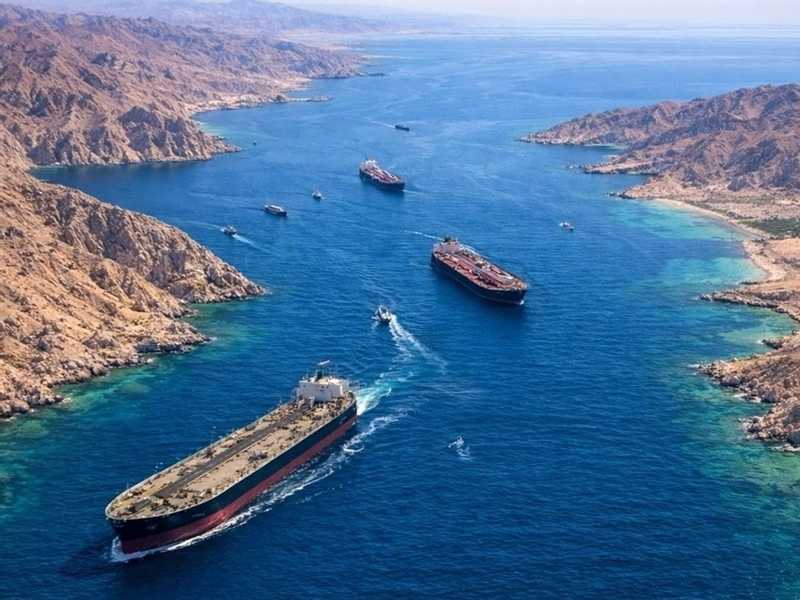
As economic pressure on Tehran intensifies and its ability to control navigation in the Strait of Hormuz diminishes, U.S. Central Command (CENTCOM) Commander Admiral Brad Cooper affirmed that shipping lanes in the strait are now free of naval mines, stating they are “open and momentum is building.” Cooper explained that the approximately 50,000 U.S. troops deployed in the region are imposing a naval blockade on Iran while simultaneously ensuring the free flow of maritime trade through the Strait of Hormuz. He noted that the mine-clearing operation was conducted using a combination of Navy divers and special operations forces, alongside air units from the U.S. Army, Navy, Air Force, and Marine Corps.
Axios reported that U.S. officials stated the American military now effectively controls most areas of the Strait of Hormuz, and that “Iran’s ability to precisely target ships in the waterway has become limited.” According to these officials, Iranian attacks struck only 2% of the ships that transited the strait last month. Axios further reported that the United States hopes to expand the main navigational channel in the Strait of Hormuz by mid-September, allowing 50 ships to pass through the strait each night.
In a related development, Bloomberg reported that crude oil exports from the Arabian Gulf have recovered to about two-thirds of pre-war levels, limiting the war’s impact on global crude prices, according to Goldman Sachs. Analysts at the bank wrote that total exports of crude oil and petroleum products from the region rose to between 15 million and 16 million barrels per day.
Meanwhile, the Wall Street Journal, citing officials, reported that Washington has rushed to transfer large quantities of ammunition from its stockpiles in Europe and Japan to the Middle East as part of preparations to confront Iran. Officials warned that “depletion of U.S. military stockpiles could limit Washington’s ability to maintain deterrence in other parts of the world.”
