Death of Norway's King Harald V and coronation of his son Haakon VII
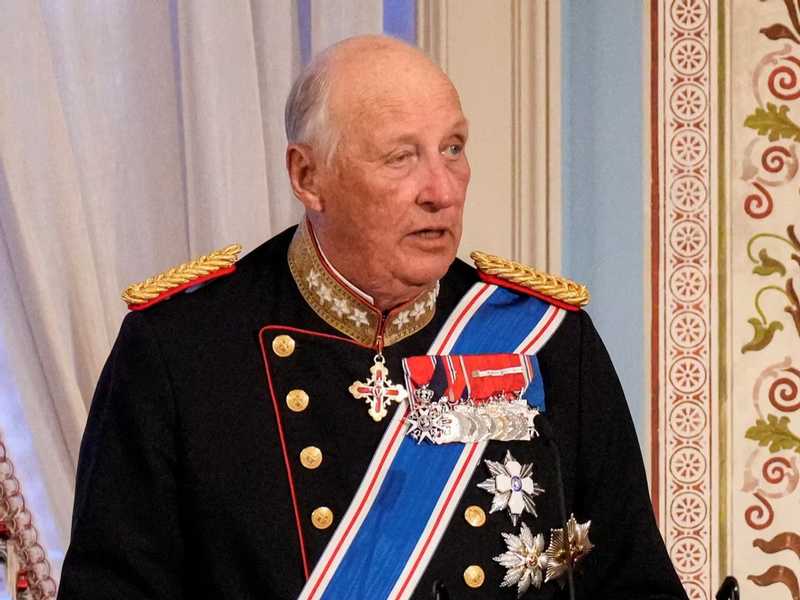
The Norwegian Royal Palace announced on Friday morning that King Harald V had died at the age of 89, after a reign of more than three decades. With the passing of the late king, who was the oldest monarch in Europe, the throne automatically passed to his son, Crown Prince Haakon (53), who will ascend to the throne as King Haakon VIII. According to a statement from the Royal Court, King Harald died at 6:35 a.m. local time (4:35 a.m. Greenwich Mean Time) at the National Hospital in the capital, Oslo.
Upon the transfer of power to the new king, his eldest daughter, Princess Ingrid Alexandra, became Crown Princess and the heir presumptive to the throne, in accordance with a 1990 constitutional amendment that grants succession rights to the eldest child regardless of gender. In a statement, Norwegian Prime Minister Jonas Gahr Støre paid tribute to the late king, saying, “The entire country is in mourning, and the people of Norway feel deep gratitude for the long life he spent serving the country.” Støre added that for more than 30 years, Harald V had shown a firm belief in the Norwegian people and had been a source of support for everyone in “drawing out the best in themselves and in others.”
The late king had ascended to the Norwegian throne in January 1991, succeeding his father, King Olav V. His reign witnessed a broad phase of reform and modernization of the monarchy, coinciding with an economic boom and unprecedented prosperity driven by the restructuring of the oil and gas sectors. Despite health challenges in recent years, Harald V insisted on remaining in office, refusing to abdicate, adhering to Norwegian royal traditions and diverging from the trends of some contemporary European monarchs.
King Haakon VIII assumes power after a long experience in public administration, having frequently acted on his father’s behalf and taken on regency duties during periods of the late king’s illness. Although Norway’s system of government—home to a population of 5.5 million—grants the monarchy a symbolic role while actual power rests with the elected parliament and government, the new king faces pressing challenges to enhance the popularity and stability of the royal family. These challenges arise amid national controversy sparked by revelations of his wife’s past connections to American Jeffrey Epstein, who was convicted of sex crimes, as well as a court ruling convicting his son-in-law in a rape case. These issues place strengthening public trust in the monarchy at the top of the new reign’s priorities.
