US approves new drug for pancreatic cancer
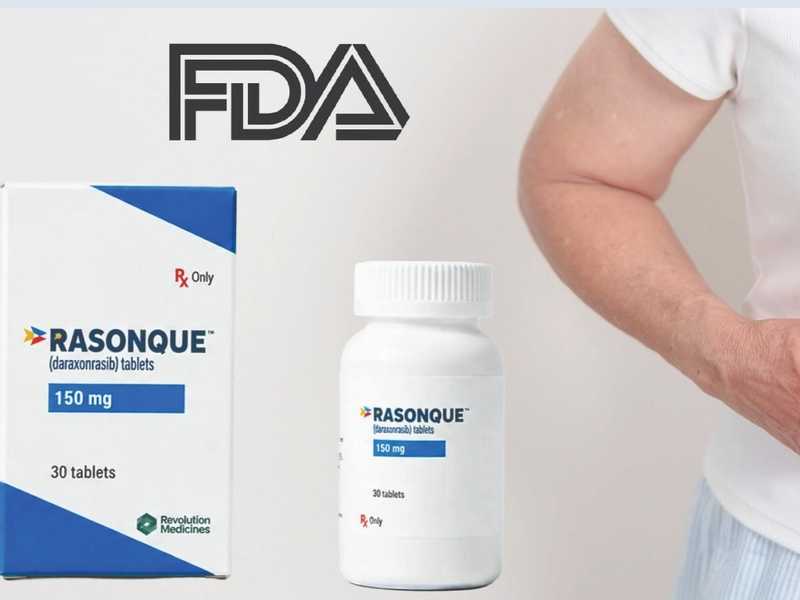
The FDA approved Daruxonrasib from Revolution Medicines for the treatment of advanced pancreatic cancer.
Translated by Alqyas from Al-Qabas — Original source
Dr. Wala’a Hafiz – The U.S. Food and Drug Administration (FDA) has approved a new drug for the treatment of advanced pancreatic cancer, a step that opens a new therapeutic option for patients facing one of the most lethal forms of cancer. The agency granted accelerated approval to “daruxosertib,” an oral therapy that targets mutated proteins within the RAS pathway, which is linked to tumor growth in more than 90% of pancreatic cancer cases. Targeting this pathway had long posed a therapeutic challenge for researchers and pharmaceutical companies. The drug, developed by Revolution Medicines, will be marketed under the brand name “Rasonk” and is to be taken once daily.
A study involving 500 patients, randomly assigned to receive either the new treatment or chemotherapy, yielded striking results: the median overall survival for patients receiving the new drug was 13.2 months, compared with 6.7 months for those receiving chemotherapy, effectively doubling the average survival duration. The most notable side effects of the treatment included skin rash, mouth ulcers, diarrhea, and other gastrointestinal disturbances.
A noticeable improvement was reported by several patients who received the treatment early, noting a marked enhancement in their quality of life compared with chemotherapy. Barbara Andes, an 88-year-old patient from California, said she was able to resume her daily activities after a year of chemotherapy, while experiencing far fewer side effects, such as nausea and fatigue. She added that the treatment “opens the door for many patients,” describing it as a “true blessing.”
A rapid review of the approval: The company stated that the drug underwent a rapid review process by the FDA under a new program designed to reduce the evaluation period to just one or two months, instead of the usual 10 to 12 months. Mark Goldsmith, the company’s chief executive officer, said the approval represents the culmination of more than a decade of work targeting pancreatic cancer associated with the RAS pathway, which has been one of the most difficult challenges in oncology.
Medical praise for the therapeutic breakthrough: Specialized physicians expressed optimism about the results, emphasizing that the drug could represent a turning point in how the disease is managed. Dr. Rashna Shroff, from the Arizona Cancer Center, said the significance of the results extends beyond prolonging patients’ survival; it also markedly improves their quality of life, as many were able to continue treatment for longer periods compared with chemotherapy. Dr. Peter Housman, from the Sylvester Comprehensive Cancer Center, described this development as a “radical shift in cancer treatment,” noting that this breakthrough could pave the way for a new wave of therapies targeting the RAS pathway, after decades of research and therapeutic challenges in targeting it.
Pancreatic cancer is among the most lethal forms of cancer, largely due to the difficulty of detecting it in its early stages before it spreads to other organs. The American Cancer Society estimates that approximately 67,000 new cases will be diagnosed in the United States this year, with a five-year survival rate of about 13% across all stages of the disease combined.
